


Terahertz Silicon Hemispherical Lenses: High-Performance Optics for THz Systems
Feb. 09, 2026
Terahertz silicon hemispherical lenses are critical optical components in modern terahertz (THz) systems, widely used to improve beam coupling efficiency, signal intensity, and imaging resolution. With the rapid expansion of terahertz technology in security inspection, medical imaging, spectroscopy, and wireless communication, silicon hemispherical lenses have become one of the most essential THz optical elements.
What Is a Terahertz Silicon Hemispherical Lens?
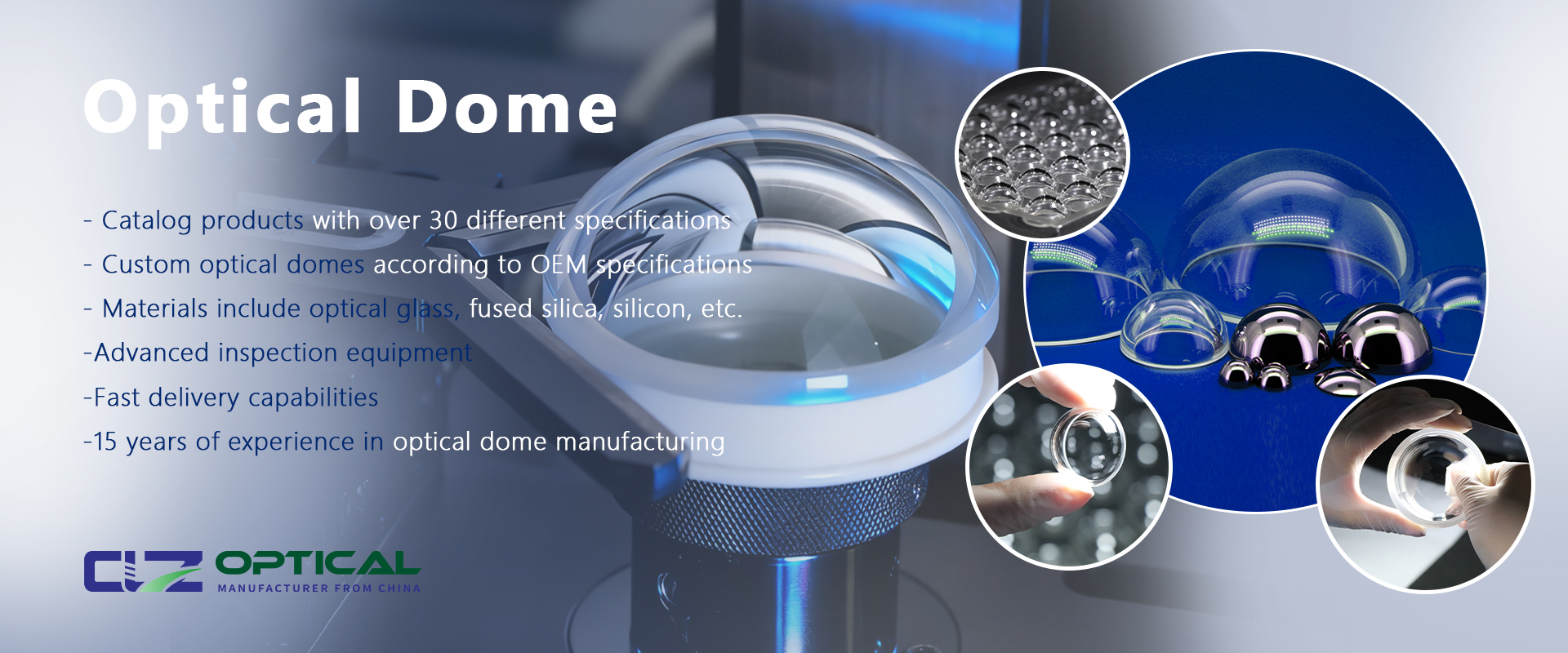
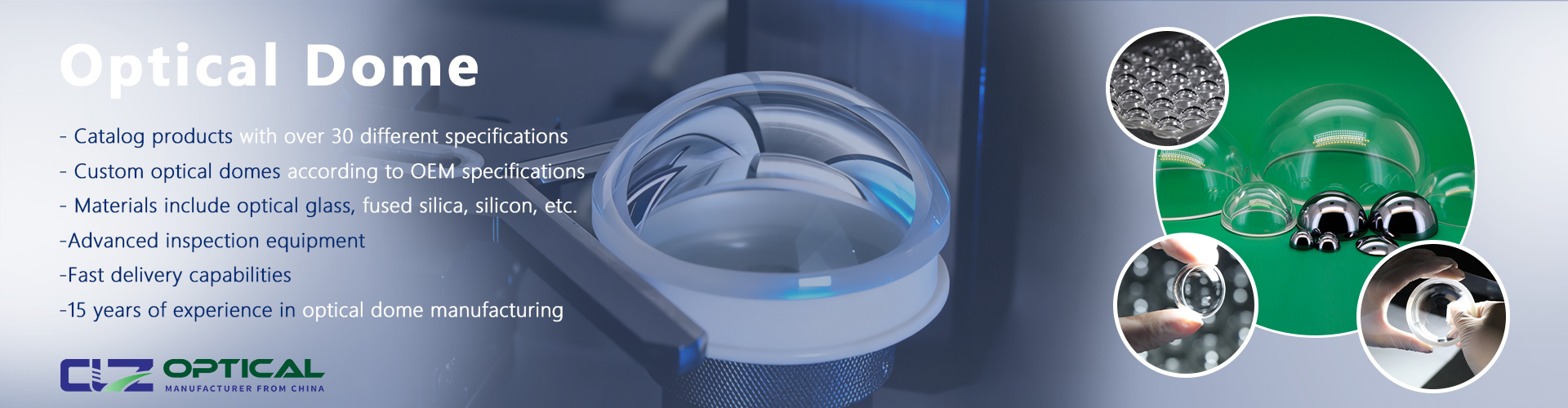
A terahertz silicon hemispherical lens is a precision optical lens made from high-resistivity silicon and shaped into a hemispherical form. It is specifically designed to operate in the terahertz frequency range (0.1–10 THz).
These lenses are typically mounted on:
THz detectors
THz antennas
THz emitters and photoconductive switches
Their primary function is to enhance free-space coupling, allowing more terahertz radiation to be efficiently transmitted or received.

Why Silicon Is the Best Material for THz Lenses
Silicon is considered the gold standard material for terahertz optics due to several key properties:
1. High Refractive Index
Silicon has a stable refractive index of ~3.4 in the THz band, enabling:
Strong focusing ability
Compact lens size
Improved beam shaping performance
2. Ultra-Low THz Absorption
High-resistivity silicon exhibits extremely low absorption loss, ensuring:
High transmission efficiency
Minimal signal attenuation
Improved signal-to-noise ratio
3. Excellent Thermal and Mechanical Stability
Silicon lenses perform reliably under:
High temperature environments
Cryogenic conditions
Vacuum systems
4. Semiconductor Manufacturing Compatibility
Silicon can be precision-machined and polished, allowing:
High surface accuracy
Repeatable mass production
Integration with THz chips
Optical Working Principle of Hemispherical THz Lenses
The hemispherical geometry offers optimal optical performance in terahertz systems.
When a THz wave enters the curved surface, it is refracted and directed toward the flat exit surface, resulting in:
Reduced beam divergence
Improved coupling efficiency
Lower reflection loss
When mounted directly onto a THz device, the lens effectively acts as a beam transformer, converting a highly divergent signal into a collimated or focused beam.
Key Advantages of Terahertz Silicon Hemispherical Lenses
High Coupling Efficiency
Reduces impedance mismatch between air and semiconductor devices.
Compact System Design
High refractive index enables miniaturized THz modules.
Low Transmission Loss
Maximizes signal energy reaching the detector or target.
Long-Term Stability
Maintains optical performance over time and temperature cycles.
Easy System Integration
Ideal for on-chip and package-level THz systems.
Manufacturing Process of Silicon Hemispherical Lenses
High-performance THz lenses require strict manufacturing control:
Step 1: High-Purity Silicon Selection
Using high-resistivity float-zone silicon for minimal absorption.
Step 2: Precision Shaping
CNC machining or diamond turning to form hemispherical geometry.
Step 3: Ultra-Fine Polishing
Surface roughness reduced to micron or sub-micron level.
Step 4: Optional Anti-Reflection Coating
Reduces Fresnel reflection and improves transmission.
Main Applications of Terahertz Silicon Hemispherical Lenses
Terahertz Imaging Systems
Used in:
Security scanners
Industrial defect detection
Non-destructive testing
Terahertz Spectroscopy
Improves:
Material identification
Chemical analysis
Pharmaceutical research
Terahertz Communication
Key component in:
6G research
Ultra-high-speed wireless links
Beam steering systems
Scientific Research
Applied in:
THz time-domain spectroscopy (TDS)
Cryogenic detectors
Astronomical instruments
How to Choose the Right THz Silicon Hemispherical Lens
When selecting a lens, consider:
Operating Frequency Range
Lens curvature must match target THz wavelength.
Lens Diameter
Larger diameter = better coupling
Smaller diameter = compact design
Silicon Resistivity
Higher resistivity = lower absorption loss.
Surface Quality
Ultra-smooth surface = minimal scattering.
Coating Options
Anti-reflection coating for high-end systems.
Future Trends in Terahertz Lens Technology
The future of terahertz optics is moving toward:
On-chip silicon lens integration
Metamaterial anti-reflection coatings
Hybrid silicon-polymer structures
Ultra-broadband THz lens designs
As 6G, autonomous sensing, and AI-based imaging continue to develop, terahertz silicon hemispherical lenses will play an even more critical role in next-generation systems.
Conclusion
Terahertz silicon hemispherical lenses are fundamental to the success of modern THz systems. Their combination of:
High refractive index
Low transmission loss
Compact size
Manufacturing precision
makes them the preferred optical solution for terahertz imaging, spectroscopy, communication, and scientific research.
For any organization or engineer working with terahertz technology, investing in high-quality silicon hemispherical lenses is one of the most effective ways to achieve maximum system performance and long-term reliability.