


Sapphire Domes: High-Strength Optical Windows for Extreme Environments
Feb. 09, 2026
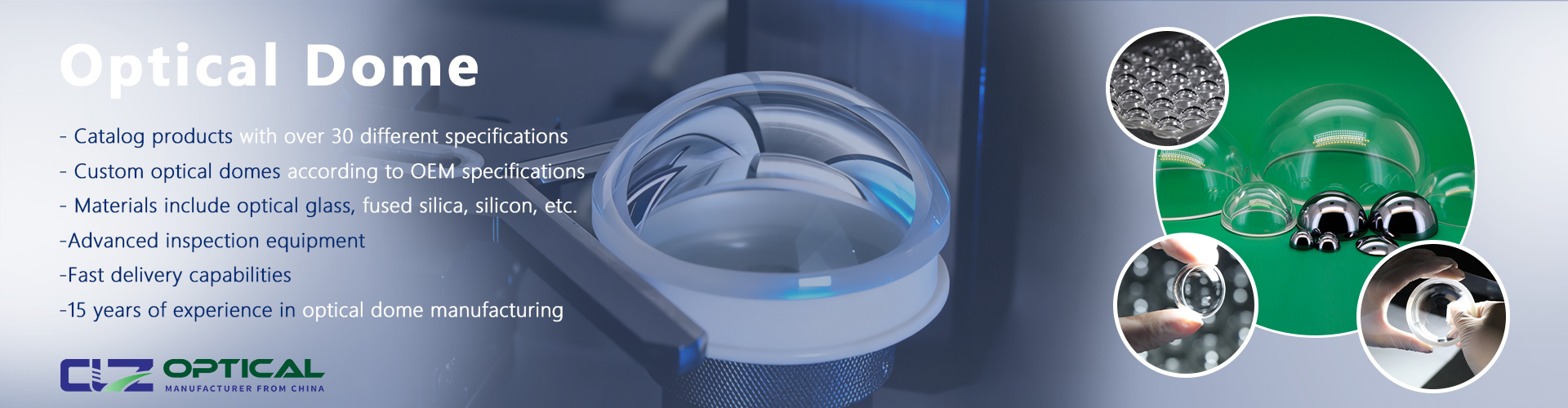
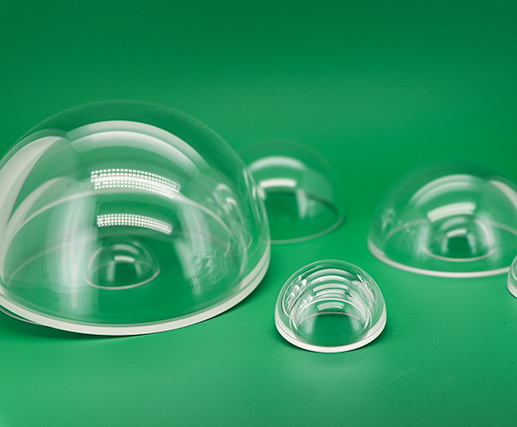
Sapphire domes are premium optical components widely used in aerospace, defense, marine, medical, and high-pressure industrial systems. Thanks to sapphire’s exceptional mechanical strength, optical clarity, and chemical resistance, sapphire domes have become the preferred solution for applications requiring maximum durability and optical performance under extreme conditions.
This article provides a comprehensive overview of sapphire domes, including material properties, optical advantages, manufacturing processes, applications, and future trends.
What Are Sapphire Domes?
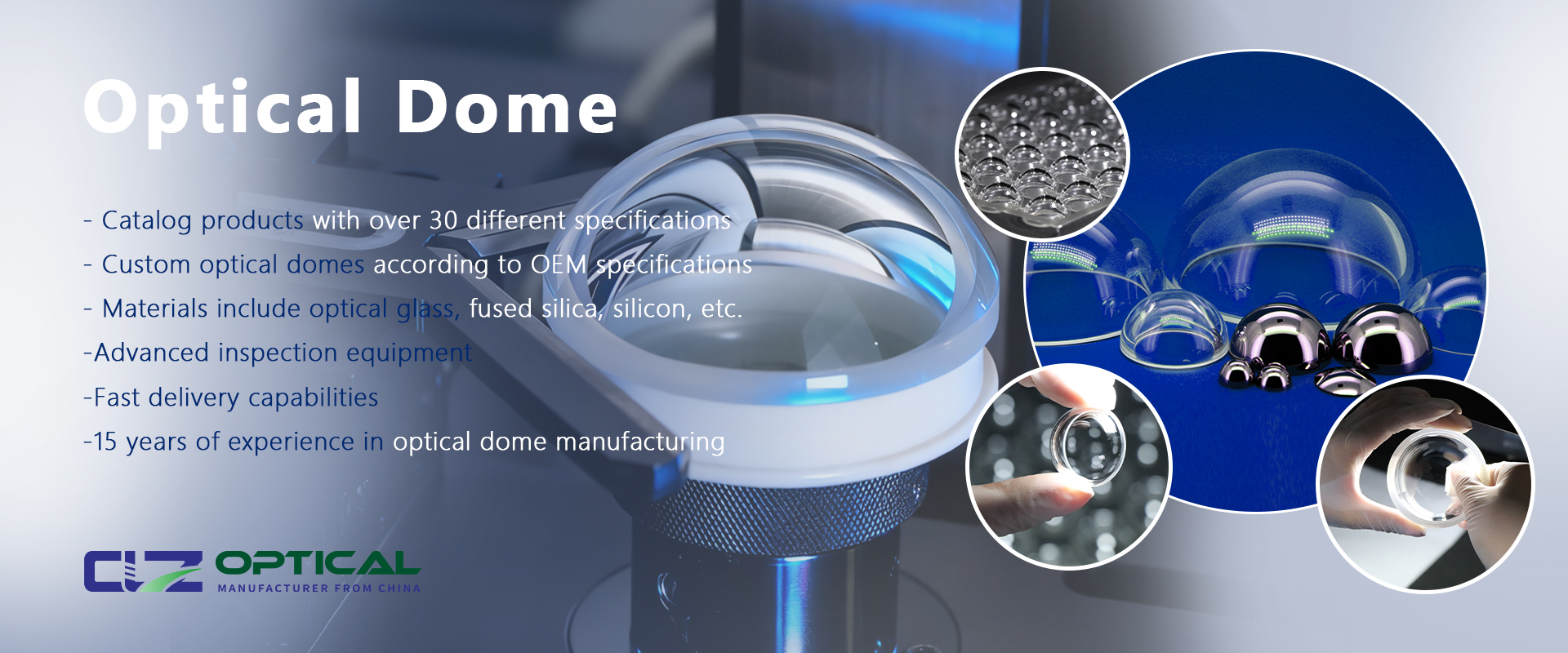
A sapphire dome is a hemispherical or spherical optical window made from synthetic single-crystal sapphire (Al₂O₃). Unlike ordinary glass or quartz windows, sapphire domes offer:
Ultra-high hardness (Mohs 9)
Outstanding scratch resistance
High pressure and temperature tolerance
Broad spectral transmission
They are commonly used to protect sensitive sensors or optical systems while maintaining excellent light transmission.
Why Sapphire Is the Best Material for Optical Domes
Sapphire is considered one of the most advanced optical materials due to the following properties:
Extreme Mechanical Strength
Sapphire is the second hardest transparent material in the world, only softer than diamond. This allows sapphire domes to withstand:
High-speed impact
Deep-sea pressure
Harsh industrial environments
Broad Optical Transmission
Sapphire transmits light across a very wide range:
UV (190 nm)
Visible light
Near-infrared (up to 5 μm)
This makes sapphire domes suitable for multispectral imaging systems.
High Thermal Stability
Sapphire can operate from cryogenic temperatures up to over 2000°C, making it ideal for:
Aerospace sensors
Combustion monitoring
High-temperature reactors
Chemical and Corrosion Resistance
Sapphire is chemically inert and resistant to:
Acids and alkalis
Saltwater corrosion
Solvents and fuels
Optical Advantages of Sapphire Domes
Compared with flat windows, sapphire domes offer:
Zero Optical Distortion
The curved geometry minimizes refraction errors, enabling:
Wide field-of-view imaging
Low aberration
High angular accuracy
Superior Surface Quality
Precision polishing achieves:
High transmission efficiency
Minimal scattering
Low wavefront error
High Laser Damage Threshold
Sapphire domes can handle:
High-power laser systems
LIDAR and targeting optics
Directed energy applications
Manufacturing Process of Sapphire Domes
Producing sapphire domes is one of the most demanding processes in optical engineering.
Step 1: Crystal Growth
Sapphire is grown using methods such as:
Kyropoulos (KY)
Czochralski (CZ)
Edge-defined film-fed growth (EFG)
Step 2: CNC Shaping
Raw sapphire boules are cut and machined into dome geometry using diamond tools.
Step 3: Precision Polishing
Multi-stage polishing achieves:
Nanometer-level surface roughness
High optical accuracy
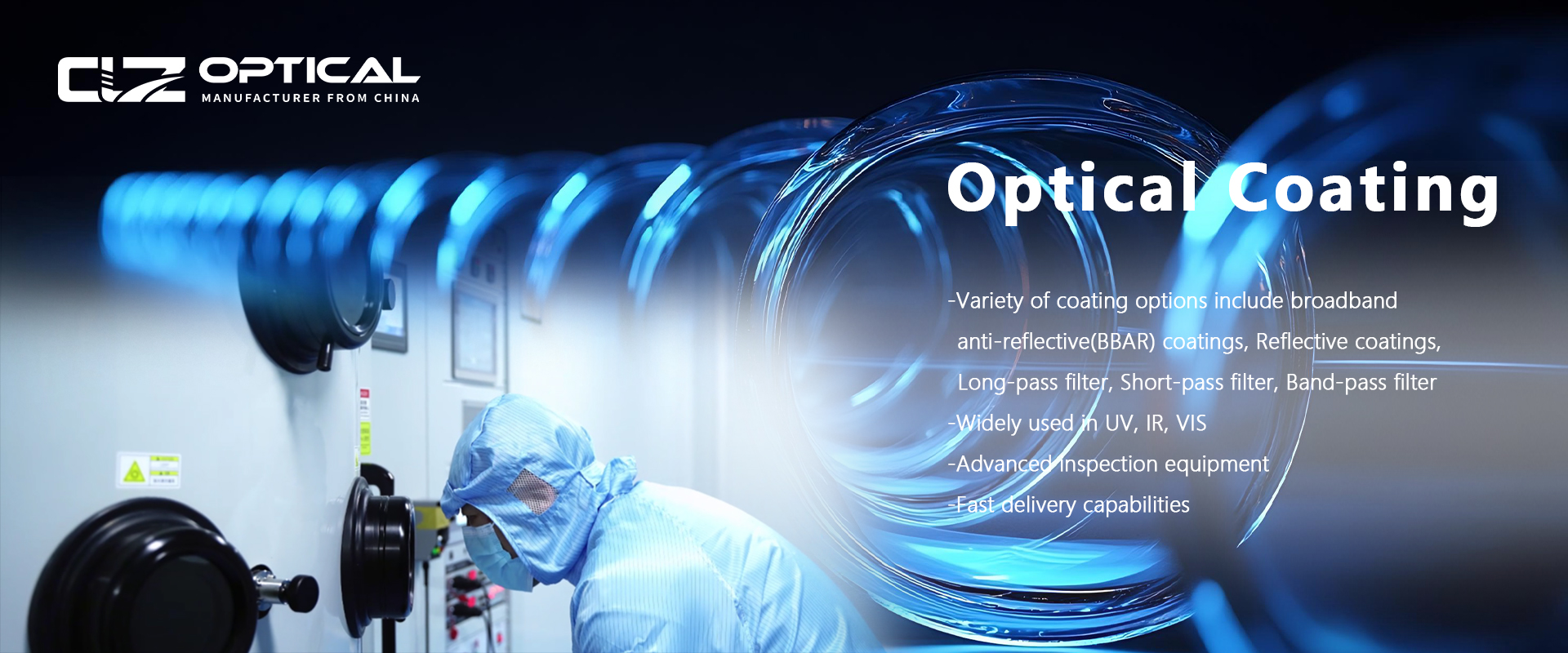
Step 4: Coating (Optional)
Advanced coatings may include:
Anti-reflection (AR)
Infrared coatings
Hard protective layers
Key Applications of Sapphire Domes
Aerospace and Defense
Used in:
Missile seeker windows
Infrared tracking systems
Radar and LIDAR sensors
Marine and Underwater Systems
Ideal for:
Submarine cameras
Sonar protection windows
Deep-sea exploration equipment
Medical Devices
Applied in:
Endoscopic systems
Laser surgical equipment
High-resolution imaging
Industrial and Scientific Equipment
Common in:
High-pressure reactors
Optical sensors
Vacuum systems
How to Choose the Right Sapphire Dome
When selecting a sapphire dome, consider:
Dome Shape
Hemispherical
Hyper-hemispherical
Custom geometry
Thickness
Thicker domes offer:
Higher pressure resistance
Better impact protection
Optical Grade
Different grades for:
Imaging systems
Laser systems
Inspection equipment
Coating Requirements
AR coatings improve transmission, especially for:
Infrared systems
Low-light applications
Sapphire Domes vs Other Optical Materials
Compared with alternatives:
Glass domes: lower strength, easier to scratch
Fused silica: good optics, poor mechanical strength
Quartz: limited temperature resistance
Sapphire domes offer the best balance of strength, clarity, and durability.
Future Trends in Sapphire Dome Technology
The sapphire dome market is evolving toward:
Larger diameter domes for space applications
Ultra-thin lightweight designs
Advanced nano-coatings
Integration with smart sensors and AI imaging systems
As autonomous systems, drones, satellites, and deep-sea exploration continue to expand, demand for sapphire domes will grow rapidly.
Conclusion
Sapphire domes are the ultimate solution for optical systems operating in extreme environments. Their unmatched combination of:
Mechanical strength
Optical transparency
Thermal stability
Chemical resistance
makes them indispensable in aerospace, defense, marine, medical, and industrial applications.