


Sapphire Half Ball Lenses: Durable, High-Precision Optics for Demanding Environments
Mar. 03, 2026
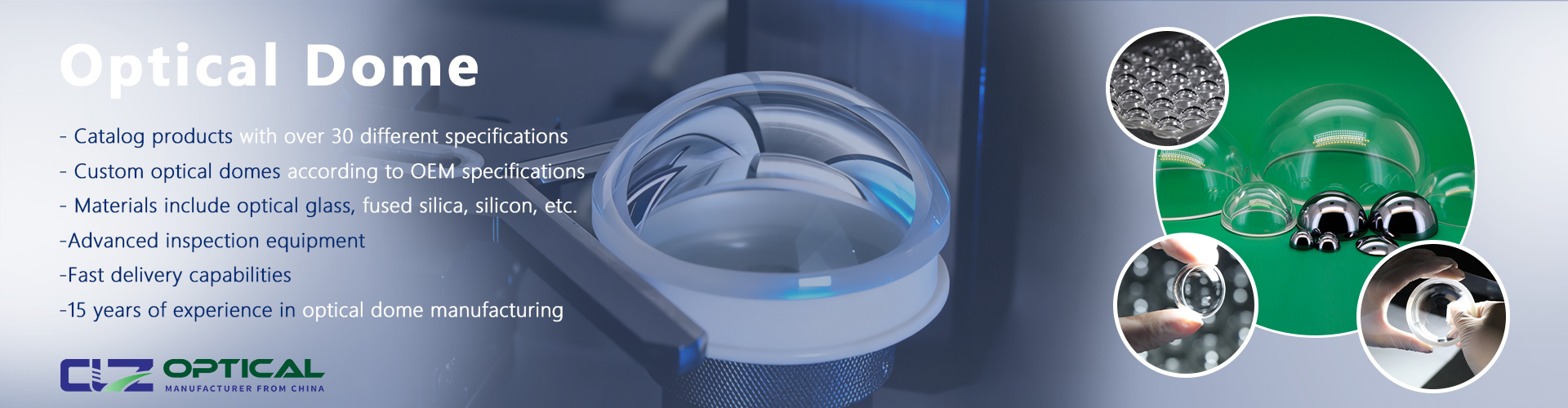
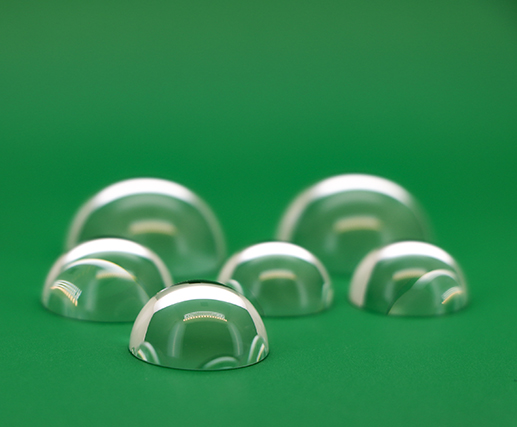
Sapphire half ball lenses are hemispherical optical components manufactured from single-crystal sapphire (Al₂O₃). Known for their exceptional hardness, thermal stability, and broad optical transmission range, these lenses are widely used in laser systems, fiber optic coupling, medical devices, aerospace sensors, and harsh industrial environments.
Combining compact geometry with superior material strength, sapphire half ball lenses deliver reliable optical performance where conventional glass lenses may fail.
What Is a Sapphire Half Ball Lens?
A sapphire half ball lens is essentially a hemispherical lens cut and polished from optical-grade sapphire crystal. Unlike a full ball lens, the flat surface allows for easier mounting, alignment, and integration into optical assemblies.
Key characteristics include:
Hemispherical geometry
High refractive index (~1.76 at visible wavelengths)
Excellent mechanical durability
High resistance to thermal shock and chemical corrosion
The flat surface improves positioning accuracy, making half ball lenses particularly suitable for fiber coupling and compact optical modules.
Why Choose Sapphire for Half Ball Lenses?
Extreme Hardness
Sapphire ranks 9 on the Mohs hardness scale, second only to diamond. This makes sapphire half ball lenses highly resistant to scratching and abrasion, ideal for industrial and field applications.
Wide Optical Transmission
Sapphire transmits light from approximately 0.15 µm (UV) to 5.5 µm (mid-infrared), supporting:
UV optics
Visible laser systems
Near-infrared applications
Certain mid-IR systems
High Thermal Stability
Sapphire maintains structural and optical integrity at temperatures exceeding 1000°C, making it suitable for high-power laser systems and extreme environments.
Chemical Resistance
It withstands exposure to acids, alkalis, and corrosive gases, which is critical in chemical processing and semiconductor manufacturing environments.
Optical Advantages of Sapphire Half Ball Geometry
Compact Focusing
The hemispherical shape enables efficient focusing and beam collimation in small spaces.
Improved Alignment
The flat mounting surface allows precise positioning against laser diodes, photodetectors, or optical fibers.
High Numerical Aperture
Sapphire’s refractive index provides strong light-bending capability, enhancing coupling efficiency in fiber optic systems.
Applications of Sapphire Half Ball Lenses
Fiber Optic Communication
Used for:
Laser diode to fiber coupling
Fiber-to-fiber alignment
Optical transceiver modules
The durability ensures long-term stability in telecom and data transmission systems.
Laser Systems
Suitable for industrial cutting, medical lasers, and sensing systems due to:
High damage threshold
Excellent thermal conductivity
Stable optical performance under high power
Medical and Endoscopic Devices
Their small size and biocompatibility make them ideal for minimally invasive instruments and optical probes.
Aerospace and Defense
Used in sensor systems and targeting devices that require impact resistance and temperature stability.
Semiconductor and Industrial Inspection
In harsh manufacturing environments, sapphire lenses provide both optical clarity and long service life.
Key Specifications to Consider
When selecting sapphire half ball lenses, evaluate:
Diameter tolerance
Surface quality (scratch-dig standard)
Surface roughness
Concentricity
Transmission wavelength range
Anti-reflection (AR) coating options
Because sapphire has moderate surface reflection, AR coatings can significantly improve transmission efficiency for specific wavelength ranges.
Comparison with Other Materials
Compared to optical glass:
Much higher hardness
Superior thermal resistance
Better chemical durability
Compared to fused silica:
Higher mechanical strength
Broader mid-IR transmission
Compared to silicon or germanium:
Better performance in visible and UV wavelengths
Greater mechanical robustness
Material choice ultimately depends on operating wavelength and environmental conditions.
Customization Options
Manufacturers often provide:
Custom diameters (sub-millimeter to several millimeters)
High-precision polishing
UV, visible, or IR-optimized AR coatings
Tight concentricity tolerances
Bulk production for OEM integration
Custom sapphire half ball lenses can be engineered for specialized photonic and laser applications.
Emerging Market Demand
With rapid growth in:
High-speed optical communication
Medical laser technology
Aerospace sensing systems
Harsh-environment industrial monitoring
The demand for rugged, high-precision optical components like sapphire half ball lenses continues to increase.
Miniaturized photonic modules and integrated optical systems are driving further innovation in sapphire lens fabrication and coating technologies.
Conclusion
Sapphire half ball lenses combine compact hemispherical geometry with the exceptional mechanical and thermal properties of single-crystal sapphire. Their durability, wide transmission range, and high precision make them ideal for fiber optics, laser systems, medical devices, and demanding industrial applications.
For engineers seeking long-lasting optical components capable of operating in extreme conditions, sapphire half ball lenses offer a reliable and high-performance solution across advanced photonic industries.