

Differences and characteristics between dielectric reflective films and metallic reflective films in optical reflective coatings
Mar. 06, 2026
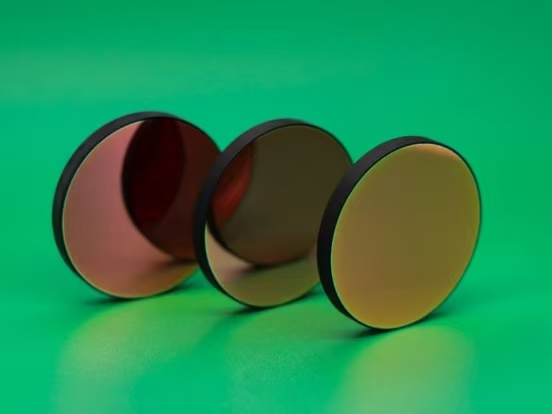
Coating the surface of optical components is a key method to improve their optical performance. Based on the materials used, it is mainly divided into two categories: dielectric coating and metallic coating. Both methods regulate light propagation behavior through thin-film structures. However, due to differences in material properties and film formation mechanisms, they exhibit significant differences in reflection, transmission, spectral adaptability, and damage threshold, directly determining the applicable scenarios and working effects of the optical system.
Optical properties of dielectric coatings
Dielectric coatings use inorganic dielectric materials such as oxides and fluorides as the core, and are formed by stacking multiple layers of films with alternating high and low refractive indices. They primarily utilize the interference effect of light to achieve optical functions. Multilayer film systems allow for precise design of phase and amplitude, achieving extremely strong constructive or destructive interference in the target wavelength band, thus obtaining extremely high or extremely low reflectivity. Because the dielectric material itself absorbs very little light, most energy is transferred through transmission or reflection. Therefore, dielectric films exhibit low absorption loss, high optical efficiency, and strong spectral selectivity. Simultaneously, the dielectric material possesses high chemical stability and good high-temperature resistance, and is not easily damaged under strong light irradiation, meeting the requirements for high precision and high stability in optics.
Optical properties of metal coatings
Metal coatings use metals such as aluminum, silver, gold, and copper as the film layer, relying on the strong interaction between the free electrons inside the metal and light to achieve optical functions. Metals have a strong reflective ability for a wide spectrum of light, and their reflective characteristics are relatively stable over a wide wavelength range. High reflectivity can be achieved without complex multilayer structures, offering advantages such as simple film formation processes, wide applicable wavelength ranges, and ease of use. However, metal materials exhibit significant light absorption, resulting in high energy loss; at the same time, metals have relatively poor chemical stability, making them susceptible to corrosion in humid, acidic, and alkaline environments. Under strong light conditions such as high-power lasers, they are more prone to damage due to heat generation.
Key differences in optical performance
Reflectivity and spectral characteristics
Dielectric coatings can achieve extremely high selectivity through film system design, but the effective wavelength range is usually narrow. Metal coatings have high and stable reflectivity across a wide wavelength range, with almost no significant change with wavelength, making them suitable for broad-spectrum applications, but it is difficult to achieve ultimate reflectivity at a single wavelength.
Absorption loss and energy utilization rate
Dielectric coatings have extremely low absorption, with most light being reflected or transmitted, resulting in high energy utilization and low heat generation. Metal coatings, on the other hand, exhibit significant intrinsic absorption, converting some light energy into heat, leading to lower energy utilization and making components more prone to overheating.
Laser damage threshold
Dielectric coatings are resistant to high temperatures and strong light, and have a high laser damage threshold, making them suitable for demanding applications such as high-power lasers and laser cavity mirrors. Metal coatings, on the other hand, are prone to softening and oxidation when heated, and have a lower damage threshold, so they are generally not used in high-power laser systems.
Polarization and angular sensitivity
Dielectric coatings are significantly affected by the incident angle; large angle changes result in noticeable shifts in optical performance, and they are also quite sensitive to polarization. Metal coatings, on the other hand, are more adaptable to different angles, exhibiting smaller changes in reflection characteristics under varying incident angles and lower polarization sensitivity.
Environmental stability
Dielectric coatings exhibit high hardness, strong adhesion, resistance to high and low temperatures, and resistance to moisture and corrosion, demonstrating excellent stability. Metal coatings, on the other hand, are prone to oxidation, discoloration, and corrosion, typically requiring additional protective films and exhibiting weaker long-term stability.
Dielectric coating and metallic coating are the two most commonly used coating methods in the field of optics, each with its own advantages in optical performance. Dielectric coating is characterized by low loss, high selectivity, and high damage threshold, making it suitable for high-precision, high-power, and narrow-band professional optical systems. Metallic coating is known for its broad-spectrum high reflectivity, simple processing, and good angular adaptability, and is often used in scenarios with broad-spectrum reflectivity, low cost, and moderate precision requirements. In practical applications, rationally selecting the coating type based on requirements such as band, power, stability, and cost is crucial to ensuring the performance of the optical system.