


Ruby Ball Lenses: Optical Properties, Applications, and Industrial Uses
May. 22, 2026
Ruby ball lenses are high-precision spherical optical components made from synthetic ruby (single-crystal aluminum oxide doped with chromium). Known for their extreme hardness, excellent wear resistance, and stable optical properties, ruby ball lenses are widely used in fiber optics, sensing systems, medical devices, and high-precision measurement applications.
Compared with standard glass ball lenses, ruby ball lenses offer superior mechanical durability and performance stability in harsh or high-contact environments.
What Is a Ruby Ball Lens?
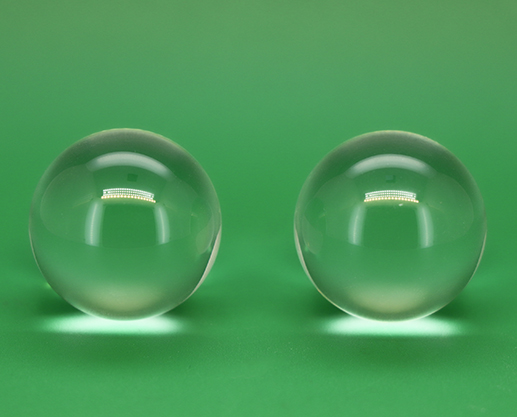
A ruby ball lens is a perfectly spherical lens made from synthetic ruby crystal. Ruby is a form of corundum (Al₂O₃) with a small amount of chromium (Cr³⁺), which gives it its characteristic red color.
In optical applications, ruby is valued not for its color, but for its:
Extreme hardness (Mohs hardness 9, second only to diamond)
High wear resistance
Excellent thermal stability
Stable refractive index
Strong chemical resistance
These properties make ruby ball lenses ideal for demanding optical and industrial environments.
Optical Characteristics of Ruby Material
Ruby has distinct optical properties that influence its performance as a lens material.
It has a relatively high refractive index, which allows efficient light focusing in compact geometries. It also exhibits good transmission in specific wavelength ranges, particularly in the red and near-infrared regions, although it is less transparent than optical glass in the full visible spectrum.
Because of its crystalline structure, ruby maintains excellent dimensional stability even under mechanical stress or temperature variation. This makes it highly reliable in precision optical assemblies.
How Ruby Ball Lenses Work
Ruby ball lenses operate based on spherical refraction principles. When light enters the curved surface, it is refracted and focused depending on the incidence angle and lens geometry.
Their spherical symmetry allows them to:
Focus light into small, precise spots
Collimate light from point sources
Improve coupling efficiency in fiber optic systems
Maintain stable optical alignment in mechanical systems
Due to their hardness and polish quality, ruby ball lenses maintain optical performance even after long-term mechanical contact or harsh operation.
Key Advantages of Ruby Ball Lenses
Ruby ball lenses offer a combination of optical performance and mechanical durability that is difficult to match with standard glass materials.
They are highly resistant to scratching, abrasion, and wear, making them suitable for systems involving repeated mechanical contact or high-friction environments.
Their thermal stability allows them to maintain consistent optical behavior under temperature fluctuations, which is critical in industrial and aerospace applications.
They also provide long service life, especially in precision devices where component degradation must be minimized.
Applications of Ruby Ball Lenses
Ruby ball lenses are used in a variety of high-performance optical and industrial systems.
In fiber optic communication, they are commonly used for coupling and aligning light between fibers and laser sources, especially in systems requiring long-term stability.
In precision sensors, ruby ball lenses are used in displacement sensors, optical encoders, and measurement devices where wear resistance is essential.
In medical equipment, they are used in minimally invasive probes and diagnostic devices where durability and biocompatibility are important.
In industrial inspection systems, ruby ball lenses are applied in high-precision measurement and alignment tools, especially in environments with mechanical stress or contamination risks.
They are also used in scientific instruments where stable optical performance is required under repeated use or harsh conditions.
Ruby Ball Lenses vs Glass Ball Lenses
Compared to H-K9L or BK7 glass ball lenses, ruby ball lenses offer significantly higher hardness and wear resistance.
Glass ball lenses are generally preferred for cost-sensitive and broadband visible-light applications, while ruby ball lenses are chosen for high-durability and high-precision environments.
Ruby lenses are more resistant to surface damage, making them suitable for systems involving repeated contact or mechanical positioning. However, they are typically more expensive and have more limited optical transmission ranges compared to optical glass.
Manufacturing and Precision Requirements
The manufacturing of ruby ball lenses requires advanced precision machining and polishing techniques.
Because ruby is an extremely hard material, shaping and polishing require specialized diamond tools. This ensures high surface quality and accurate spherical geometry.
Surface roughness must be extremely low to minimize scattering and maintain optical clarity. Any deviation in roundness can significantly affect optical performance, especially in fiber coupling applications.
Center accuracy and dimensional tolerance are also critical, as even microscopic errors can impact beam alignment and efficiency.
Selection Considerations
When selecting ruby ball lenses, several factors must be evaluated.
Diameter size directly affects focal properties and coupling efficiency. Smaller diameters are typically used in fiber optic systems, while larger ones are used in sensing and imaging applications.
Surface quality is essential for minimizing optical loss and ensuring consistent beam behavior.
Refractive index consistency ensures predictable optical performance across production batches.
Environmental conditions such as temperature, vibration, and mechanical contact should also be considered, as these are areas where ruby lenses provide significant advantages over glass alternatives.
Conclusion
Ruby ball lenses are premium optical components designed for high-durability and precision applications. Their combination of extreme hardness, thermal stability, and reliable optical performance makes them ideal for fiber optics, sensing systems, medical devices, and industrial measurement equipment.
While more expensive than traditional glass ball lenses, their long service life and resistance to wear make them a preferred choice in demanding environments where stability and reliability are critical.