


H-K9L Half Ball Lenses: Optical Properties, Applications, and Engineering Guide
May. 22, 2026
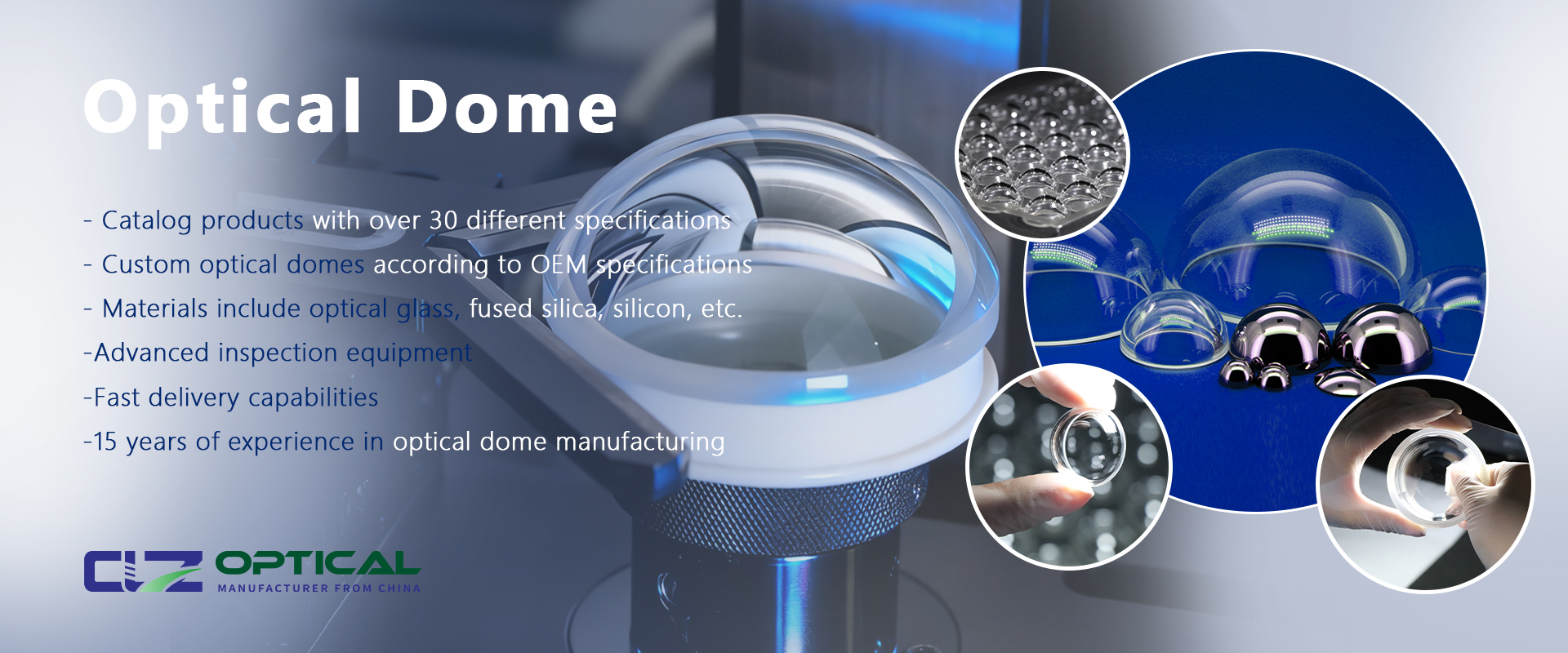
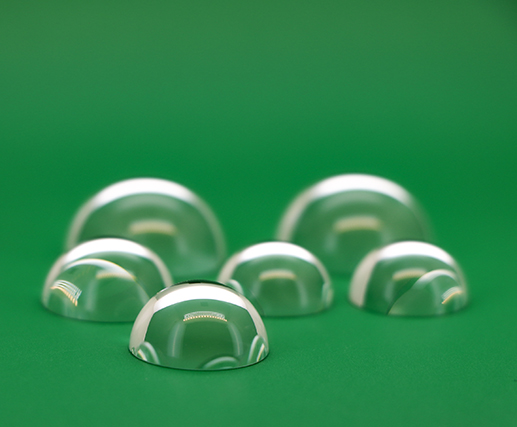
H-K9L half ball lenses are precision optical components derived from full ball lenses, cut into hemispherical or plano-spherical forms. They are widely used in fiber optics, laser systems, sensing modules, and compact imaging devices where controlled light shaping and stable optical coupling are required.
Compared with full ball lenses, half ball lenses provide easier integration into optical assemblies while maintaining strong focusing and collimation performance.
What Is an H-K9L Half Ball Lens?
An H-K9L half ball lens is a hemispherical optical element made from H-K9L glass. One side is a polished spherical surface, while the opposite side is flat or slightly modified depending on application requirements.
This structure allows the lens to be mounted directly onto flat substrates, optical fibers, or mechanical housings, improving stability and alignment precision in compact optical systems.
Material: H-K9L Optical Glass
H-K9L is a widely used optical crown glass with performance characteristics similar to BK7. It is favored in industrial and photonic applications due to its balance of optical clarity, mechanical strength, and cost efficiency.
Key properties include:
High transmission in the visible spectrum (400–700 nm)
Stable refractive index for consistent optical performance
Good chemical resistance and durability
Excellent homogeneity and low optical defects
Suitable for precision polishing and coating
These properties make H-K9L suitable for both standard and precision-grade optical components.
Optical Working Principle of Half Ball Lenses
H-K9L half ball lenses manipulate light through their hemispherical geometry.
When light enters or exits the curved surface, it is refracted and redirected depending on the incidence angle and positioning. Because one side is flat, the lens can be mounted in a fixed orientation, which simplifies optical alignment.
In practical use, the lens can:
Focus light into a small spot
Collimate divergent beams from point sources
Improve coupling efficiency between optical fibers and emitters
Shape beam profiles in compact optical modules
The combination of spherical refraction and flat mounting surface makes it highly practical for engineered optical systems.
Key Optical Features
H-K9L half ball lenses offer stable and predictable optical performance in visible-light applications.
They provide strong light focusing ability with relatively low distortion over short optical paths. The spherical surface ensures symmetrical refraction, while the flat side enables mechanical integration without complex alignment systems.
The material’s uniform refractive index contributes to consistent beam behavior across production batches, which is critical in industrial and communication systems.
When coated with anti-reflective layers, transmission efficiency can be further improved and surface reflection significantly reduced.
Applications of H-K9L Half Ball Lenses
H-K9L half ball lenses are used in a wide range of optical and photonic systems where compact design and stable alignment are required.
In fiber optic systems, they are commonly used for coupling light between laser diodes and optical fibers. Their flat surface allows direct mounting, which improves stability and reduces alignment errors.
In laser modules, they help focus or collimate beams in small spaces, making them suitable for barcode scanners, laser pointers, and sensing devices.
In optical sensors, half ball lenses are used to improve light collection efficiency and enhance signal strength in compact detection systems.
They are also widely applied in medical optics, such as diagnostic instruments and minimally invasive imaging probes, where space constraints are critical.
In industrial automation and machine vision, these lenses help achieve stable illumination and accurate imaging in compact inspection systems.
Advantages of H-K9L Half Ball Lenses
One of the main advantages of H-K9L half ball lenses is their ease of integration. The flat surface allows direct mounting onto optical platforms, which simplifies mechanical design and improves system stability.
They provide reliable optical performance in visible-light applications and maintain good transmission efficiency when properly coated.
Compared to full ball lenses, half ball designs offer better structural stability in fixed assemblies. They are also easier to align in fiber coupling systems, reducing assembly complexity and production cost.
In addition, H-K9L glass ensures a good balance between optical quality and material cost, making it suitable for large-scale industrial use.
Comparison with Full Ball Lenses
While full ball lenses provide symmetrical optical behavior in all directions, half ball lenses are more practical in engineered systems.
Full ball lenses are typically used in free-space or flexible alignment systems. In contrast, half ball lenses are preferred when mechanical fixation is required.
The flat surface of the half ball lens enables precise positioning, which improves repeatability and reduces system drift over time.
Manufacturing Considerations
The performance of H-K9L half ball lenses depends heavily on manufacturing precision.
The spherical surface must be polished to high optical quality to ensure minimal scattering and accurate light focusing. The flat surface must maintain strict flatness and parallelism to avoid optical misalignment.
Centering accuracy between the spherical and flat surfaces is critical, especially in fiber coupling applications where small deviations can significantly reduce efficiency.
Surface coatings, such as anti-reflective layers, are often applied to enhance transmission and improve performance consistency.
Selection Criteria
When selecting H-K9L half ball lenses, several parameters should be considered.
Diameter size affects focal length and coupling efficiency. Smaller diameters are typically used in compact optical systems, while larger sizes support higher light collection efficiency.
Surface quality determines scattering loss and beam quality, especially in laser applications.
Refractive index consistency ensures stable optical behavior across different batches, which is important in mass production environments.
Mounting requirements should also be considered, as the flat surface must match the mechanical design of the optical system.
Conclusion
H-K9L half ball lenses are essential components in modern optical engineering, offering a practical combination of compact structure, stable alignment, and reliable optical performance.
Their ability to efficiently focus and couple light in constrained spaces makes them ideal for fiber optics, laser systems, medical devices, and industrial imaging applications.
With precise manufacturing and proper system integration, H-K9L half ball lenses provide high performance and long-term stability across a wide range of optical applications.