




Achromatic Lenses: Working Principles, Types, Applications, and Selection Guide
May. 22, 2026
Achromatic lenses are widely used optical components designed to improve image quality by reducing chromatic aberration. In many optical systems, simple lenses cannot focus all wavelengths of light at the same point, which leads to color fringing and blurred edges. Achromatic lenses solve this problem by combining different optical materials to deliver sharper and more accurate imaging performance.
What Is an Achromatic Lens?
An achromatic lens is a compound lens system engineered to minimize chromatic aberration. It typically brings two wavelengths of light—commonly red and blue—into the same focal plane, significantly improving image clarity.
This is achieved by combining optical glass materials with different dispersion properties, most often:
Crown glass with low dispersion
Flint glass with high dispersion
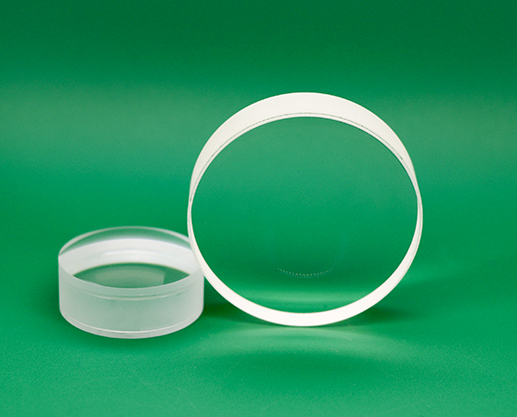
These elements are bonded or assembled together to form a single optical unit that corrects color distortion.
How Achromatic Lenses Work
Chromatic aberration occurs because different wavelengths of light bend at different angles when passing through a lens. Blue light bends more strongly than red light, resulting in multiple focal points and visible color fringing.
Achromatic lenses correct this issue through optical balancing:
They use two or more lens elements with different refractive indices. Each element is shaped and selected so that its dispersion properties counteract the other. As a result, two key wavelengths are brought into a common focus, reducing color separation and improving sharpness.
This makes the image clearer, especially in systems that rely on broadband visible light.
Types of Achromatic Lenses
There are several common configurations used in optical systems.
Achromatic Doublet Lenses
This is the most widely used structure. It consists of two lens elements cemented together. The design is compact and efficient, making it suitable for imaging systems, microscopy, and laser focusing applications.
Air-Spaced Achromatic Lenses
In this design, the two optical elements are separated by an air gap instead of being cemented. This structure improves thermal stability and is often used in high-power laser systems where heat resistance is critical.
Cemented Achromatic Lenses
These lenses are permanently bonded using optical adhesive. They offer a stable, compact design and are commonly used in industrial imaging and general optical instruments.
Multi-Element Achromatic Systems
Some advanced optical systems use more than two elements to achieve higher correction accuracy. These are typically found in precision scientific equipment and high-end optical devices.
Key Characteristics of Achromatic Lenses
Achromatic lenses are valued for their ability to improve optical performance in demanding applications. Their main characteristics include strong correction of chromatic aberration, stable imaging across the visible spectrum, and high transmission efficiency when properly coated.
High-quality models often include anti-reflective coatings to reduce light loss and improve contrast. Surface precision and material purity also play a critical role in determining overall performance.
Applications of Achromatic Lenses
Achromatic lenses are used across a wide range of industries where image clarity and optical precision are required.
In microscopy systems, they improve resolution and reduce color distortion, allowing researchers to observe fine biological or material structures more accurately.
In laser systems, they are used to focus and shape laser beams with minimal distortion, supporting applications such as engraving, cutting, and medical procedures.
In imaging and machine vision systems, achromatic lenses enhance inspection accuracy and help detect small defects in industrial production lines.
Scientific instruments such as spectrometers, telescopes, and optical measurement devices also rely on achromatic lenses to ensure reliable data and precise observations.
They are further applied in industrial inspection systems where consistent image quality is essential for quality control and automation processes.
Advantages of Using Achromatic Lenses
The main advantage of achromatic lenses is their ability to significantly reduce chromatic aberration compared to single-element lenses. This leads to clearer imaging, better edge definition, and more accurate color reproduction.
They also provide stable optical performance across a broad wavelength range, making them suitable for multi-color or broadband light sources. In addition, when properly manufactured, they offer high transmission efficiency and excellent compatibility with precision optical systems.
Achromatic Lenses in Comparison with Other Optical Lenses
Unlike standard single lenses, achromatic lenses are specifically designed to correct color dispersion. While they improve chromatic aberration, they may not fully correct spherical aberration.
Other optical designs, such as aspheric lenses, focus on reducing spherical distortion but do not address color separation. In many advanced optical systems, both types are combined to achieve optimal performance, with each lens solving different optical challenges.
How to Select the Right Achromatic Lens
Choosing the correct achromatic lens depends on several key factors.
The first consideration is the operating wavelength range. Different applications require optimization for visible light, near-infrared, or other spectral bands.
Focal length is another important factor, as it determines magnification, working distance, and beam control behavior.
Aperture size affects light-gathering capability and resolution, especially in low-light or high-precision systems.
Coating selection also plays a major role. Anti-reflective coatings help improve transmission efficiency and reduce unwanted reflections.
Finally, environmental conditions such as temperature stability, vibration resistance, and mechanical durability should be considered, especially in industrial or high-power laser applications.
Manufacturing Considerations
The performance of achromatic lenses depends heavily on manufacturing quality. Precision grinding and polishing are required to ensure accurate curvature and smooth optical surfaces.
Proper alignment of optical axes is essential to avoid residual aberrations. High-quality optical glass selection also influences dispersion control and transmission efficiency.
Advanced coating technologies improve durability and optical performance, while strict inspection processes such as interferometric testing ensure consistency and accuracy.
Poor manufacturing control can result in reduced image quality, residual color errors, and lower system performance.
Future Development Trends
As optical systems continue to evolve, achromatic lenses are also advancing in design and manufacturing.
Modern trends include hybrid structures that combine achromatic and aspheric elements for improved correction performance. Broadband coatings are being developed to enhance transmission across wider spectral ranges.
Miniaturization is becoming increasingly important for compact imaging and portable devices. At the same time, improvements in thermal stability and laser damage resistance are expanding their use in high-power industrial systems.
These developments are driving wider adoption in automation, robotics, medical imaging, and advanced manufacturing.
Conclusion
Achromatic lenses play a critical role in modern optical engineering by effectively reducing chromatic aberration and improving image clarity. Their ability to deliver sharp, color-accurate imaging makes them essential in microscopy, laser processing, machine vision, and scientific instrumentation.
A proper understanding of their structure, working principles, and selection criteria helps ensure optimal performance in any optical system.