


A Guide to Ball Lenses and How to Choose the Right Lens for Your Application
Aug. 13, 2025
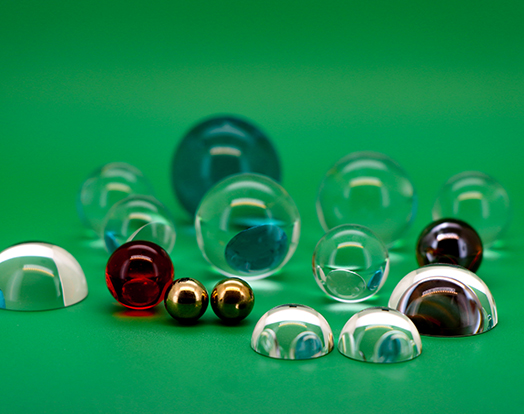
Ball lenses have become a vital component in modern optics, particularly in applications that demand efficient signal coupling and precise light management. They are commonly used to enhance the coupling efficiency between fibers, emitters, transmitters, receivers, and detectors. In addition, ball lenses serve as objective lenses in systems such as barcode scanners, medical endoscopes, and compact imaging devices.
One of the defining features of a ball lens is its short back focal length, which reduces the distance required between the lens and the optical fiber. This characteristic enables highly accurate light coupling, especially in applications where space is limited.
Ball lenses are frequently used in pairs. Typically, one lens functions as a collimator to correct the output of an optical fiber or diode, while the other focuses the collimated light back into the coupled fiber. For smaller or space-constrained applications, half-ball lenses are often preferred due to their compact form factor.
Why Choose Ball Lenses over GRIN Lenses?
Gradient Index (GRIN) lenses are sometimes used for similar purposes as ball lenses. However, ball lenses offer several unique advantages:
Compact Size and Cost Efficiency: Ball lenses are generally smaller and less expensive than GRIN lenses.
Ease of Mounting and Alignment: Their rotational symmetry makes positioning and alignment simpler.
Environmental Stability: The focal length of ball lenses is less sensitive to environmental changes such as temperature fluctuations. Since a shift in focal length can reduce coupling efficiency, ball lenses offer more reliable performance under varying conditions.
Common Materials Used for Ball Lenses
The choice of material plays a critical role in determining the performance, durability, and suitability of ball lenses for specific applications. Below are the most widely used materials and their characteristics:
Fused Silica (Quartz)
Properties: High UV transmission from 200 nm to 2.2 μm, excellent thermal stability due to its low coefficient of thermal expansion.
Applications: Ideal for demanding applications that involve ultraviolet, visible, and near-infrared wavelengths. Frequently used in laser systems, spectroscopy, and high-precision imaging equipment.
Sapphire
Properties: High refractive index with low spherical aberration, extreme mechanical strength, excellent chemical stability, and broad transmission from 200 nm to 5,000 nm+.
Applications: Suitable for harsh environments, high-power laser systems, aerospace optics, and situations requiring exceptional durability.
Ruby
Properties: Very hard and resistant to wear from metals and chemicals. The red coloration enhances visibility, making it easier to handle.
Applications: Used in industrial and mechanical environments where wear resistance is essential.
Cubic Zirconia
Properties: High refractive index, excellent wear resistance, strong resistance to chemical corrosion.
Applications: Widely applied in optical telecommunications, transmitters, and receivers where high coupling efficiency is required.
Ceramic
Properties: Strong resistance to corrosion, abrasion, oxidation, and stable performance under extreme temperatures.
Applications: Found in chemical pumps, flow meters, bearings, gages, valves, and down-hole pumps where contact with acids, salts, and harsh chemicals is common.
BK7 and Other Optical Glasses
Properties: Borosilicate glass such as BK7 provides chemical resistance and low thermal expansion, while high-index glasses like BAF-8 are specifically suited for fiber coupling.
Applications: Frequently used as pre-forms for aspheric lenses and in general optical systems requiring stable and affordable materials.
Key Factors to Consider When Choosing a Ball Lens
When selecting a ball lens for a specific application, it is important to evaluate not only the material but also other design-related parameters:
Focal Length and Back Focal Length: Directly affect coupling efficiency and performance.
Diameter: Smaller diameters often reduce spherical aberration and deliver better precision.
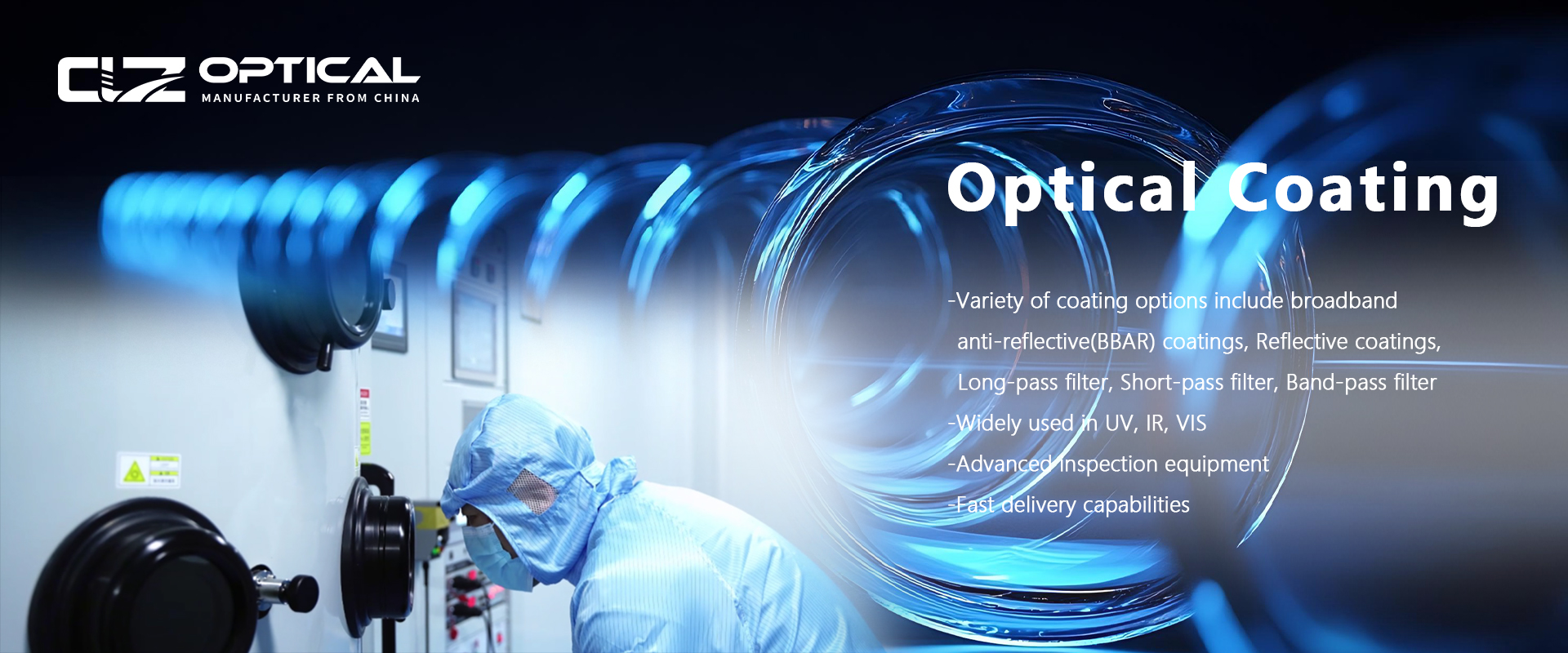
Optical Coatings: Anti-reflective (AR) coatings can significantly improve transmission and minimize reflection losses.
Environmental Requirements: Consider whether the lens must withstand extreme heat, chemical exposure, or mechanical stress.
Conclusion
Ball lenses are versatile optical components that enable high-performance coupling and precise light management across a wide range of industries. With materials ranging from fused silica and sapphire to ceramics and polymers, each option offers unique benefits tailored to specific applications.
The correct choice of ball lens depends on the operating environment, wavelength requirements, durability needs, and budget considerations. By carefully evaluating these factors, engineers and procurement professionals can ensure they select the most suitable lens for their application, maximizing both efficiency and reliability.