


What are the advantages of High Index Ball Lenses in optical systems?
Aug. 15, 2025
High Index Ball Lenses are increasingly recognized as a critical component in modern optical systems, particularly where space efficiency and precision performance are required. Compared to standard ball lenses, they deliver unique optical and structural advantages that make them highly valuable across various industries.
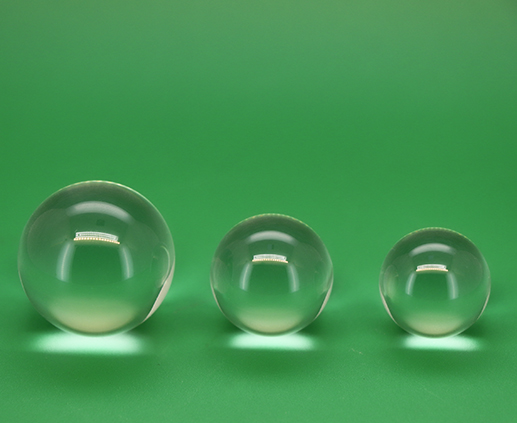
1. Higher Refractive Index for Compact Design
The core advantage of high index ball lenses lies in their elevated refractive index, often ranging between 1.8 to 2.0. This property allows optical designers to achieve shorter back focal lengths (BFL), enabling miniaturized assemblies without sacrificing optical efficiency. This is particularly beneficial in fiber optic communications, medical imaging devices, and consumer electronics, where compactness is essential.
2. Enhanced Coupling Efficiency
One of the primary uses is fiber-to-fiber and fiber-to-detector coupling. By concentrating light more efficiently, high index ball lenses minimize optical loss and improve signal transmission. In telecom systems, this translates into better data throughput and reliability.
3. Versatile Applications in Photonics
High index ball lenses are widely applied in:
Laser systems – for beam collimation and focusing.
Endoscopy and medical devices – for clear imaging in constrained spaces.
LED and photodiode coupling – for maximizing light output.
Optical sensors and detectors – for higher accuracy measurements.
4. Improved Optical Performance
They offer low spherical aberration, high transmission rates, and broad wavelength compatibility. This makes them ideal for high-precision imaging and metrology applications where even slight distortion is unacceptable.
5. Cost and Manufacturing Benefits
Despite their advanced performance, high index ball lenses are relatively easy to manufacture in various diameters, making them a cost-effective choice for OEM integration. The availability of customization in diameter, tolerance, and coatings further enhances their value.
How to select the right High Index Ball Lenses for your project?
1. Define the Optical Requirements
Refractive Index Range: Depending on the application, lenses with a higher refractive index (1.8–2.0) may be required for shorter BFL.
Transmission Wavelengths: Select lenses with material properties aligned to your working spectrum (UV, visible, or IR).
Beam Collimation or Focusing Needs: Ensure the lens design matches the intended light manipulation task.
2. Choose the Right Material
Common materials include N-LASF31, SF11, sapphire, and custom high-index glasses. Each material offers different durability, transmission ranges, and cost implications. For instance, sapphire ball lenses are highly resistant to scratches and heat, making them suitable for harsh environments.
3. Evaluate Size and Tolerance Options
Diameter Range: From sub-millimeter (for micro-optics) to several millimeters (for high-power lasers).
Tolerance Precision: Tight tolerance lenses reduce alignment errors and improve optical efficiency.
4. Consider Coatings and Customization
Anti-reflective (AR) coatings, hydrophobic coatings, and wavelength-specific customizations significantly enhance performance. Procurement teams should clarify coating needs upfront to avoid redesign costs later.
5. Quality Control and Supplier Reliability
Reliable suppliers often provide full optical test reports, including surface quality, roundness, and transmission data. Working with ISO-certified manufacturers ensures consistency for bulk procurement.
6. Cost and Lead Time
High index ball lenses are generally cost-efficient, but bulk orders, custom diameters, and specialized coatings can impact price and delivery. Buyers should request quotation comparisons across multiple vendors to balance performance and cost.
For industries demanding miniaturization, efficiency, and precision, high index ball lenses provide a unique combination of performance and affordability, ensuring their evergreen role in optical system design.