

Optical Filters
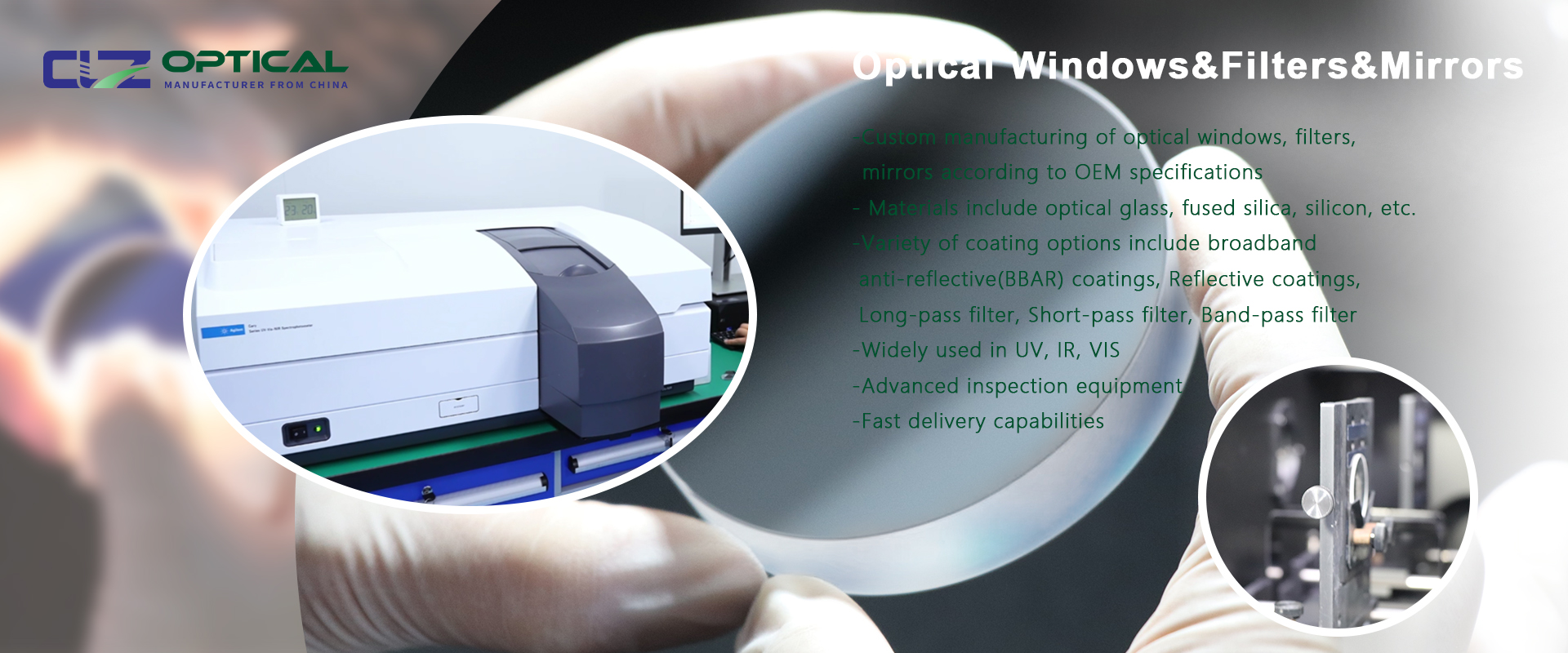
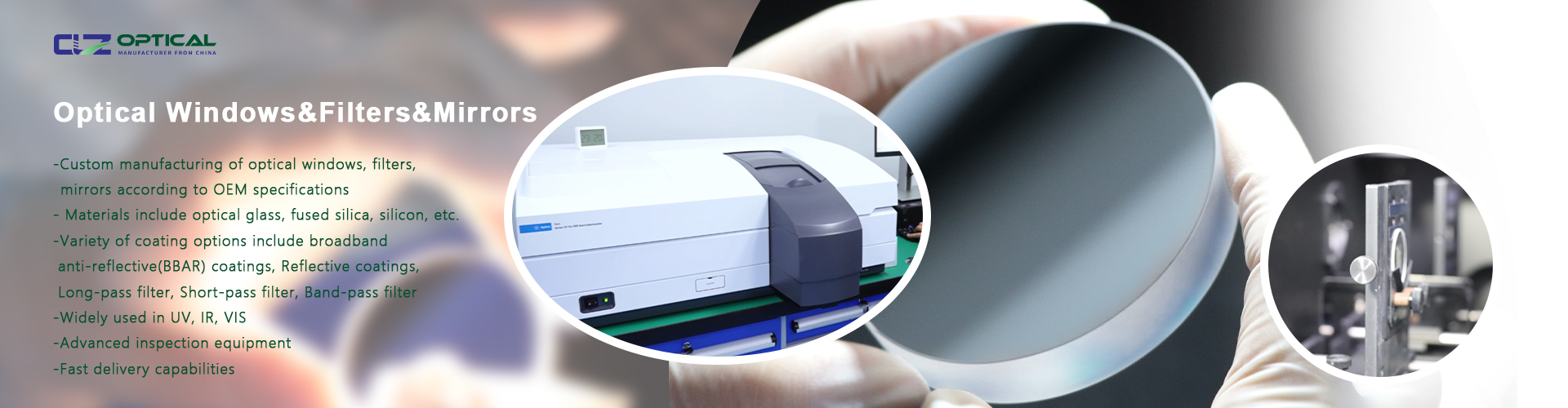
Optical Filters are a category of crucial optical components, with their core function being to selectively transmit, reflect, block, or attenuate specific spectral wavelengths. In modern optical systems, optical filters play an indispensable role and are widely applied across various industries and product sectors, providing precise spectral control solutions for a diverse range of optical applications.
Product Classification
Classification by Function
Bandpass Filters: These filters allow light within a specific wavelength range to pass through while blocking light at other wavelengths. They are suitable for applications requiring precise selection of specific spectral regions.
Longpass Filters: These filters transmit long-wavelength light and block short-wavelength light, commonly used for separating light signals across different wavelength bands.
Shortpass Filters: Contrary to longpass filters, shortpass filters transmit short-wavelength light and block long-wavelength light, meeting specific spectral separation requirements.
Dichroic Filters: These filters can selectively reflect or transmit light based on its wavelength and polarization state, finding significant applications in fields such as fluorescence microscopy.
Notch Filters: These filters exhibit high attenuation characteristics at specific wavelengths, effectively suppressing light interference at those wavelengths.
Cold Mirrors: These mirrors reflect visible light and transmit infrared light, used in applications requiring the separation of visible and infrared light.
Hot Mirrors: In contrast to cold mirrors, hot mirrors reflect infrared light and transmit visible light, protecting optical components from infrared radiation damage.
Color Filters: These filters selectively transmit light of specific colors and are widely used in photography, displays, and other fields.
Classification by Manufacturing Process
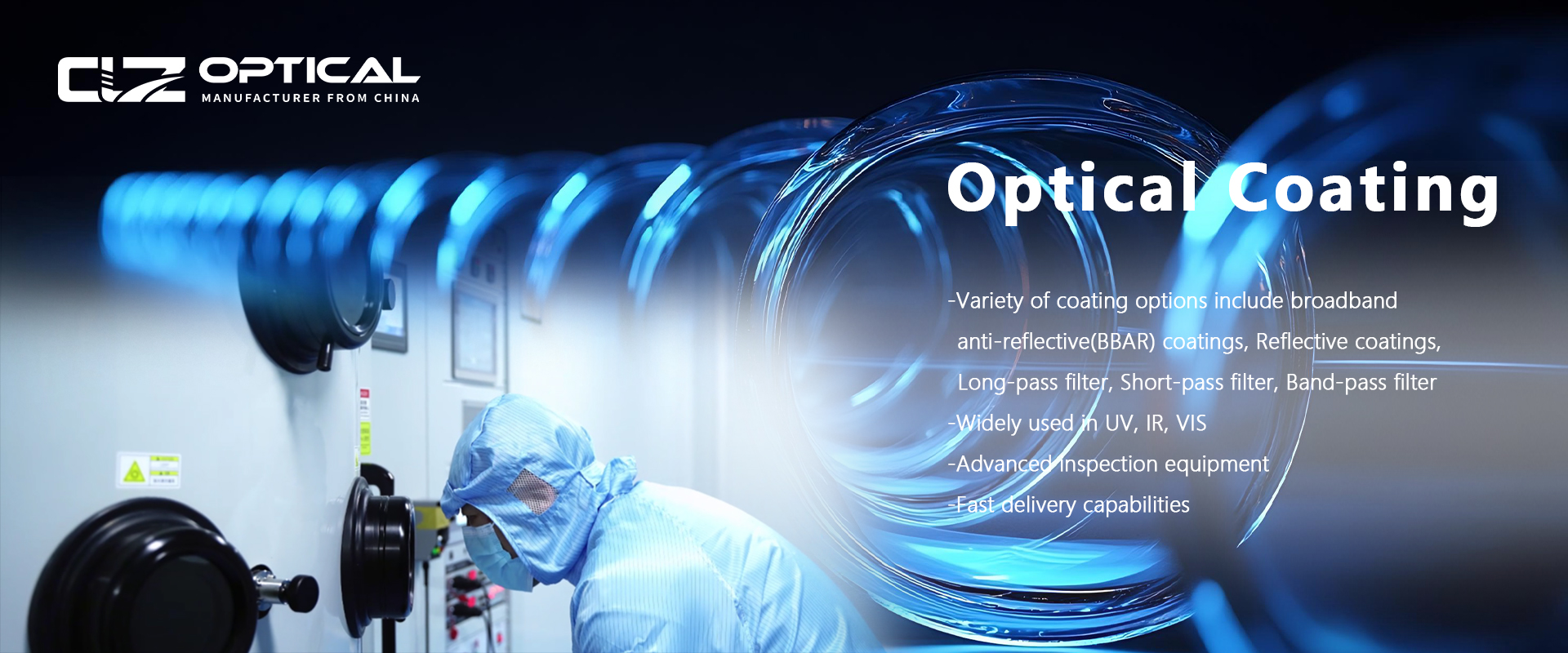
Interference Filters: These filters utilize the principle of multilayer thin-film interference to achieve spectral selection, offering advantages such as high precision and high selectivity.
Color Absorption Filters: These filters achieve their filtering function by absorbing light at specific wavelengths, with lower costs and suitability for applications with less stringent precision requirements.
Product Application Areas
The various optical filters supplied by CLZ Optical are widely applied in the following fields:
Spectral Analysis: In spectral analysis instruments used in chemistry, physics, and other fields, filters are employed to select specific spectral bands, enhancing the accuracy and sensitivity of analysis.
Biomedical Imaging: In biomedical imaging equipment such as fluorescence microscopes and confocal microscopes, filters separate excitation light from emission light, improving imaging contrast and resolution.
Machine Vision Inspection: In machine vision systems used in industrial automation production, filters are used to filter out interfering light, enhancing image quality and enabling more precise detection and recognition.
Fluorescence Microscopy Observation: Filters are a core component of fluorescence microscopes, selectively transmitting fluorescence signals to allow observers to clearly see fluorescently labeled cells or tissue structures.
Optoelectronic Detection Systems: In optoelectronic detectors, filters are used to suppress background light interference, improving the signal-to-noise ratio and detection sensitivity of the detectors.
Customization Services
CLZ Optical can customize optical filters according to customers' specific needs. Whether it involves special spectral characteristics, unique size specifications, or personalized manufacturing processes, our professional technical team and advanced production equipment enable us to provide customized filter solutions that meet customer requirements, supporting scientific research exploration and industrial innovation.