


Why Are Smaller Optical Glass Domes Becoming More Common?
Sep. 09, 2026
Why Are Smaller Optical Glass Domes Becoming More Common?
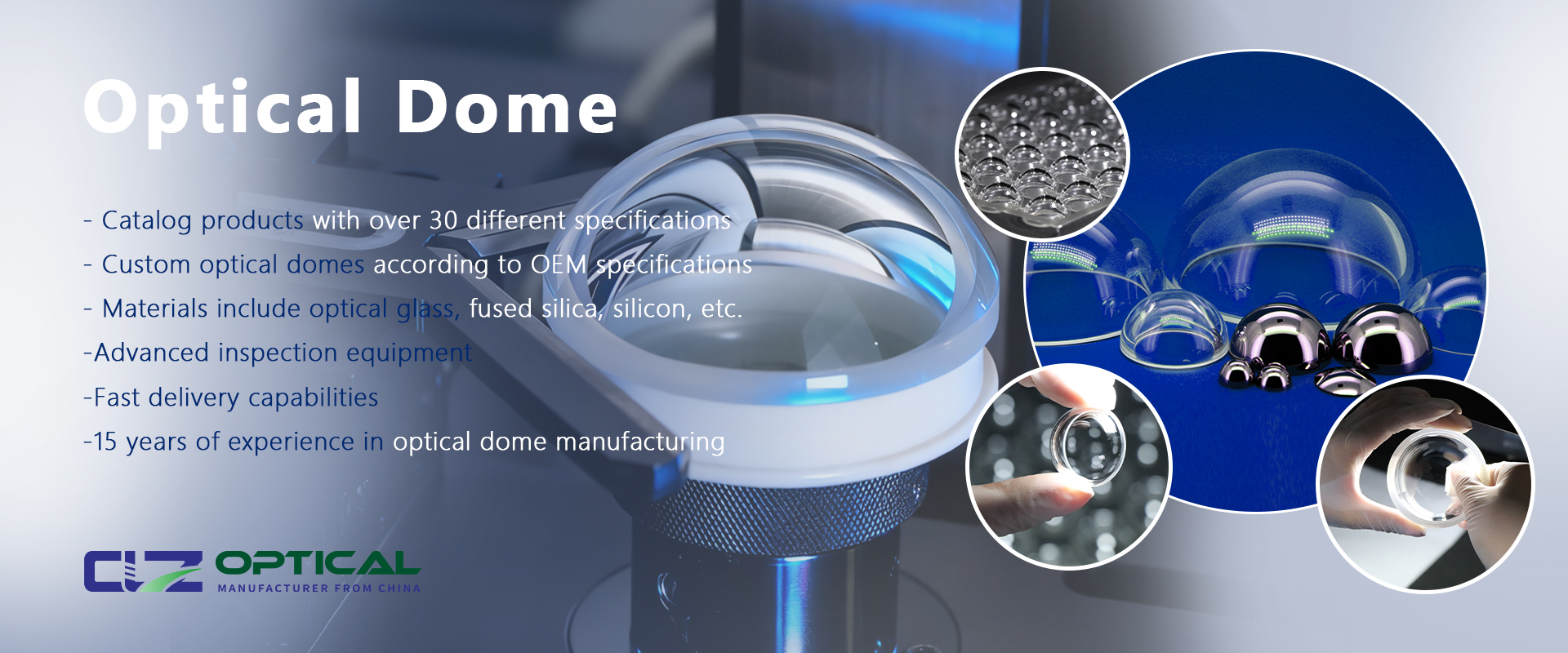
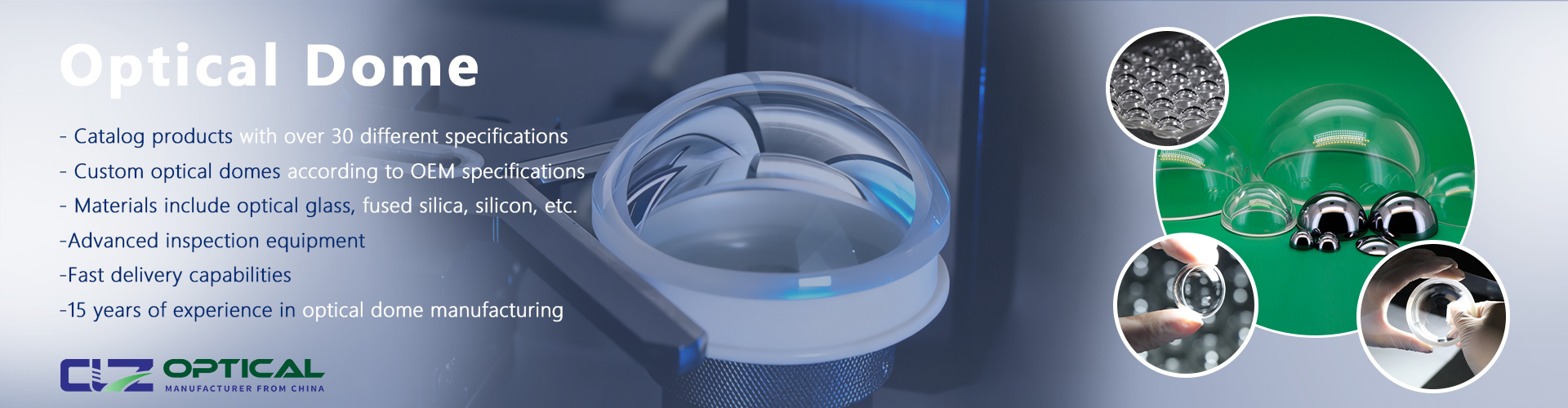
When cameras and sensors are designed for UAVs, robotics, portable devices, and compact imaging systems, space and weight become important constraints. Optical Glass Domes are increasingly available in smaller sizes to match these systems. The trend is closely linked to small optical dome lenses, miniature optical windows for sensors, and custom optical glass domes, while key specifications include clear aperture, field of view (FOV), and surface figure.
Why Smaller Optical Glass Domes Fit Modern Sensors
Modern sensor assemblies often combine lenses, detectors, electronics, and protective structures in a limited space. A smaller dome can reduce the space required around the optical assembly while providing the necessary environmental protection.
Smaller Optical Glass Domes Save Packaging Space
A 20 mm dome occupies far less radial space than a 100 mm dome. This can simplify compact camera housings and leave more room for electronics or mechanical components.
However, the actual system-size reduction depends on the lens, mount, housing, and sealing structure. Smaller is not automatically better; the dome still needs enough clear aperture and mechanical strength.
Small Optical Dome Lenses Can Reduce Material Use
When material, thickness, and design conditions are comparable, a smaller dome generally requires less optical material and can potentially reduce mass.
This is especially useful for UAVs and other platforms where payload weight is limited. The goal, however, is not simply to use the smallest possible dome. The selected size must still meet the optical and mechanical requirements.
How Smaller Optical Glass Domes Support Infrared Systems
Compact infrared cameras are another application driving interest in smaller dome designs. IR domes must transmit the required wavelength while protecting sensors from moisture, dust, temperature changes, and mechanical exposure.
Small Infrared Optical Domes Need the Right Material
Material selection depends on the operating wavelength. Commercial infrared dome manufacturers offer materials such as Germanium, ZnS, ZnSe, and sapphire for different spectral ranges.
For example, ECOPTIK lists infrared dome diameters from 10 mm to 350 mm, showing that small infrared domes are already available as commercial products.
Smaller Optical Glass Domes Still Need Adequate FOV
A dome's diameter cannot be selected independently from the optical system. If the diameter is reduced too far, the available clear aperture may become insufficient for the required field of view.
Engineers therefore need to evaluate the lens, detector, dome geometry, aperture, and FOV together before determining the final dome size.
Smaller Optical Glass Domes vs. Larger Domes
| Factor | Smaller Dome | Larger Dome |
|---|---|---|
| Packaging | Better for compact housings | Requires more space |
| Material use | Potentially lower | Generally higher |
| Weight | Potentially lower | Usually higher |
| Optical aperture | Suitable for smaller systems | Better for larger apertures |
| Wide FOV | Depends on dome geometry | More design flexibility |
There is no universal winner. The right choice is the dome that meets the complete optical and mechanical specification without unnecessary size or material.
What Is Driving Demand for Smaller Optical Glass Domes?
Miniature Optical Domes for UAVs and Robotics
UAVs and robotic platforms typically have limited space and payload capacity. Rayotek, for example, lists UAV and RPV camera covers among its applications and reports dome manufacturing from 3 mm to 2 m in diameter.
This does not mean every UAV requires a small dome. The required diameter still depends on the camera aperture, FOV, environmental conditions, and mounting structure.
Smaller Optical Glass Domes for Compact Sensors
Modern sensor modules increasingly combine optics, detectors, electronics, and mechanical structures into compact assemblies. A dome that matches the optical assembly can simplify the interface between the protective window and housing.
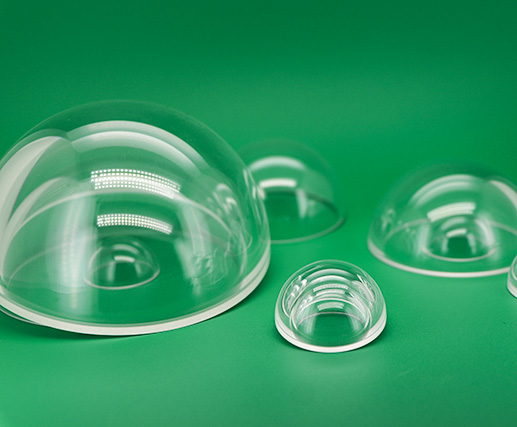
RZ Optics reports precision optical dome diameters from 15 mm to 125 mm, while AOS Optics lists infrared dome capabilities starting at 8 mm. These ranges demonstrate that compact dome configurations are established manufacturing options.
How to Choose the Right Small Optical Glass Dome
1. Check Optical Aperture and FOV
Determine the detector size, lens aperture, and required FOV before choosing the dome diameter. The dome must provide enough clear aperture for the complete optical path.
2. Select the Correct Optical Material
Choose the substrate according to the operating wavelength. Visible, NIR, MWIR, and LWIR systems can require different materials and coatings.
3. Define Measurable Precision Requirements
Specify surface figure, surface quality, centering, thickness tolerance, and clear aperture rather than using general terms such as "high precision."
For example, AOS Optics lists one infrared dome specification with surface accuracy down to PV 1/10 wavelength, centering below 30 arc seconds, and clear aperture above 90%.
4. Consider the Operating Environment
Temperature, pressure, humidity, vibration, abrasion, and aerodynamic exposure should be considered when selecting the material, thickness, coating, and mounting method.
Small Optical Glass Domes from CLZ Optical Co., Ltd.
For compact imaging and sensing systems, CLZ Optical Co., Ltd. can approach dome development according to the complete application rather than diameter alone.
For custom small optical domes, miniature optical windows for imaging sensors, and compact infrared dome covers, important specifications include dome diameter, wavelength, clear aperture, surface figure, centering accuracy, coating, and environmental requirements.

Conclusion
Smaller Optical Glass Domes are becoming more common because modern sensors increasingly require compact packaging, lower material use, and integration into UAVs, robots, and portable imaging systems. Commercial suppliers already offer dome diameters starting at only a few millimeters.
The key is not simply choosing the smallest possible dome. A suitable small-diameter optical dome must balance clear aperture, FOV, surface figure, material, and environmental requirements.
Contact CLZ Optical Co., Ltd. to discuss your drawings and application requirements for a custom Optical Glass Dome.
FAQ About Smaller Optical Glass Domes
Are smaller Optical Glass Domes always better?
No. The dome must be large enough to provide the required clear aperture, FOV, protection, and mechanical performance.
What is a typical small optical dome diameter?
There is no universal standard. Published commercial ranges show that some manufacturers offer domes starting around 3–8 mm, depending on material and application.
Why are small Optical Glass Domes useful for UAVs?
They can help engineers manage limited payload space and weight while providing optical protection. The final size should still be determined by the camera and sensor requirements.
Does a smaller dome reduce FOV?
Not necessarily. FOV depends on the complete optical design, including the lens, detector, dome geometry, and relative positioning.
What should I provide when requesting a custom Optical Glass Dome?
Provide the diameter, height or radius, thickness, material, wavelength, clear aperture, surface requirements, coating, temperature range, environmental conditions, and mounting requirements. A technical drawing is also helpful.