

Optical System and Optical Components of Laser Collimator Head
Dec. 26, 2025
In the field of laser applications, the optical system of the laser collimator head is a core functional module that ensures lasers perform precise operations, while optical components are the core carriers that constitute the system and drive it to function. The two complement each other and work in synergy, capable of precisely regulating the propagation path and beam characteristics of lasers to fully meet the practical application requirements of different scenarios such as industrial processing, precision measurement, and optical fiber communication.
Optical System of Laser Collimator Head: The "Directional Guide" of Lasers
The core function of the optical system of the laser collimator head is to precisely constrain and regulate the propagation direction of lasers. Even if the laser directly emitted from the laser generator has relatively high directionality, it still has a certain divergence angle. As the propagation distance increases, the laser spot will gradually expand, and the energy density will decrease accordingly. This not only makes it impossible to accurately act on the target object, but may also affect the operation effect due to energy dispersion.
The optical system of the laser collimator head is like a "straight channel" tailor-made for lasers. It integrates a variety of optical components inside and adopts sophisticated optical path design. Through the orderly cooperation of various components, it can "correct" and "shape" the divergent laser beam—first, it preliminarily converges the divergent light, and then converts it into a highly parallel collimated beam through a specific optical structure, allowing the laser to propagate stably along the preset fixed direction. This process can effectively counteract the natural divergence tendency of lasers, ensuring that after long-distance transmission, the laser can still accurately cover the target area and maintain a stable energy density and spot shape.
Core Optical Components: The "Functional Executors" of the System
Optical components are the key support for the optical system of the laser collimator head to achieve collimation functions. Different types of components assume specific responsibilities, forming a complete optical control chain from beam regulation, stray light filtering to polarization optimization, and jointly completing the high-precision collimation of lasers.
Collimating Lens
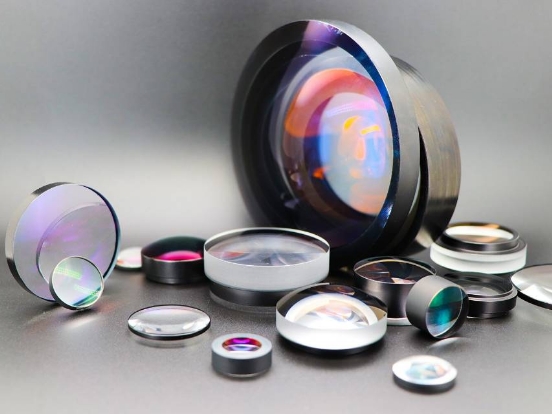
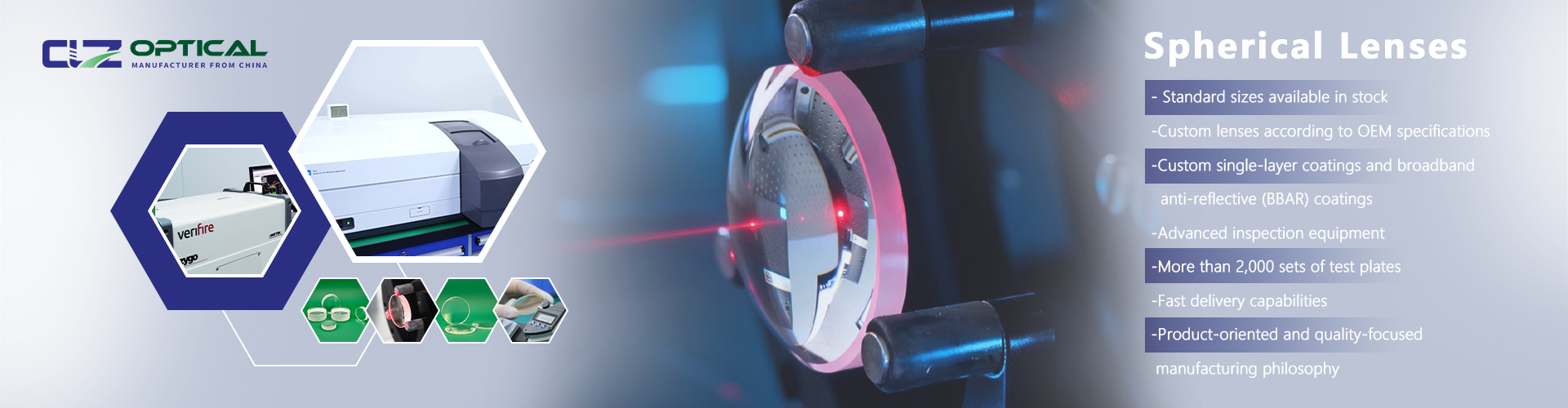
It is the most core component in the collimation system, directly determining the quality of laser collimation effect. Collimating lenses mostly adopt professional optical designs, such as plano-convex lenses, biconvex lenses or aspherical lenses. Their surface curvature is precisely calculated, enabling them to accurately act on divergent laser beams. When divergent light is incident on the lens surface, it will converge the originally fan-shaped divergent light and adjust it into parallel light through the refraction characteristics of the lens. High-quality collimating lenses can also effectively reduce optical aberrations such as spherical aberration and chromatic aberration, further improving the uniformity and stability of parallel light beams, and serving as the fundamental guarantee for laser collimation.
Optical Filter Component
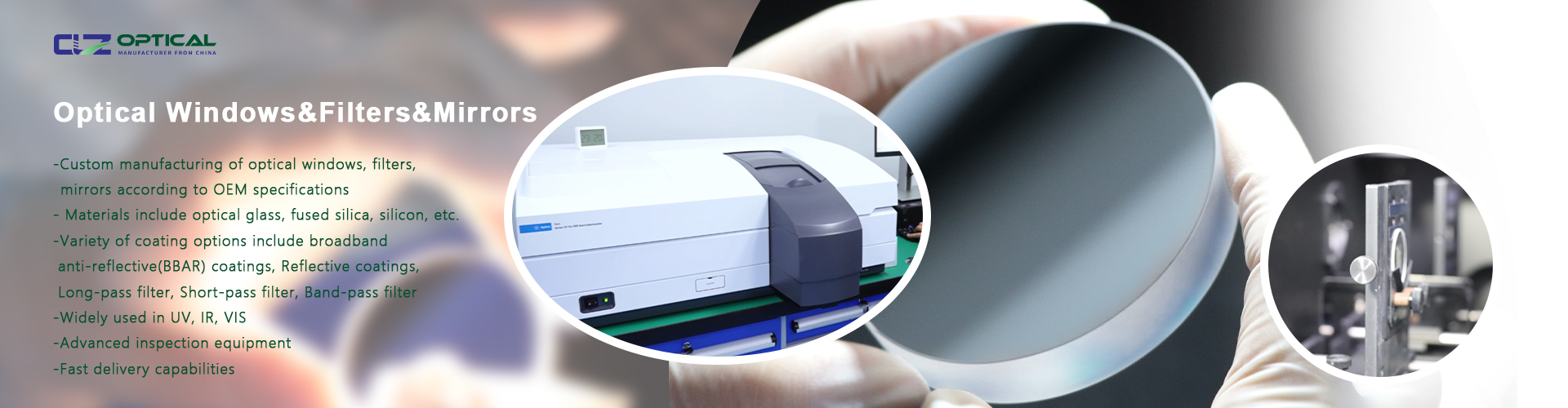
During the generation and transmission of lasers, there may be stray light that does not match the target wavelength. Such stray light may come from the sub-wave output of the laser generator or light interference from the external environment. If not filtered out, it will reduce the purity of the collimated laser and interfere with subsequent precise operations. The function of optical filter components (such as narrow-band filters and interference filters) is to accurately screen lasers of specific wavelengths, allowing only lasers of the target wavelength to pass through, while absorbing or reflecting all other stray light. Thus, the output parallel laser has extremely high monochromaticity and purity, avoiding the negative impact of stray light on the accuracy of laser ranging and the precision of industrial processing.
Polarization Control Component
This type of component (such as polarizers and wave plates) has a core function of adjusting and unifying the polarization state of lasers. Naturally emitted lasers may have multiple polarization directions. The disorder of polarization directions will lead to additional energy loss when the laser passes through optical components or during reflection and refraction processes, and may even affect the stability of the light beam. Polarization control components can filter out lasers with specific polarization directions, or convert randomly polarized lasers into linearly polarized light or circularly polarized light, keeping the vibration direction of the laser highly consistent. After polarization optimization, the laser can not only reduce energy loss during transmission, but also improve performance stability in specific application scenarios such as long-distance transmission, laser interferometry, and laser cutting and welding.
Significance of the Cooperation Between the Two
The optical system of the laser collimator head serves as an "integration platform" for optical components, providing precise installation positions and optical path planning for various components to ensure that the components can work in synergy according to the preset sequence and angle; while optical components are the "functional core" of the system, endowing the system with the actual ability to regulate the propagation characteristics of lasers. The two form an inseparable organic whole: without optical components, the optical system is just an empty shell without any functions; without the integration and optical path design of the system, a single optical component cannot independently complete the precise collimation of lasers.
Their efficient cooperation has successfully broken through the limitations of natural laser divergence, maximized the directional advantages of lasers, and greatly expanded the application boundaries of laser technology. Whether it is the precise long-distance measurement in laser rangefinders, the stable signal transmission in optical fiber communication, or the high-precision material processing in laser cutting machines, they are all inseparable from the synergistic effect of the optical system and optical components of the laser collimator head. It can be said that the combination of the two is an important cornerstone for the precise propagation and efficient application of laser technology.