


Sapphire and Sapphire windows
Jan. 04, 2026
Sapphire, also known as single-crystal aluminum oxide (Al₂O₃), is a highly regarded material in the field of optics due to its outstanding physical and optical properties. It is renowned for its wide transmission range, from ultraviolet (UV) to infrared (IR) spectrum. Sapphire's high refractive index, extremely high hardness, and excellent heat and chemical resistance make it ideal for demanding applications, including high-pressure windows, lenses, and substrates in aerospace, defense, and industrial systems. Its robustness allows it to withstand harsh environmental conditions, making sapphire the preferred choice for durable and reliable optical components in a variety of advanced technology applications.
I. Physical properties
1. Optical Properties
Refractive Index: No = 1.75449, Ne = 1.74663
Refractive Index Thermal Coefficient: 13.1 x 10⁻⁶
Transmission Range: 0.2 – 5.2 µm
2. Thermal Properties
Linear thermal expansion: 300 W/m·K at 27.2 K
Thermal conductivity: 763 J/kg·K
Specific heat capacity: 339 J/kg·K
Melting point: 2040 °C
3. Mechanical Properties
Density: 3.97 g/cm³
Knoop Hardness: 1800 and 2200
Young's Modulus: 335 GPa
Shear Modulus: 148.1 GPa
Bulk Modulus: 240 GPa
Poisson's Ratio: 0.25
II. There are two commonly used methods for growing sapphire crystals:
1. The Czochralski method (CZ method): The raw material is first heated to its melting point to form a molten liquid. A single-crystal seed crystal is then brought into contact with the surface of the molten liquid. Due to the temperature difference at the solid-liquid interface between the seed crystal and the molten liquid, supercooling occurs. The molten liquid then begins to solidify on the seed crystal surface, growing a single crystal with the same crystal structure as the seed crystal. Simultaneously, the seed crystal is pulled upwards at a very slow speed, accompanied by a certain rotational speed. As the seed crystal is pulled upwards, the molten liquid gradually solidifies at the liquid-solid interface of the seed crystal, eventually forming an axisymmetric single-crystal ingot.
2: The Kyropoulos method (KY method), also known as the Kjeldahl method, is similar in principle to the Czochralski method. The raw material is first heated to its melting point to form a molten solution. A seed crystal (also called a seed rod) is then placed on the surface of the molten solution. At the solid-liquid interface between the seed crystal and the molten solution, a single crystal with the same crystal structure as the seed crystal begins to grow. The seed crystal is pulled upwards at a very slow rate, but after a period of time to form a crystal neck, once the solidification rate at the interface between the molten solution and the seed crystal stabilizes, the seed crystal is no longer pulled upwards or rotated. The single crystal is then gradually solidified from top to bottom by controlling the cooling rate, eventually forming a single crystal ingot.
III. Sapphire Single-Crystal Crystal Orientation: C-axis, M-axis, R-axis, A-axis
1. C-axis Sapphire Wafers
C-axis sapphire substrates are used to grow III-V and II-VI group metal thin films, such as gallium nitride, enabling the production of blue LEDs, laser diodes, and infrared detectors. This is primarily because the process of growing sapphire crystals along the C-axis is mature, relatively low-cost, and offers stable physicochemical properties. Epitaxy on the C-plane is also a mature and stable technology. The C-axis exhibits optical properties, while other axes exhibit negative optical properties; the C-plane is planar and best suited for cutting.
2. M-plane sapphire wafers: The M-plane has a stepped serrated shape, making it difficult to cut and prone to cracking. It is mainly used to grow non-polar/semi-polar GaN epitaxial films to improve luminescence efficiency.
3. A-type Sapphire Wafers
The A-type substrate has significantly higher hardness than the C-type substrate, specifically in terms of wear resistance, scratch resistance, and high hardness; the A-face has a Z-shaped serrated surface, making it easier to cut; the A-type substrate produces a uniform permittivity/dielectric and is highly insulating, making it suitable for use in hybrid microelectronics. High-temperature superconductors can be produced by growing crystals on an A-type substrate.
4. The R-axis is slightly more difficult to cut than the A-axis. The silicon elongation crystals grown on the R-axis substrate with different depositions are used in microelectronic integrated circuits.
Furthermore, high-speed integrated circuits and pressure sensors can be formed during the epitaxial silicon growth process. R-type substrates can also be used in the fabrication of ingots, other superconducting components, high-resistivity resistors, and gallium arsenide.
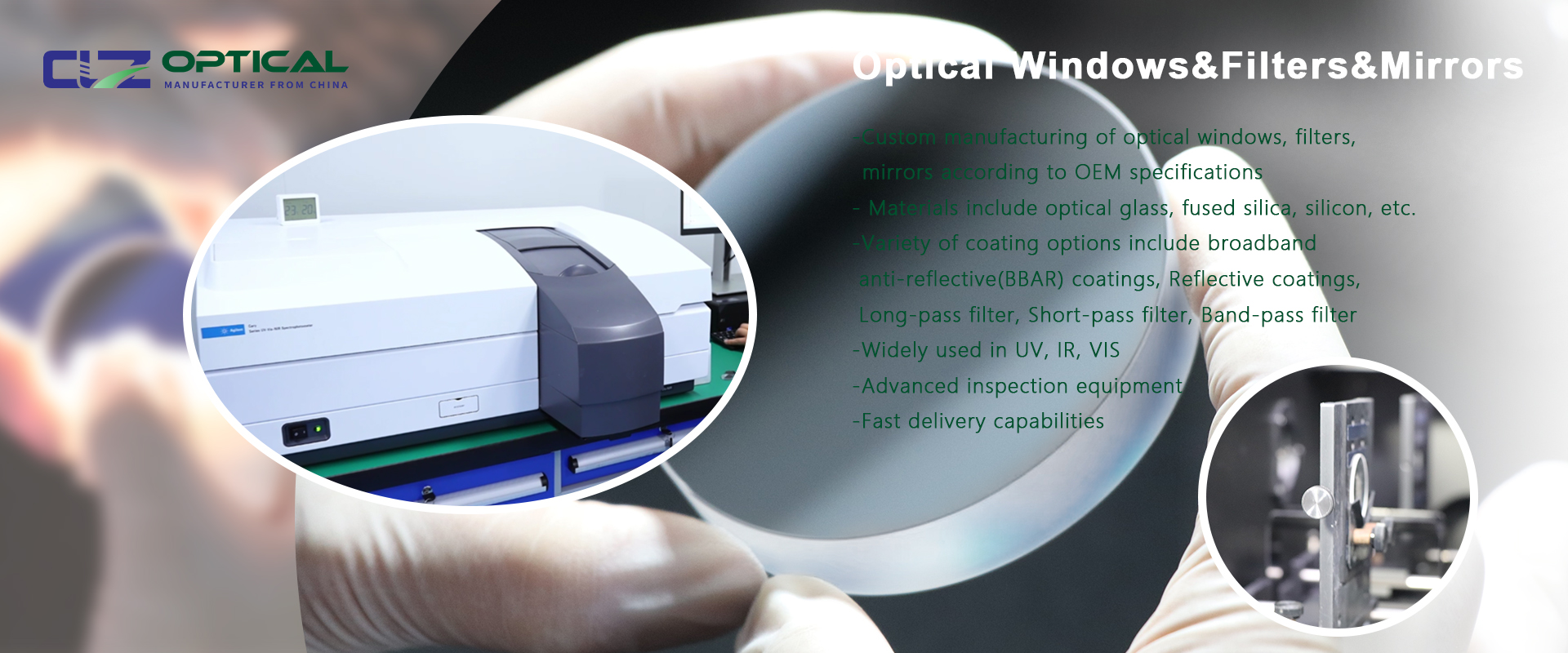
IV, sapphire windows are high-performance optical components made of single-crystal sapphire (Al₂O₃, aluminum oxide). Sapphire is widely used in various demanding optical and industrial fields due to its superior physical, chemical, and optical properties. It is the second hardest material after diamond, giving it extremely high wear and scratch resistance.
1. Physical and Optical Properties
High Hardness and Abrasion Resistance: Sapphire has a Mohs hardness of approximately 9, second only to diamond, giving sapphire windows excellent abrasion and scratch resistance.
Broad Spectral Transmittance: Sapphire exhibits good transparency across a broad spectral range, from ultraviolet (approximately 190 nm) to mid-infrared (approximately 5,000 nm).
High Thermal Conductivity: Sapphire's high thermal conductivity allows for effective heat dissipation in high-temperature applications.
Chemical Stability: Sapphire exhibits extremely high resistance to most acids, alkalis, and corrosive environments, making it suitable for applications in harsh conditions.
High strength and toughness: Sapphire has high mechanical strength and good toughness, which enables it to withstand high pressure and impact.
2. Application Areas
High-Performance Windows: Sapphire windows are widely used in applications requiring high strength, high wear resistance, and chemical stability, such as high-pressure observation windows and windows for high-speed aircraft.
Laser Systems: In laser systems, sapphire windows are used to protect lasers and other optical components, especially in harsh environments.
Infrared and Ultraviolet Optical Systems: Due to its wide spectral transmittance, sapphire windows are suitable for windows and lenses in infrared and ultraviolet optical systems.
High-Temperature and High-Pressure Applications: Sapphire's high thermal stability and strength make it an ideal window material for high-temperature and high-pressure environments.
3. Advantages
Extremely high hardness and wear resistance.
Good chemical stability, suitable for harsh environments.
Broad spectral range of transparency.
High thermal conductivity and mechanical strength.
In summary, sapphire windows are high-performance optical components suitable for applications under extreme conditions. Their superior physical and optical properties make them widely used in high-end optics, industry, and scientific research.