








Optical Dove Prisms for Precision Optics
Dec. 22, 2025
In precision optical systems, even minor deviations in beam orientation or image alignment can lead to significant performance losses. Optical Dove prisms are widely used in these environments because they provide accurate image rotation, stable beam control, and compact integration, making them a trusted solution in high-precision applications.
This article explores how optical Dove prisms support precision optics, their performance advantages, and what engineers and buyers should consider when selecting them.
What Are Optical Dove Prisms?
Optical Dove prisms are truncated right-angle prisms designed to rotate an image around the optical axis. When a Dove prism is rotated by a certain angle, the transmitted image rotates by twice that angle, allowing precise and predictable image orientation control.
Because of this unique property, Dove prisms are frequently used in systems that demand accurate rotational alignment without changing the optical path direction.
Why Optical Dove Prisms Are Ideal for Precision Optics
Precision optics requires components that deliver consistent performance under tight tolerances. Optical Dove prisms meet these demands through several key advantages.
First, they provide high rotational accuracy. Image rotation is directly linked to the mechanical rotation of the prism, enabling fine control in alignment-sensitive systems.
Second, optical Dove prisms offer excellent beam stability. When properly aligned, the output beam remains collinear with the input, which is essential in metrology, laser systems, and imaging setups.
Finally, their compact and rigid structure allows integration into space-constrained optical assemblies without compromising performance.
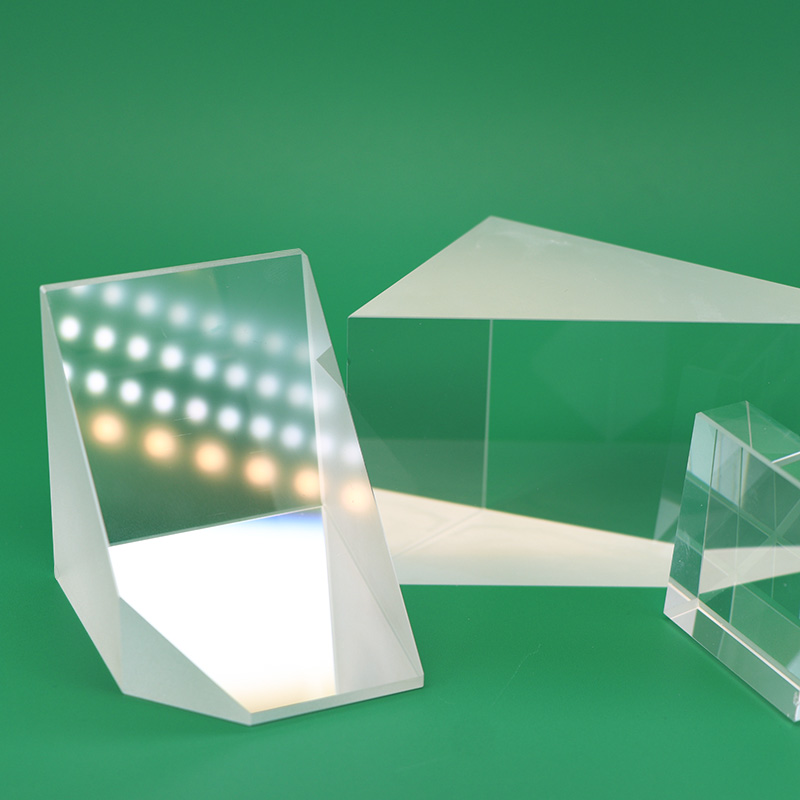
Image Rotation Accuracy in Precision Systems
One of the defining characteristics of optical Dove prisms is their predictable image rotation behavior. Rotating the prism by a small mechanical angle results in a precisely doubled image rotation angle.
This feature is particularly valuable in precision optics applications such as:
Image orientation correction
Rotational calibration
Optical alignment verification
Because the relationship between prism rotation and image rotation is linear and repeatable, Dove prisms enable highly accurate adjustments with minimal system complexity.
Optical Performance Factors That Matter in Precision Optics
Surface Quality and Optical Flatness
High surface quality is critical in precision optics. Optical Dove prisms used in demanding applications are manufactured with fine surface polish to reduce scattering and wavefront distortion.
Superior flatness ensures that the prism does not introduce aberrations that could degrade image quality or measurement accuracy.
Angular Accuracy and Dimensional Tolerances
Precision optical systems require tight angular tolerances to maintain beam alignment. High-quality optical Dove prisms are produced with strict control over angles and dimensions, ensuring consistent performance across multiple units.
This level of precision is essential for repeatable results in industrial and scientific environments.
Material Selection for Optical Stability
Optical Dove prisms are commonly made from high-quality optical glass to ensure thermal stability and minimal refractive index variation. Stable materials help maintain consistent optical performance even under temperature changes or long-term operation.
Material choice directly affects durability, transmission efficiency, and system reliability.
Applications of Optical Dove Prisms in Precision Optics
Laser Systems and Beam Control
In laser-based systems, optical Dove prisms are used to rotate beam profiles and adjust orientation without altering beam direction. This is especially important in precision cutting, marking, and alignment systems.
Metrology and Measurement Equipment
Precision measurement instruments rely on Dove prisms for accurate rotational alignment and calibration. Their predictable behavior supports repeatable measurement results and high system accuracy.
Machine Vision and Imaging Systems
Optical Dove prisms help correct image orientation and enhance system flexibility in machine vision applications, where precise alignment directly impacts inspection accuracy and reliability.
Scientific Research and Optical Laboratories
In laboratory environments, Dove prisms are used for experimental setups requiring precise optical manipulation. Their reliability and ease of adjustment make them a preferred choice for research and development.
Optical Dove Prisms vs Other Image-Rotating Optics
Compared to alternative image-rotating components, optical Dove prisms offer a balance of simplicity and precision. Unlike complex prism assemblies or mirror systems, a single Dove prism can achieve accurate image rotation with fewer alignment steps.
This simplicity reduces system complexity while maintaining high optical performance, which is critical in precision-focused applications.
Coatings and Transmission Efficiency
To maximize performance, optical Dove prisms can be treated with anti-reflective coatings. These coatings reduce surface reflections, improve transmission efficiency, and minimize stray light—important factors in high-precision optical systems.
Proper coating selection also enhances durability and performance in demanding environments.
Selecting Optical Dove Prisms for Precision Optics
When choosing an optical Dove prism, buyers should evaluate:
Required image rotation accuracy
Surface quality and flatness specifications
Material stability and optical clarity
Coating options and transmission requirements
Mechanical integration and mounting compatibility
Clear definition of these requirements ensures optimal performance and long-term reliability.
Quality Control and Performance Validation
High-quality optical Dove prisms undergo rigorous testing to verify angular accuracy, surface quality, and optical performance. This ensures that each prism meets the strict requirements of precision optical systems.
Quality control is particularly important when Dove prisms are used in measurement, calibration, or safety-critical applications.
Future Role of Optical Dove Prisms in Precision Optics
As precision optics continues to advance, demand for highly accurate and stable optical components will grow. Optical Dove prisms will remain essential due to their reliability, predictable behavior, and adaptability across applications.
Improvements in manufacturing and coating technologies will further enhance their role in next-generation precision optical systems.
Conclusion
Optical Dove prisms are a vital component in precision optics, offering accurate image rotation, stable beam alignment, and reliable long-term performance. Their simplicity, precision, and adaptability make them indispensable in applications where optical accuracy cannot be compromised.
For engineers and buyers focused on precision, optical Dove prisms provide a proven solution that supports performance, efficiency, and system integrity.