



N-BK7 Optical Windows: How to Select Flatness, Coating, Thickness, and Wedge
Jul. 30, 2026
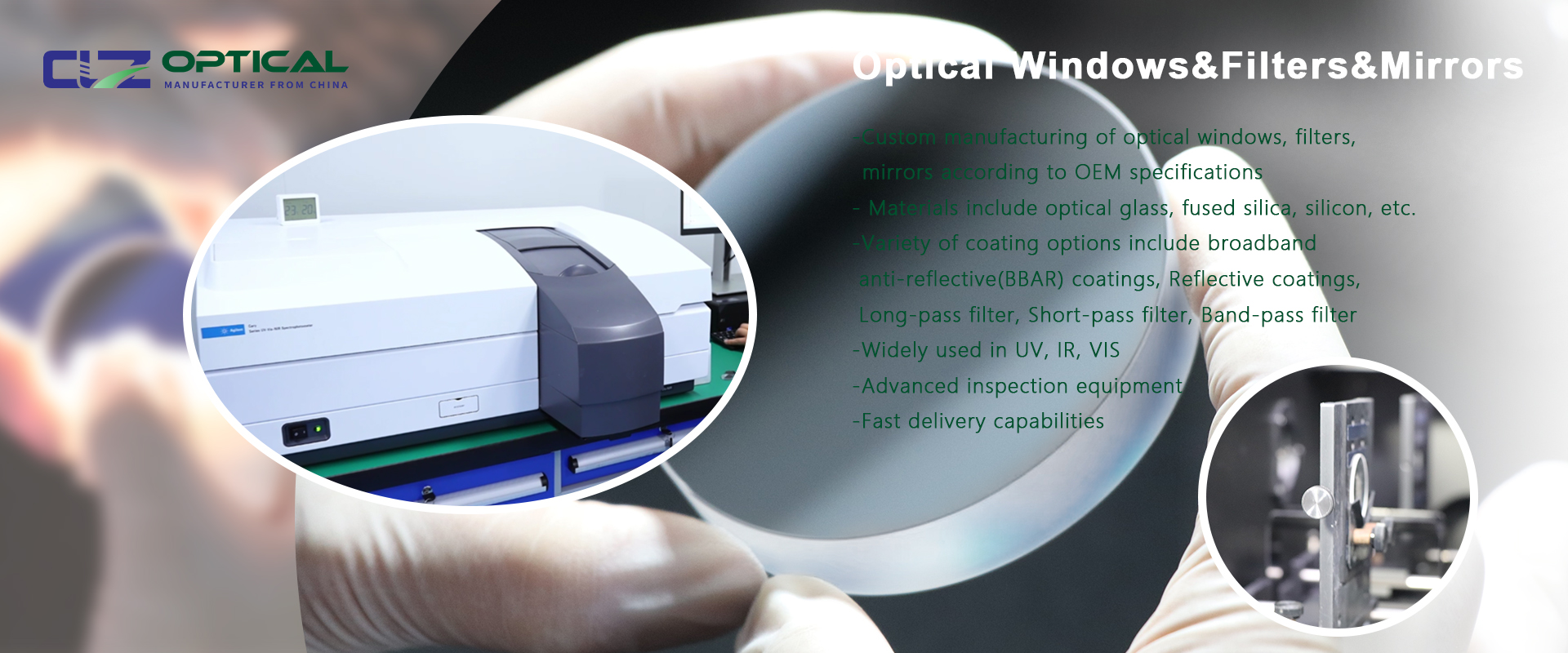
N-BK7 optical windows are widely used to protect sensitive optical components while allowing visible or near-infrared light to pass through an optical system. They can separate different environments, protect cameras and detectors, seal instrument housings, isolate laser systems, and prevent dust, moisture, particles, or accidental contact from reaching internal components.
Although an optical window may appear to be a simple flat glass plate, its effect on system performance can be significant. Surface flatness, parallelism, wedge angle, thickness, surface quality, coating, clear aperture, mounting stress, and material homogeneity can all influence transmitted wavefront quality.
A window with unsuitable specifications may introduce beam deviation, ghost reflections, interference fringes, image distortion, scattering, or power loss. A well-selected N-BK7 window, by contrast, can provide effective protection without unnecessarily increasing system complexity or cost.
This guide explains the properties of N-BK7, the differences between parallel and wedged windows, the specifications buyers should evaluate, and the information manufacturers need to produce a customized optical window.
What Is an N-BK7 Optical Window?
An N-BK7 optical window is a flat, transparent optical component manufactured from N-BK7 borosilicate crown glass.
Unlike a lens, an optical window is not normally intended to focus or diverge a beam. Its primary function is to create a physical barrier while maintaining the optical path. The two polished surfaces are therefore designed to transmit light with controlled reflection, scattering, wavefront distortion, and beam deviation.
N-BK7 is a commonly used optical glass with a refractive index of approximately 1.5168 at the helium d-line and an Abbe number of 64.17. These standardized optical properties make it suitable for a broad range of visible and near-infrared optical components.
Typical N-BK7 optical window applications include:
Laser system protection
Imaging system covers
Camera and sensor windows
Detector housing windows
Laboratory instruments
Optical measurement equipment
Machine vision systems
Illumination systems
Spectroscopy equipment
Sealed optical enclosures
N-BK7 is particularly attractive when the application does not require the deeper ultraviolet transmission or lower thermal expansion offered by fused silica.
Why Is N-BK7 Used for Optical Windows?
Good Visible and Near-Infrared Performance
N-BK7 provides useful transmission across much of the visible and near-infrared spectrum. This makes it suitable for common imaging wavelengths, visible lasers, alignment systems, detectors, and broadband instruments.
The actual transmission of a finished window depends on:
Wavelength
Material thickness
Internal absorption
Surface reflection
Antireflection coating
Angle of incidence
Surface contamination
Number of optical interfaces
Uncoated N-BK7 can transmit a large percentage of incident light internally, but reflection occurs at each air-glass interface. For systems requiring higher throughput, an antireflection coating is often applied to one or both surfaces.
Commercial N-BK7 precision windows are commonly offered with coating options covering visible, near-infrared, short-wave infrared, and selected laser wavelength regions.
Stable and Standardized Optical Properties
The optical constants of N-BK7 are well documented, allowing optical engineers to include the material in ray-tracing and optical-design software.
Its predictable refractive index and dispersion help designers estimate:
Beam displacement
Optical path length
Reflection at each interface
Chromatic effects
Focus shift caused by inserting a window
Angle-dependent transmission
This is especially useful when a window is positioned in a converging beam, at a non-zero angle of incidence, or close to an image plane.
Good Manufacturability
N-BK7 can be ground, polished, edged, beveled, coated, and manufactured in a wide variety of dimensions.
Available configurations can include:
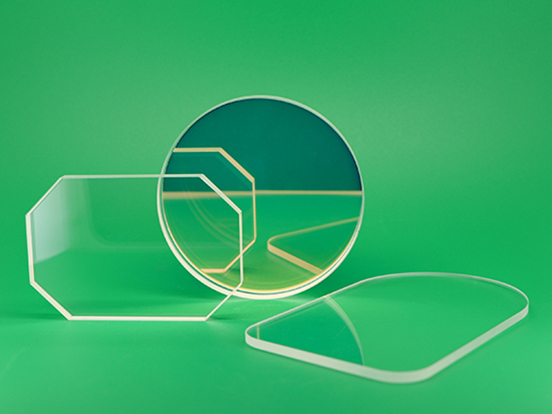
Circular windows
Square windows
Rectangular windows
Parallel windows
Wedged windows
Ultra-thin windows
Thick pressure-resistant windows
Drilled or shaped windows
Mounted optical windows
Custom apertures
Standard precision windows are commercially available in circular and rectangular formats across a broad size range, demonstrating the material’s suitability for both compact and relatively large optical components.
Cost-Effective for General Optical Systems
N-BK7 often offers a practical balance among optical quality, material availability, processing capability, and cost.
For general visible and near-infrared instruments, specifying fused silica or sapphire may provide little benefit when the system does not require:
Deep-ultraviolet transmission
High-temperature operation
Very low thermal expansion
Exceptional scratch resistance
Extreme pressure resistance
Very high laser damage performance
Selecting N-BK7 for an appropriate application can reduce material and processing costs without sacrificing the performance that the system actually needs.
How Does an Optical Window Affect a Beam?
Ideally, a window should transmit light without changing the beam. In practice, every window interacts with the optical path.
Possible effects include:
Surface reflection
Internal absorption
Beam displacement
Angular deviation
Wavefront distortion
Multiple reflections
Interference fringes
Scattering
Polarization changes at oblique incidence
Focus shift in converging beams
The importance of each effect depends on the window specification and how it is installed.
A window positioned perpendicular to a collimated beam usually has less influence on beam direction than a tilted window. However, even a normally installed parallel window can produce back reflections that return toward a laser source or create unwanted interference.
This is why buyers must decide whether the application requires a parallel window, a wedged window, or a window installed at a deliberate angle.
Parallel N-BK7 Windows
A parallel optical window has two surfaces manufactured as parallel to each other as practical.
Parallel windows are commonly selected for:
Imaging systems
Protective camera covers
Sensor housings
General laboratory instruments
Sealed optical assemblies
Systems requiring minimal angular beam deviation
Parallelism describes the angular relationship between the two polished surfaces. Tighter parallelism can reduce transmitted beam deviation and is especially important in imaging, alignment, interferometry, and position-sensitive systems.
High-precision commercial N-BK7 windows may specify parallelism on the order of a few arcseconds, depending on the product grade.
However, parallel surfaces can also create an optical cavity. Reflections from the front and rear surfaces may overlap and generate interference effects, particularly with coherent or narrow-linewidth light.
Therefore, the most parallel window is not automatically the best window for every laser system.
Wedged N-BK7 Windows
A wedged optical window has two surfaces positioned at a small intentional angle rather than being perfectly parallel.
The wedge separates front- and back-surface reflections so that they do not travel along the same optical path. This helps reduce etalon interference and prevents secondary reflections from returning directly toward the source.
Wedged N-BK7 windows are commonly used in:
Laser beam paths
Interferometric instruments
Spectroscopy systems
Systems sensitive to optical feedback
Beam sampling assemblies
Coherent-light applications
Precision alignment systems
A wedged window can reduce unwanted interference, but it may also introduce controlled angular deviation. The designer must therefore specify the wedge angle and window orientation according to the acceptable beam displacement.
Parallel Window vs Wedged Window
| Requirement | Parallel N-BK7 Window | Wedged N-BK7 Window |
|---|---|---|
| Minimal angular deviation | Generally preferred | Requires wedge orientation control |
| Reduced etalon effects | Less effective | Preferred |
| Imaging protection | Commonly used | Used when ghosting must be controlled |
| Laser feedback reduction | May require tilting | Generally more suitable |
| Mechanical installation | Simple orientation | Wedge direction may need marking |
| Interferometry | Application dependent | Useful for separating reflections |
| Cost | Usually lower | May require additional processing |
Important N-BK7 Window Specifications
Diameter or Outer Dimensions
Circular windows are normally specified by diameter, while rectangular products require length and width.
The total outside dimension must fit the mount or housing. However, the usable optical area is defined by the clear aperture rather than by the full mechanical diameter.
A buyer should therefore specify both:
Overall component dimensions
Minimum clear aperture
The clear aperture may exclude the bevel, edge zone, chamfer, mounting area, or regions where full surface quality is not guaranteed.
Thickness
Window thickness influences mechanical strength, optical path length, weight, thermal response, and resistance to bending.
A thicker N-BK7 window may provide:
Greater mechanical rigidity
Better resistance to mounting pressure
Improved handling
Reduced bending across a large aperture
Greater resistance to pressure differences
However, additional thickness may also increase:
Weight
Material cost
Internal absorption
Optical path length
Thermal gradients
Focus shift in converging beams
Ultra-thin N-BK7 windows can be useful in compact or weight-sensitive systems, but they are more fragile and may deform more easily under mounting or pressure loads.
The correct thickness should be determined from both optical and mechanical requirements rather than selected independently.
Surface Flatness
Surface flatness measures how much a polished surface deviates from an ideal plane.
It is commonly specified in fractions or multiples of a wavelength, such as:
2λ
λ
λ/2
λ/4
λ/10
λ/20
The reference wavelength must also be stated, commonly 632.8 or 633 nm.
Surface flatness can influence transmitted wavefront quality, particularly in:
Interferometry
Collimated laser systems
High-resolution imaging
Beam expansion systems
Wavefront sensing
Precision metrology
Flatness is typically evaluated by comparing the test surface with a calibrated optical flat and observing the interference fringes between them.
It is important to distinguish surface flatness from transmitted wavefront error. A component with two individually flat surfaces may still produce transmitted wavefront distortion because of thickness variation, internal stress, refractive-index inhomogeneity, or mounting deformation.
Transmitted Wavefront Error
Transmitted wavefront error describes how much the wavefront changes after passing through the complete window.
This can be more meaningful than surface flatness alone for demanding transmission applications.
Factors affecting transmitted wavefront include:
Front-surface figure
Rear-surface figure
Thickness uniformity
Parallelism
Material homogeneity
Internal stress
Mounting pressure
Operating temperature
For precision imaging or interferometric systems, buyers should consider specifying transmitted wavefront performance across the clear aperture rather than relying solely on individual surface flatness.
Surface Quality
Surface quality describes visible defects such as scratches and digs.
A common specification format is scratch-dig, for example:
80-50
60-40
40-20
20-10
10-5
Lower numbers represent tighter cosmetic requirements.
Surface quality is especially important when:
The beam is tightly focused
Scattered light must be minimized
High image contrast is required
The system uses a high-power laser
The window is close to a detector
The application is sensitive to stray light
A general protective window may not need the same surface quality as a laser cavity or high-resolution imaging system. Specifying unnecessarily tight scratch-dig requirements can significantly increase production cost.
Parallelism
Parallelism is generally specified in arcminutes or arcseconds.
Poor parallelism can act like a small prism and change the beam direction. This can cause:
Image displacement
Alignment error
Detector-position error
Beam walk-off
Reduced coupling efficiency
Inconsistent replacement performance
Tighter parallelism is especially valuable when the window must be replaced without recalibrating the complete optical system.
Wedge Angle
For a wedged window, the wedge angle must be intentionally defined.
A small wedge may be sufficient to separate ghost reflections, while a larger wedge creates greater beam separation. The ideal value depends on:
Beam diameter
Optical path length
Refractive index
Detector size
Coherence length
Required reflection separation
Permitted transmitted beam deviation
The direction of the wedge may also need to be marked on the component or packaging so that the window can be installed consistently.
Edge Thickness and Bevel
A protective bevel removes the sharp glass edge and reduces the risk of chipping during handling and assembly.
Buyers may specify:
Bevel width
Bevel angle
Ground or polished edge
Edge-blackening requirements
Orientation mark
Maximum edge chips
Large bevels reduce the usable clear aperture, while extremely small bevels may provide inadequate protection.
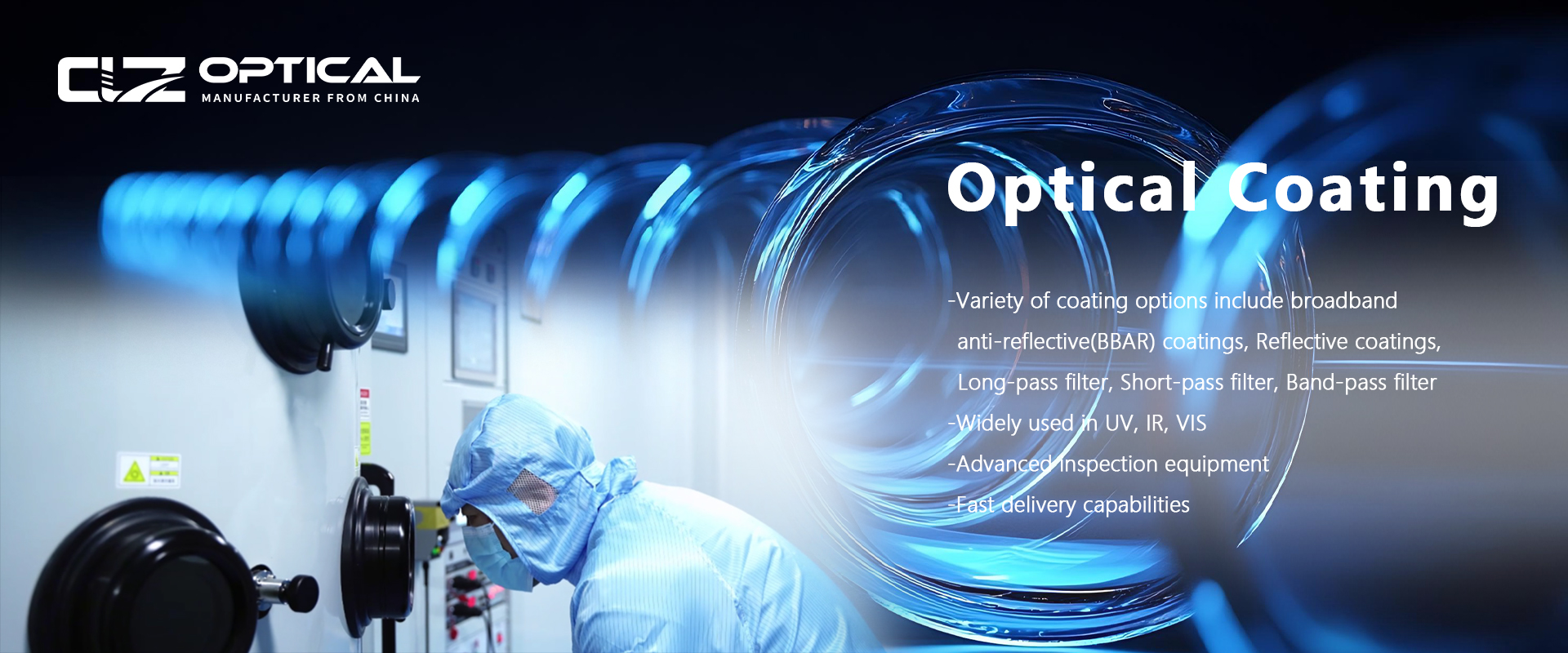
Antireflection Coatings for N-BK7 Windows
An uncoated N-BK7 window reflects part of the incident light at each surface because of the refractive-index difference between air and glass.
An antireflection coating can improve transmission and reduce ghost reflections within a selected wavelength range.
Common coating categories include:
Visible broadband coatings
Visible–near-infrared coatings
Near-infrared coatings
Short-wave infrared coatings
Single-wavelength laser coatings
Dual-wavelength coatings
MgF₂ coatings
Custom multilayer coatings
Commercial N-BK7 windows are available with coatings for ranges such as 430–700 nm, 650–1000 nm, and 1000–1550 nm, illustrating the importance of matching the coating to the actual working band.
Buyers should specify:
Center wavelength or complete spectral range
Angle of incidence
Polarization
Maximum allowable reflectance
Average or absolute reflectance requirement
Environmental durability
Laser damage requirement
Whether one or both surfaces require coating
A coating designed for normal incidence may not provide the same performance when the window is installed at a large angle.
Uncoated vs AR-Coated N-BK7 Windows
An uncoated window may be suitable when:
Cost must be minimized
Transmission loss is acceptable
The window is used for alignment
The spectral range is very broad
The system contains only one window
Reflections do not affect performance
An AR-coated window is usually more appropriate when:
High system throughput is required
Multiple optical elements are used
Ghost reflections affect imaging
Back reflections may destabilize a laser
Detector signals are weak
A defined wavelength range is used
For multiple-element systems, reducing reflection at each surface can produce a meaningful improvement in total throughput.
Common Applications of N-BK7 Optical Windows
Laser Protection Windows
A replaceable N-BK7 laser window can protect more expensive internal optics from smoke, particles, fingerprints, splashes, or process contamination.
The window should be selected according to laser wavelength, power, beam diameter, surface quality, coating performance, and expected replacement frequency.
For high-power or pulsed lasers, buyers must also evaluate coating and substrate damage thresholds rather than assuming that every N-BK7 window is suitable.
Imaging and Machine Vision Systems
N-BK7 windows can protect cameras, lenses, and sensors in industrial inspection systems.
For imaging applications, important specifications include:
Surface flatness
Parallelism
transmitted wavefront error
Coating uniformity
Clear aperture
Stray-light control
Installation angle
A low-quality cover window placed close to the image sensor can reduce contrast or shift the apparent object position.
Detector and Sensor Housings
Optical detectors are often sealed behind a window to prevent contamination or environmental exposure.
The window must transmit the required wavelength band and maintain the sealing function without introducing unacceptable reflection or distortion.
Laboratory and Measurement Equipment
N-BK7 windows are used in spectrometers, beam profilers, metrology systems, optical benches, alignment tools, and educational instruments.
Standardized optical properties and broad commercial availability make the material practical for prototypes as well as repeated production.
Vacuum and Sealed Chambers
An optical window can provide visual or laser access to a controlled chamber.
For pressure-differential applications, thickness, unsupported diameter, sealing method, edge condition, and safety factor require mechanical engineering analysis. Optical-grade material selection alone does not determine whether a window is structurally safe.
N-BK7 vs Fused Silica Windows
N-BK7 and fused silica are both common optical-window materials, but they serve different requirements.
| Consideration | N-BK7 | Fused Silica |
|---|---|---|
| Visible transmission | Very suitable | Very suitable |
| Deep-UV use | Limited | Generally preferred |
| Near-infrared use | Suitable for many systems | Suitable over a broader range |
| Thermal expansion | Higher | Lower |
| Thermal-shock resistance | Moderate | Better |
| General optical cost | Often lower | Usually higher |
| Standard imaging systems | Common choice | Often unnecessary unless special performance is needed |
| High-temperature stability | More limited | Generally better |
N-BK7 is typically selected when the ultraviolet performance and lower thermal expansion of fused silica are not required.
The material decision should be based on wavelength, temperature, laser power, environmental conditions, mechanical requirements, and budget.
Common Purchasing Mistakes
Selecting Only by Diameter and Thickness
Two N-BK7 windows with identical dimensions may have completely different flatness, parallelism, surface quality, coatings, and transmitted wavefront performance.
Dimensions alone are not sufficient for technical comparison.
Confusing Surface Flatness With Surface Quality
Flatness describes the overall surface figure. Surface quality describes localized defects such as scratches and digs.
A highly flat surface can still contain cosmetic defects, while a cosmetically clean surface may not be sufficiently flat for precision optical use.
Ignoring the Angle of Incidence
Tilting a window changes optical path length, beam displacement, polarization behavior, and coating performance.
The supplier should know the intended installation angle when preparing a coating or evaluating system performance.
Specifying Unnecessarily Tight Tolerances
A λ/20 window with 10-5 surface quality may be valuable for interferometry but unnecessary for a protective machine-vision cover.
Over-specification increases manufacturing difficulty, inspection requirements, rejection rates, and price.
Ignoring Mounting Stress
Even a precision window can become distorted when it is clamped too tightly or mounted unevenly.
The mount should support the window without concentrating pressure near the edge or forcing the component against an irregular surface.
Using a Parallel Window in a Feedback-Sensitive Laser System
Parallel surfaces can direct reflections back toward the source and create etalon effects.
A wedged window or slightly tilted installation may be more appropriate when optical feedback or interference is a concern.
Information to Provide When Requesting a Custom N-BK7 Window
A complete request for quotation should include the following information:
| Specification | Information to Provide |
|---|---|
| Application | Imaging, laser protection, detector cover, chamber or instrument |
| Wavelength | Center wavelength or full operating range |
| Shape | Circular, square, rectangular or custom |
| Dimensions | Diameter, length, width and thickness |
| Clear aperture | Required usable optical area |
| Window type | Parallel or wedged |
| Flatness | Required value and reference wavelength |
| Wavefront | Maximum transmitted wavefront error |
| Surface quality | Scratch-dig requirement |
| Parallelism | Maximum permitted angular error |
| Wedge | Required angle and orientation |
| Coating | Uncoated, broadband AR or laser-line AR |
| Angle of incidence | Normal or specified installation angle |
| Environment | Temperature, humidity, chemicals or pressure |
| Edge | Bevel, chamfer, polished edge or blackened edge |
| Quantity | Prototype, small batch or mass production |
| Inspection | Dimensional, interferometric, coating or material report |
Providing the complete application can help the optical manufacturer identify specifications that are either insufficient or unnecessarily demanding.
How to Evaluate an N-BK7 Window Supplier
A capable supplier should be able to control both the optical and mechanical aspects of the component.
Important capabilities include:
Verified optical-grade N-BK7 material
Precision double-side polishing
Surface-flatness testing
Parallelism and wedge measurement
Surface-quality inspection
Thickness and dimensional control
Antireflection coating capability
Edge beveling and chip control
Custom shape production
Cleaning and protective packaging
Prototype and production-volume support
Inspection documentation
For high-precision windows, buyers should also ask whether the supplier can measure transmitted wavefront error rather than only checking individual surface flatness.
Frequently Asked Questions About N-BK7 Windows
Is an N-BK7 window the same as an N-BK7 lens?
No. A window is normally designed to protect or isolate an optical system without intentionally focusing the beam. A lens uses curved surfaces to converge or diverge light.
What wavelengths are suitable for N-BK7 windows?
N-BK7 is commonly used in visible and near-infrared optical systems. The exact usable range depends on window thickness, required transmission, coating, and system sensitivity.
Does an N-BK7 window need an AR coating?
Not always. However, an AR coating is recommended when high transmission, reduced ghosting, or lower back reflection is required.
What is the difference between flatness and parallelism?
Flatness describes how closely each surface matches an ideal plane. Parallelism describes the angular relationship between the two surfaces.
Why use a wedged N-BK7 window?
A wedge separates front- and rear-surface reflections, helping reduce etalon interference and optical feedback.
Can N-BK7 windows be used with lasers?
Yes, particularly in many low-power and industrial laser systems. The substrate, surface quality, coating, and damage threshold must be matched to the laser wavelength and operating conditions. Precision N-BK7 windows are commonly offered for industrial and low-power laser applications.
Can an N-BK7 window be made in a custom shape?
Yes. Circular, rectangular, square, thin, thick, wedged, beveled, coated, and other customized configurations can be manufactured.
Which is better, N-BK7 or fused silica?
Neither material is universally better. N-BK7 is often more cost-effective for visible and near-infrared systems, while fused silica is generally preferred for deeper ultraviolet wavelengths, lower thermal expansion, and stronger thermal performance.
What causes beam deviation through a window?
Beam deviation may result from wedge, poor parallelism, tilted installation, refractive-index variation, or uneven mounting stress.
What specifications have the greatest effect on price?
Material size, thickness, surface flatness, transmitted wavefront error, scratch-dig quality, parallelism, wedge tolerance, coating complexity, dimensional tolerance, and order quantity can all affect cost.
Conclusion
N-BK7 optical windows provide a practical way to protect, seal, or separate optical systems operating across visible and near-infrared wavelength regions.
Their performance depends on much more than the glass type. Surface flatness determines how accurately the window maintains the wavefront, parallelism influences beam direction, surface quality affects scattering, thickness influences mechanical stability, and the coating determines reflection and transmission across the working wavelength range.
Parallel N-BK7 windows are often appropriate for imaging, sensors, and general instrument protection. Wedged N-BK7 windows are usually more suitable when coherent-light interference, ghost reflections, or laser feedback must be controlled.
By specifying the application, wavelength, dimensions, clear aperture, flatness, surface quality, parallelism, wedge, coating, and environmental requirements, buyers can obtain an N-BK7 window that provides reliable optical protection without adding unnecessary cost or system distortion.