






Customizable Silicone Domes: A Complete Guide to Design, Performance, and Applications
Jul. 30, 2026
Customizable silicone domes are widely used in electronic control interfaces that require reliable tactile feedback, compact construction, quiet operation, and long-term durability. They can be found beneath the buttons of industrial control panels, medical devices, automotive switches, remote controls, communication equipment, household appliances, and other human-machine interface products.
Unlike standard mechanical switches, silicone domes can combine several functions within one molded component. A properly designed dome can provide button travel, return force, tactile response, sealing, electrical contact, sound control, and mechanical protection. Silicone rubber dome switches can also be incorporated into a keypad assembly with additional sealing, acoustic, and mechanical functions.
For product developers and equipment manufacturers, customization is especially important. Dome geometry, actuation force, material hardness, contact type, color, dimensions, and environmental resistance can all influence how the finished button feels and performs.
This article explains how customizable silicone domes work, which parameters can be adjusted, where they are used, and what buyers should evaluate when selecting a manufacturing partner.
What Are Customizable Silicone Domes?
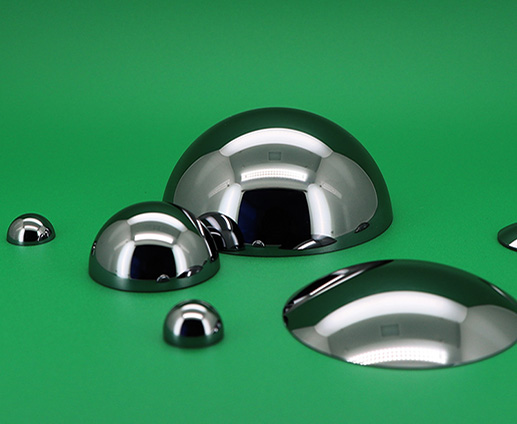
A silicone dome is a flexible, dome-shaped structure molded from silicone rubber. It is normally positioned between a keycap or button surface and an electrical circuit, such as a printed circuit board or membrane switch.
When a user presses the button, the dome deforms and collapses. This movement may push a conductive contact against the circuit below, closing the electrical connection. When the pressure is released, the elasticity of the silicone allows the dome to return to its original shape.
Customizable silicone domes differ from generic rubber buttons because their physical and tactile characteristics can be engineered for a specific product.
Common customization options include:
Dome diameter and height
Actuation force
Return force
Button travel
Snap ratio
Silicone hardness
Wall thickness
Conductive contact material
Contact resistance
Key spacing and layout
Surface texture
Color and transparency
Backlighting compatibility
Sealing structure
Legends, symbols, and coatings
These options allow engineers to create a button response that matches the intended application rather than adapting the product around a standard switch.
How Does a Silicone Dome Switch Work?
A typical silicone dome switch consists of four functional areas:
The button or keytop
The flexible dome wall
The contact or actuator area
The supporting base or web
When the key is pressed, force travels from the keytop to the dome wall. As pressure increases, the dome reaches a collapse point. The wall then buckles quickly, producing the tactile sensation commonly described as a “snap.”
At the bottom of the stroke, a conductive carbon pill, conductive coating, or mechanical actuator contacts the circuit. Conductive carbon elements are commonly used to bridge circuit contacts when the rubber dome is pressed.
After the user releases the button, the dome recovers and lifts the contact away from the circuit.
The geometry of the dome determines whether the button feels light, firm, soft, crisp, or gradual. Even small changes to the wall angle, height, or thickness can noticeably affect the tactile response.
Why Use Custom Silicone Rubber Domes?
Consistent Tactile Feedback
Tactile feedback confirms that a button has been activated. This is especially valuable when the operator cannot continuously watch the display.
Industrial operators wearing gloves, vehicle drivers, medical personnel, and field technicians often depend on a predictable tactile response. By adjusting the dome design, manufacturers can create different force levels for different functions.
For example, a frequently used navigation button may require a lighter touch, while an emergency or safety-related button may need greater resistance to reduce accidental activation.
Compact Product Construction
Silicone domes can be molded as part of a complete keypad mat. Multiple buttons, sealing ribs, locating pins, light guides, contact areas, and mounting features can be integrated into one component.
This reduces the number of separate parts required in the assembly. A simplified structure can improve installation efficiency, reduce tolerance accumulation, and support thinner product designs.
Quiet Operation
Compared with many mechanical switch mechanisms, silicone domes usually generate less noise. This makes them suitable for medical equipment, office electronics, testing instruments, home appliances, and other products where excessive clicking may be undesirable.
The dome geometry can also be adjusted to balance tactile response and operating sound.
Environmental Sealing
Silicone rubber is often selected for equipment exposed to dust, moisture, oils, temperature changes, and repeated cleaning.
A custom keypad can include perimeter sealing walls, compression ribs, drainage features, protective membranes, or integrated gaskets. The sealing performance depends on the entire enclosure design, including keypad compression, housing tolerances, and assembly method.
Design Flexibility
Silicone domes can be developed in different shapes and sizes, including:
Round domes
Oval domes
Rectangular domes
Low-profile domes
Tall domes
Single-button domes
Multi-key dome sheets
Domes beneath plastic keycaps
Domes integrated into silicone keypads
Custom assemblies may also combine molded silicone with plastic keytops, frames, membrane circuits, or other human-machine-interface components.
Important Silicone Dome Design Parameters
Actuation Force
Actuation force is the amount of pressure required to collapse the dome and activate the button.
A lower force creates a lighter, faster response. A higher force makes the button feel firmer and may help prevent accidental operation.
The correct force depends on:
User profile
Button size
Operating frequency
Whether gloves are worn
Product orientation
Safety requirements
Expected environmental conditions
A handheld consumer device may require a relatively light force, while an industrial panel exposed to vibration may need a firmer response.
Snap Ratio
Snap ratio describes the relationship between the force required to collapse the dome and the force after the dome has collapsed.
A higher snap ratio normally produces a sharper tactile sensation. A lower snap ratio creates a softer and more gradual response.
The highest possible snap ratio is not always the best choice. An overly sharp dome may increase stress, feel uncomfortable during repeated use, or shorten the stable operating range of the design.
The target should be a balanced tactile curve that matches the user experience and service-life requirements.
Button Travel
Travel is the distance the button moves from its resting position to the actuation point or final stop.
Short-travel domes support slim devices and quick input. Longer travel may create a more noticeable button movement.
Travel must also be coordinated with:
Keycap clearance
Housing dimensions
Contact position
Circuit location
Hard-stop design
Compression allowance
Insufficient clearance may prevent complete actuation, while excessive travel may overstress the dome or create an unstable feel.
Silicone Hardness
Silicone hardness affects flexibility, recovery, sealing, and tactile response. Softer material may provide better conformity and sealing, while harder material may improve structural support.
However, dome performance cannot be determined by hardness alone. Geometry, material formulation, wall thickness, and curing conditions all influence the result.
Manufacturers should validate the complete molded part rather than evaluating only the nominal hardness value.
Dome Geometry
The diameter, height, wall angle, wall thickness, base thickness, and transition radius all affect the force-displacement curve.
Two domes made from the same silicone compound can feel very different when their geometry changes. This is why tactile requirements should be defined during the design stage, before the production mold is finalized.
Finite element analysis, prototype tooling, force testing, and sample evaluation may be used for demanding applications.
Conductive Contact Options
For electrical switching applications, silicone domes can incorporate different contact solutions.
Carbon Pills
Carbon pills are widely used because they offer stable conductivity, economical production, and suitability for many general-purpose keypad applications.
They are molded or bonded into the underside of the button and contact the PCB when the dome collapses.
Conductive Printing
Conductive ink can be printed onto the contact area. This option may be useful for certain shapes, lower-profile designs, or applications requiring a larger conductive surface.
Metal Contacts
Metal contacts may be considered when lower resistance or specific electrical performance is required. Material selection must account for corrosion, bonding reliability, circuit compatibility, and environmental exposure.
Non-Conductive Actuators
In some assemblies, the silicone dome provides only the mechanical force and tactile response. A molded actuator presses a separate membrane switch, metal dome, or mechanical contact beneath it.
The best option depends on current level, resistance requirements, switching cycle target, circuit design, and total product cost.
Surface and Appearance Customization
Custom silicone domes do not have to remain hidden inside the product. They can also form the visible control surface.
Available appearance options may include:
Custom molded colors
Transparent or translucent silicone
Matte or glossy surfaces
Raised symbols
Recessed legends
Screen-printed graphics
Laser-etched legends
Protective coatings
Backlit icons
Epoxy-coated keytops
Plastic keycap integration
For backlit products, the silicone material, pigment concentration, legend method, LED position, and wall thickness must be coordinated carefully. Poor optical design can lead to uneven brightness, light leakage, or unclear symbols.
Protective coatings may be added when the keypad is exposed to abrasion, skin oils, chemicals, cleaning agents, or frequent operation.
Common Applications of Customizable Silicone Domes
Industrial Control Equipment
Industrial machines often require durable buttons that can be operated repeatedly in dusty or humid environments.
Custom silicone domes may be used in:
Machine control panels
Handheld industrial controllers
Measurement instruments
Factory automation equipment
Access control systems
Process monitoring devices
Different dome forces can be assigned to start, stop, menu, and emergency functions to help operators distinguish controls by touch.
Medical and Laboratory Devices
Medical equipment requires cleanable surfaces, reliable actuation, clear labeling, and consistent user feedback.
Applications include:
Patient monitoring equipment
Diagnostic instruments
Infusion equipment
Laboratory analyzers
Portable healthcare devices
Rehabilitation equipment
The silicone compound and coating must be selected according to the required cleaning process, chemical exposure, and applicable regulatory expectations.
Automotive Electronics
Automotive controls may be exposed to temperature variation, vibration, sunlight, dust, oils, and frequent use.
Silicone domes can be used in:
Steering wheel controls
Dashboard buttons
Window control panels
Climate control interfaces
Key fobs
Seat adjustment systems
In-vehicle entertainment controls
Automotive projects normally require careful validation of force consistency, environmental aging, dimensional stability, and long-term durability.
Consumer Electronics
Remote controls, keyboards, handheld devices, gaming accessories, and smart-home products use silicone domes because they are compact, quiet, and cost-efficient for multi-key layouts.
A custom dome sheet can combine multiple keys into one molded component, simplifying assembly and maintaining consistent spacing.
Communication and Outdoor Equipment
Radios, navigation devices, marine equipment, security systems, and outdoor controllers may require buttons that remain functional in wet, dirty, or low-temperature environments.
Custom sealing ribs, raised buttons, glove-friendly force levels, and high-contrast legends can improve usability in these conditions.
Silicone Dome Manufacturing Process
The production process normally begins with product requirements and technical drawings.
Requirement Review
The manufacturer evaluates the target application, button layout, force requirements, operating environment, dimensions, contact system, appearance, and annual volume.
At this stage, design risks such as insufficient travel, uneven key height, weak dome walls, or unsuitable contact spacing should be identified.
Material Selection
The silicone formulation is selected according to hardness, temperature range, color, mechanical properties, regulatory requirements, and environmental exposure.
The selected material should support both the tactile requirement and the expected service life.
Mold Design
A compression mold or other appropriate molding tool is developed according to the approved component design.
Mold accuracy directly affects dome thickness, button dimensions, surface quality, and force consistency. Venting, parting lines, cavity balance, and material flow must be carefully managed.
Molding and Curing
Silicone material is placed or injected into the tool and formed under controlled temperature and pressure. The part is then cured to develop its final elastic properties.
Some materials or applications may require secondary curing to reduce residual substances and stabilize performance.
Secondary Operations
Depending on the product, secondary processes may include:
Conductive pill installation
Screen printing
Laser marking
Surface coating
Adhesive application
Trimming
Plastic keycap assembly
Membrane switch assembly
Electrical testing
Inspection and Testing
Finished parts should be inspected for dimensions, appearance, tactile force, contact resistance, recovery, printing quality, and assembly fit.
For critical projects, testing may also cover temperature aging, humidity exposure, chemical resistance, compression set, abrasion, and repeated actuation.
Quality Factors Buyers Should Evaluate
When sourcing customizable silicone domes, buyers should not compare suppliers based only on tooling cost or unit price.
Important evaluation criteria include:
Tactile Consistency
Force variation between keys can make the entire interface feel poorly made. The supplier should define how actuation force and return force are measured and controlled.
Dimensional Accuracy
Key height, dome thickness, contact position, hole location, and perimeter dimensions must match the housing and PCB.
Dimensional variation may cause sticking keys, incomplete contact, light leakage, or sealing failure.
Contact Reliability
For conductive domes, buyers should confirm:
Contact material
Resistance range
Contact diameter
Bonding method
Circuit surface compatibility
Test method
Expected switching life
Printing and Coating Durability
Visible keypads should be evaluated for legend adhesion, abrasion resistance, color consistency, and resistance to cleaning agents.
Sample testing should simulate the real operating environment rather than relying only on a visual inspection.
Tooling Capability
A capable manufacturer should review dome geometry and manufacturability before mold production. Corrections made during the design stage are usually less expensive than modifications after production tooling is completed.
Batch Traceability
For industrial, automotive, and medical projects, raw-material tracking, production records, inspection reports, and batch identification may be required.
Information to Provide When Requesting a Quote
A detailed request helps the manufacturer prepare a more accurate quotation and design recommendation.
Buyers should provide:
2D drawings or 3D files
Overall keypad dimensions
Number and layout of buttons
Target actuation force
Required button travel
Preferred snap feel
Silicone hardness
Color requirements
Conductive contact type
Contact resistance requirement
Printing or legend details
Backlighting requirements
Operating temperature
Chemical exposure
Sealing expectations
Estimated annual quantity
Prototype quantity
Required testing
Applicable compliance standards
When exact specifications are not yet available, the buyer can provide an enclosure drawing, PCB layout, target user experience, and application description. The silicone dome manufacturer can then recommend a preliminary structure for prototype validation.
Prototype Testing Before Mass Production
Silicone domes should be evaluated as part of the complete assembly, not only as isolated rubber parts.
The prototype should be installed with the actual or representative:
Housing
Keycaps
PCB
Membrane circuit
Adhesive
LED system
Fasteners
Sealing structure
Engineers should check button force, return speed, actuation reliability, sound, key wobble, light transmission, sealing compression, and user comfort.
Where possible, several users should evaluate the samples. A dome that appears acceptable in force test data may still feel unsuitable during repeated real-world operation.
Frequently Asked Questions
Are silicone domes the same as metal domes?
No. Silicone domes are elastic molded structures that provide travel and return force. Metal domes are thin metal components that collapse with a distinct click. Some products combine a silicone keypad with metal domes beneath it.
Can the actuation force be customized?
Yes. Force can be adjusted through dome geometry, silicone formulation, hardness, wall thickness, and button dimensions.
Can different keys have different forces?
Yes. A single keypad can contain multiple dome designs, although extreme differences may increase mold and production complexity.
Can silicone domes be used with backlighting?
Yes. Translucent silicone, laser-etched legends, printed coatings, transparent windows, and integrated light-guiding structures can be used.
Are conductive carbon contacts required?
No. Carbon pills are common, but conductive printing, metal contacts, or non-conductive actuators may also be used.
Can silicone domes provide waterproofing?
They can contribute to a sealed interface, but final waterproof performance depends on the complete housing, compression design, gasket structure, fasteners, and assembly process.
How long do silicone domes last?
Service life depends on material, dome geometry, actuation force, operating temperature, chemical exposure, compression, and usage frequency. The required cycle target should be defined and verified through testing.
Is custom tooling required?
Most fully customized dome sheets or silicone keypads require dedicated tooling. Prototype tooling or simplified sample molds may be considered before high-volume production tooling.
Conclusion
Customizable silicone domes provide a practical solution for products requiring tactile feedback, electrical switching, quiet operation, compact construction, and environmental protection.
Successful dome design requires more than selecting a silicone hardness or button shape. Actuation force, snap ratio, travel, geometry, contact technology, surface treatment, sealing, lighting, and assembly tolerances must work together as one system.
For buyers, the most reliable development process is to define the application requirements early, review the complete interface structure with the manufacturer, test functional prototypes, and approve measurable quality standards before mass production.
By treating the silicone dome as an engineered human-machine-interface component rather than a simple molded rubber part, product developers can improve operating comfort, control reliability, assembly efficiency, and long-term product performance.