



Why Are Custom Sapphire Domes Ideal for Aerospace Applications?
Jun. 24, 2026
Custom sapphire domes are widely used in aerospace systems because they combine extreme mechanical strength, excellent optical performance, and strong resistance to harsh environmental conditions. In aircraft, satellites, and space exploration equipment, optical components must survive high pressure, rapid temperature changes, radiation exposure, and mechanical stress. Sapphire domes are uniquely suited to meet these demands.
This article explains why sapphire domes are preferred in aerospace applications, how they perform under extreme conditions, and what makes custom designs especially valuable for advanced aerospace systems.
What Is a Sapphire Dome?
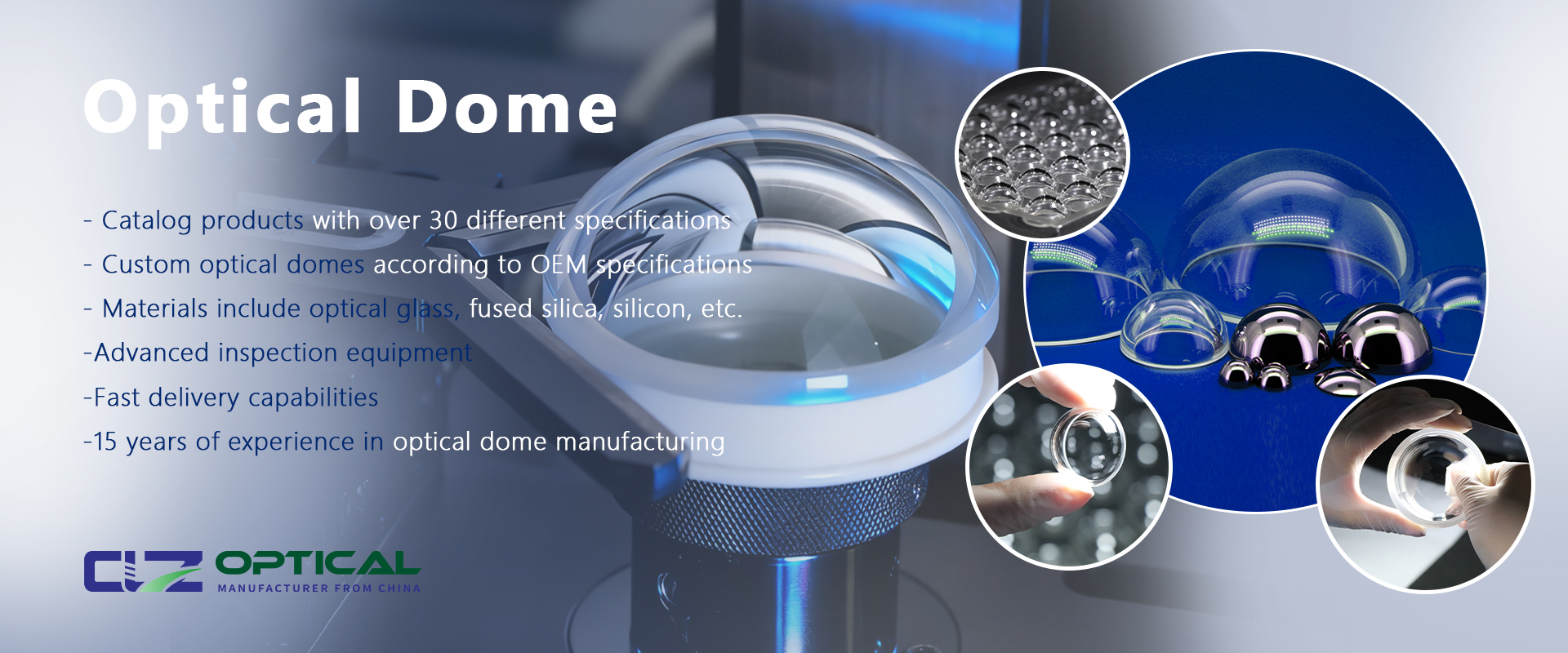
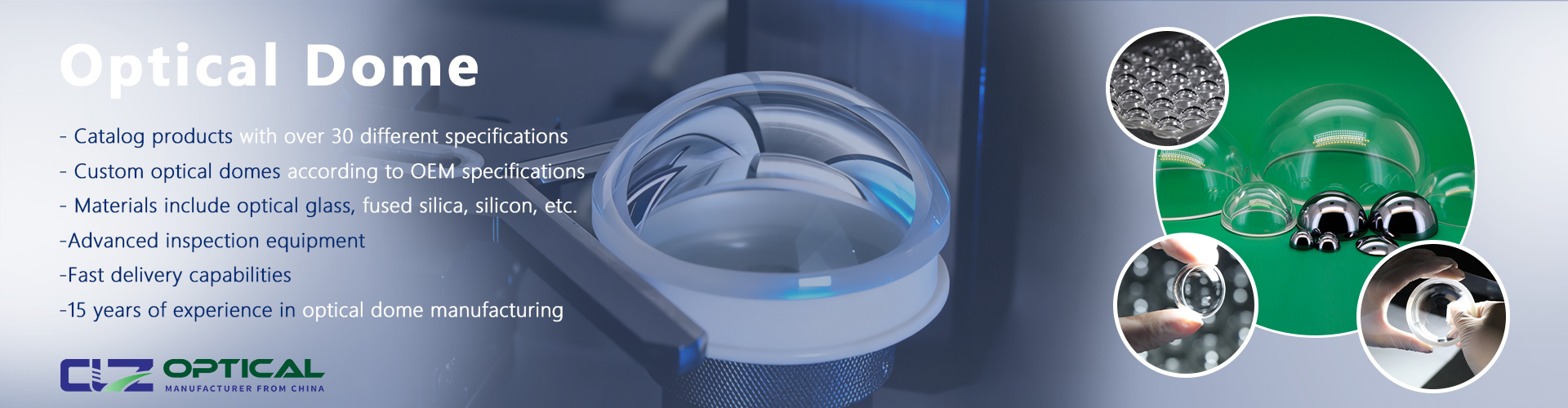
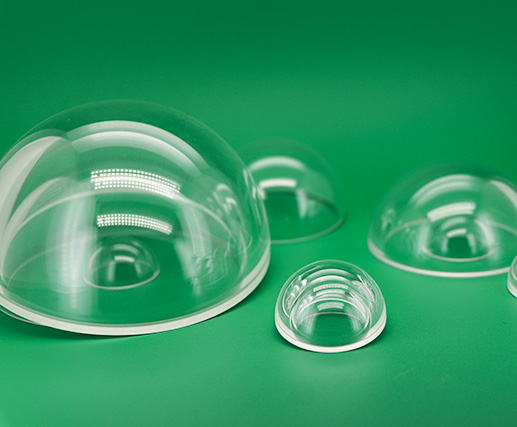
A sapphire dome is a curved optical component made from single-crystal sapphire, a material known for its exceptional hardness and optical clarity. Unlike standard glass domes, sapphire domes are significantly stronger and more resistant to scratching, impact, and thermal shock.
In aerospace systems, sapphire domes are commonly used as protective windows for sensors, cameras, infrared detectors, and guidance systems. Their dome shape helps maintain optical performance while withstanding aerodynamic and environmental pressure.
Custom sapphire domes are engineered with specific dimensions, curvature, and optical properties to match the requirements of different aerospace platforms.
Extreme Mechanical Strength for Harsh Environments
One of the main reasons sapphire domes are ideal for aerospace use is their exceptional mechanical strength. Sapphire is one of the hardest transparent materials available, second only to diamond on the Mohs hardness scale.
This hardness allows sapphire domes to resist impact from debris, dust, ice particles, and high-speed airflow during flight. In aerospace environments where mechanical reliability is critical, this durability significantly reduces the risk of optical failure.
Compared to conventional optical glass, sapphire maintains structural integrity under far more extreme stress conditions.
Excellent Thermal Stability in Space and High-Altitude Conditions
Aerospace systems experience rapid and extreme temperature changes, from sub-zero conditions in high-altitude flight to intense heat during atmospheric re-entry or direct solar exposure in space.
Sapphire has excellent thermal stability and a very high melting point, allowing it to maintain its optical and mechanical properties across a wide temperature range.
It also has good thermal conductivity, which helps distribute heat evenly across the dome surface, reducing the risk of thermal stress cracking.
This makes sapphire domes particularly reliable for spacecraft sensors and high-speed aircraft optical systems.
High Optical Transmission Across Multiple Wavelengths
Another key advantage of sapphire domes is their broad optical transmission range. Sapphire performs well in visible, near-infrared, and mid-infrared wavelengths, making it suitable for a wide variety of aerospace sensing systems.
This is especially important in applications such as target tracking, navigation, and environmental monitoring, where sensors may operate across multiple spectral bands.
Because of its low optical distortion and high clarity, sapphire ensures accurate signal collection and transmission even in demanding conditions.
Resistance to Radiation in Space Environments
In space applications, materials are exposed to high levels of cosmic radiation and solar particle radiation. Many optical materials degrade over time under these conditions, leading to reduced transparency and performance loss.
Sapphire has strong radiation resistance compared to many conventional optical materials. It maintains its structural and optical properties even after prolonged exposure, making it suitable for long-term satellite missions and deep-space exploration equipment.
This durability is critical for systems that cannot be repaired or replaced once deployed.
Aerodynamic Performance in High-Speed Flight
The dome shape is not only important for optical performance but also for aerodynamic efficiency. In high-speed aerospace applications such as missiles, aircraft sensors, or re-entry vehicles, the dome must minimize air resistance and withstand dynamic pressure.
Sapphire domes are shaped to ensure smooth airflow over the sensor housing, reducing turbulence and mechanical stress. This helps maintain system stability and protects sensitive internal components.
Custom shaping allows engineers to optimize the dome for specific flight conditions and aerodynamic requirements.
Importance of Custom Design in Aerospace Systems
Custom sapphire domes are preferred over standard components because aerospace systems often require highly specific optical and mechanical configurations.
Different applications may require variations in dome curvature, thickness, diameter, and surface finish. These parameters directly influence optical performance, pressure resistance, and integration compatibility.
Custom manufacturing allows precise control over these factors, ensuring the dome performs optimally in its intended environment.
In addition, anti-reflection coatings and surface treatments can be applied to improve transmission efficiency and reduce signal loss.
Integration with Aerospace Optical Systems
Sapphire domes are commonly integrated into systems such as infrared cameras, guidance sensors, missile tracking systems, and satellite imaging devices.
In these applications, the dome acts as a protective barrier while allowing high-quality optical signals to pass through with minimal distortion.
Proper integration requires precise alignment between the dome and internal optical components to maintain imaging accuracy and signal integrity.
Manufacturing Challenges and Precision Requirements
Producing custom sapphire domes is technically challenging due to the hardness of the material. Sapphire requires advanced machining techniques such as diamond grinding and precision polishing.
Maintaining surface quality is critical, as even minor imperfections can affect optical performance. Tight tolerances are required to ensure consistent thickness and curvature across the dome surface.
Despite these challenges, modern manufacturing techniques allow high-precision sapphire domes to be produced for advanced aerospace applications.
Future Use in Aerospace Technology
As aerospace systems continue to evolve, the demand for durable, high-performance optical materials will increase.
Custom sapphire domes are expected to play an important role in next-generation technologies such as hypersonic vehicles, deep-space exploration missions, and advanced Earth observation satellites.
Their combination of strength, optical clarity, and environmental resistance makes them a long-term solution for extreme operating conditions.
Conclusion
Custom sapphire domes are ideal for aerospace applications because they offer unmatched durability, excellent optical performance, and strong resistance to thermal, mechanical, and radiation stress. Their ability to operate reliably in extreme environments makes them a critical component in modern aerospace optical systems.
As aerospace technology advances, sapphire domes will continue to be an essential solution for protecting and enhancing high-precision optical instruments in the most demanding conditions.