


Customizable Silicon Domes in Military and Defense Systems
Apr. 24, 2026
In modern defense technology, optical components are no longer simple protective elements—they are mission-critical parts of sensing, targeting, and surveillance systems. Among them, customizable silicon domes play a vital role in ensuring reliability, precision, and durability in extreme military environments.
From infrared tracking systems to unmanned aerial vehicles (UAVs), silicon domes are widely used where optical performance and environmental resistance must coexist.
What Are Customizable Silicon Domes?
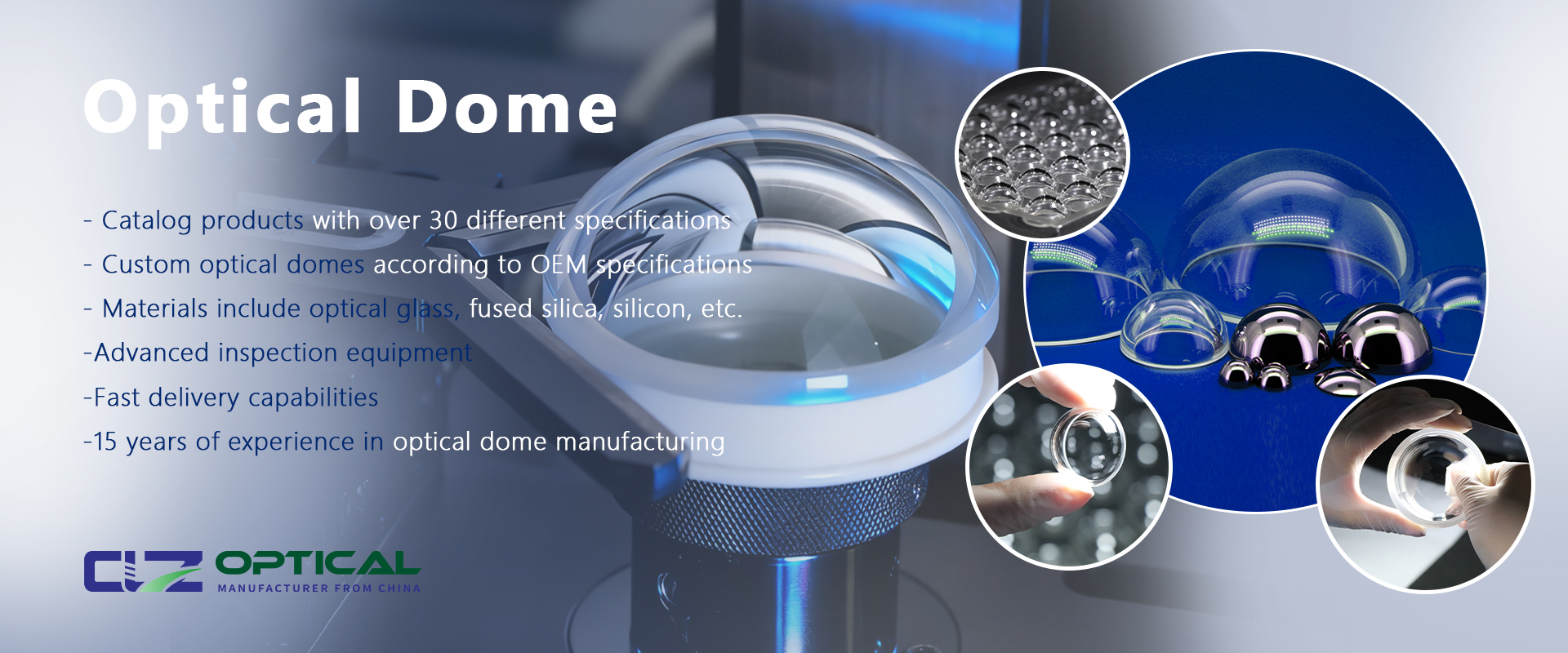
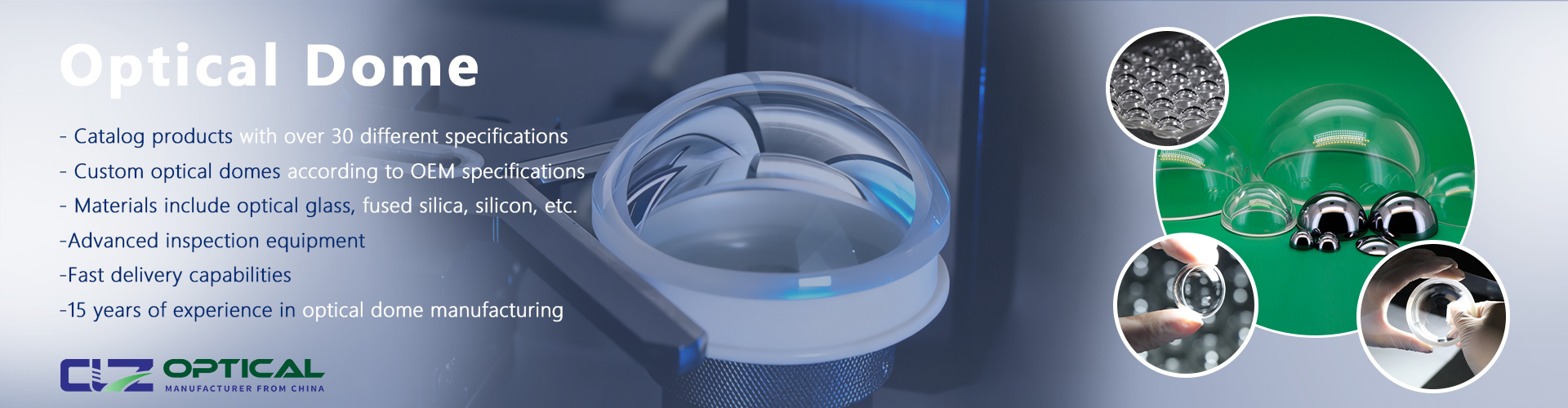
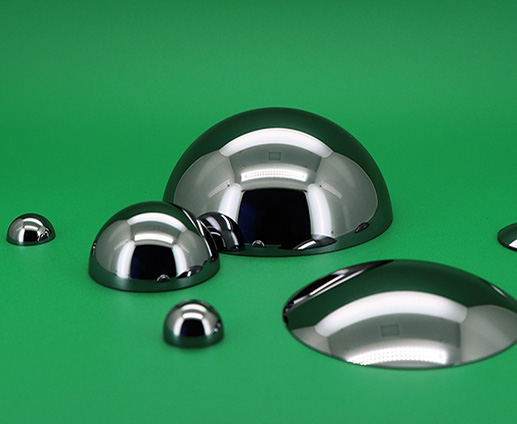
Customizable silicon domes are precision-engineered optical covers made from high-purity silicon materials. They are designed in dome shapes to protect sensitive optical sensors while maintaining excellent transmission performance, especially in infrared (IR) and near-infrared (NIR) wavelengths.
Key Characteristics:
High infrared transmission capability
Excellent mechanical strength
Strong resistance to thermal shock
Customizable geometry (radius, thickness, curvature)
Suitable for harsh environmental conditions
These properties make them highly suitable for defense-grade optical systems.
Why Silicon Domes Are Critical in Defense Applications
Military systems operate in environments where failure is not an option. Equipment must perform under:
Extreme temperature fluctuations
High-speed aerodynamic stress
Dust, sand, and salt exposure
Mechanical shock and vibration
Electromagnetic interference zones
Customizable silicon domes provide a protective optical barrier while ensuring that sensor performance is not compromised.
Key Military and Defense Applications
1. Infrared (IR) Imaging Systems
Silicon domes are widely used in IR detection systems for:
Target acquisition
Night vision imaging
Thermal surveillance
They allow IR radiation to pass through with minimal distortion, ensuring clear and accurate thermal signatures.
2. Missile Guidance Systems
One of the most critical applications is in missile seeker heads.
Role of silicon domes:
Protect seeker optics during high-speed flight
Maintain aerodynamic shape
Ensure uninterrupted IR signal transmission
In these systems, optical clarity and structural integrity directly affect mission success.
3. Unmanned Aerial Vehicles (UAVs)
Modern drones rely heavily on optical sensors for navigation and reconnaissance.
Customizable silicon domes are used in:
EO/IR payload protection
Surveillance cameras
Autonomous navigation systems
They provide durability while maintaining high-resolution imaging capability.
4. Ground Surveillance and Radar Integration Systems
Defense ground systems use silicon domes to protect:
Multi-sensor surveillance units
Thermal detection modules
Optical radar hybrid systems
Their resistance to environmental degradation ensures long-term field deployment.
5. Naval and Marine Defense Systems
In marine environments, saltwater corrosion and humidity are major challenges.
Silicon domes are used in:
Shipborne IR tracking systems
Coastal surveillance equipment
Subsea optical sensors
Their chemical stability makes them ideal for long-term exposure to seawater conditions.
Advantages of Customizable Silicon Domes in Defense Systems
1. Superior Infrared Transmission
Silicon offers excellent transmission in IR bands, making it ideal for thermal imaging and targeting systems.
2. High Mechanical Strength
Silicon domes can withstand:
High-speed airflow
Impact stress
Vibrational loads
This is essential for airborne and missile applications.
3. Environmental Resistance
They resist:
Dust and sand erosion
Moisture and corrosion
Temperature extremes
This ensures reliability in desert, marine, and arctic conditions.
4. Custom Engineering Flexibility
Manufacturers can customize:
Dome curvature
Thickness distribution
Surface coating (anti-reflective or protective layers)
Optical performance parameters
This allows integration into highly specialized defense systems.
5. Long Operational Lifespan
Compared with traditional optical materials, silicon domes maintain performance over long deployment cycles with minimal degradation.
Challenges in Defense Applications
Despite their advantages, customizable silicon domes also face challenges:
High precision manufacturing requirements
Cost of advanced machining and polishing
Strict defense certification standards
Complex integration with multi-sensor systems
However, advancements in semiconductor-grade processing are continuously improving production efficiency.
Future Trends in Military Silicon Dome Technology
The future of customizable silicon domes is closely linked to next-generation defense systems:
AI-powered targeting and tracking systems
Hypersonic missile guidance optics
Multi-band infrared imaging systems
Lightweight UAV sensor modules
Integrated electro-optical/infrared (EO/IR) platforms
As defense systems become more intelligent and sensor-driven, demand for high-performance optical domes will continue to increase.
Conclusion
Customizable silicon domes are a critical component in modern military and defense systems, enabling reliable optical performance in some of the most demanding environments on Earth.
Their combination of infrared transparency, mechanical strength, and environmental resistance makes them indispensable for applications ranging from missile guidance to UAV surveillance and naval defense systems.
As defense technology continues to evolve toward higher precision and multi-sensor integration, silicon domes will remain a foundational element in next-generation optical engineering.