


HRFZ-Si THz Lens for Medical Imaging Applications
Apr. 24, 2026
Terahertz (THz) technology is gradually reshaping the landscape of advanced medical imaging. Among the key optical components enabling this progress, the HRFZ-Si THz lens (High-Resistivity Float-Zone Silicon Terahertz Lens) stands out for its exceptional low-loss performance, high transmission efficiency, and stability in sensitive diagnostic environments.
This article explores how HRFZ-Si THz lenses are used in medical imaging, why they are preferred, and what benefits they bring to modern healthcare and biomedical research.
What Is an HRFZ-Si THz Lens?
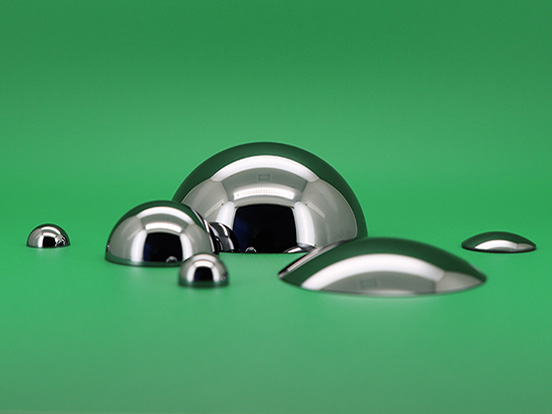
An HRFZ-Si THz lens is a precision optical component made from high-resistivity float-zone silicon, specifically engineered for terahertz frequency applications.
Unlike conventional optical lenses, it is designed to operate in the 0.1–10 THz frequency range, where traditional materials like glass or plastic fail due to high absorption losses.
Key Material Characteristics:
Extremely high electrical resistivity (reduces signal loss)
Low absorption in THz spectrum
High refractive index (~3.4)
Excellent thermal and mechanical stability
These properties make it highly suitable for medical-grade imaging systems requiring high precision and signal clarity.
Why HRFZ-Si THz Lens Is Important in Medical Imaging
Medical imaging systems demand:
High resolution
Non-invasive operation
Safe interaction with biological tissues
Accurate signal transmission
THz waves are particularly attractive because they are:
Non-ionizing (safer than X-rays)
Sensitive to water content and molecular composition
Capable of distinguishing between healthy and diseased tissues
However, THz systems are highly sensitive to optical losses. This is where HRFZ-Si THz lenses play a critical role.
They help by:
Minimizing energy loss during transmission
Maintaining beam focus and imaging resolution
Improving system stability and repeatability
Applications in Medical Imaging
1. Skin Cancer Detection
HRFZ-Si THz lenses are widely used in experimental systems for early-stage skin cancer detection.
THz waves can differentiate between:
Healthy skin tissue
Cancerous lesions (higher water content)
The lens ensures:
Sharp beam focusing on tissue surfaces
High contrast imaging results
Improved diagnostic accuracy
2. Dental Imaging
In dental research, THz imaging is emerging as a non-invasive alternative for:
Enamel and dentin analysis
Early caries detection
Micro-crack identification
HRFZ-Si lenses improve image clarity, allowing researchers to detect sub-surface defects without radiation exposure.
3. Burn Assessment and Tissue Hydration Mapping
Burn severity is closely linked to tissue water content.
THz imaging systems using HRFZ-Si lenses can:
Map hydration levels in tissue
Distinguish burn depth
Assist in treatment planning
The lens ensures stable imaging even in high-contrast biological environments.
4. Biomedical Spectroscopy
HRFZ-Si THz lenses are also used in THz time-domain spectroscopy (THz-TDS) systems for:
Protein structure analysis
Pharmaceutical research
Biomolecular interaction studies
Their low-loss transmission improves spectral accuracy, which is essential for medical research.
5. Pharmaceutical Quality Inspection
In pharmaceutical industries, THz imaging is used to:
Detect tablet coating uniformity
Identify internal defects
Monitor crystallization states
HRFZ-Si lenses enhance system sensitivity, enabling non-destructive testing of drugs and formulations.
Advantages of HRFZ-Si THz Lens in Medical Systems
1. Low Signal Loss
Medical imaging requires high signal integrity. HRFZ-Si minimizes absorption, ensuring strong and clean THz signals.
2. High Imaging Resolution
The material’s high refractive index allows precise beam focusing, improving image sharpness.
3. Non-Destructive and Safe Imaging
Since THz radiation is non-ionizing, it is safer for biological applications compared to X-ray systems.
4. Thermal Stability
Medical devices often operate continuously. HRFZ-Si lenses maintain performance under varying temperatures.
5. Long-Term Reliability
High durability reduces maintenance and recalibration frequency in medical equipment.
Design Considerations for Medical Applications
When integrating HRFZ-Si THz lenses into medical imaging systems, engineers typically evaluate:
Optical Requirements
Frequency range compatibility
Beam focusing precision
Anti-reflection coating needs
Mechanical Requirements
Surface flatness
Lens curvature accuracy
Edge quality for mounting
Biological Interaction
Tissue penetration depth
Moisture sensitivity
Signal-to-noise optimization
Challenges in Medical Adoption
Despite its advantages, several challenges remain:
High manufacturing cost
Precision machining requirements
System integration complexity
Limited commercialization in routine hospital use
However, ongoing advancements in THz technology are gradually reducing these barriers.
Future Trends in Medical THz Imaging
The use of HRFZ-Si THz lenses is expected to grow in:
AI-assisted medical imaging systems
Portable diagnostic THz devices
Real-time surgical imaging tools
Early disease detection platforms
As medical imaging moves toward non-invasive and high-resolution diagnostics, HRFZ-Si lenses will play an increasingly important role.
Conclusion
The HRFZ-Si THz lens is a critical enabling component in next-generation medical imaging systems. Its unique combination of low loss, high transmission efficiency, and optical precision makes it ideal for applications ranging from cancer detection to pharmaceutical inspection.
Although still in the advanced research and development stage, its potential in healthcare is significant. As THz technology matures, HRFZ-Si lenses are expected to become a cornerstone of high-performance biomedical imaging systems.