


Ball Lenses for Scientific Research and Lab Equipment
Apr. 24, 2026
In modern scientific research and precision laboratory systems, optical components play a decisive role in measurement accuracy, signal quality, and experimental stability. Among these components, ball lenses are widely used due to their compact design, excellent optical coupling ability, and versatility across a wide range of photonics applications.
From fiber coupling experiments to advanced spectroscopy setups, ball lenses have become an essential building block in many lab environments where space, precision, and efficiency matter.
What Are Ball Lenses?
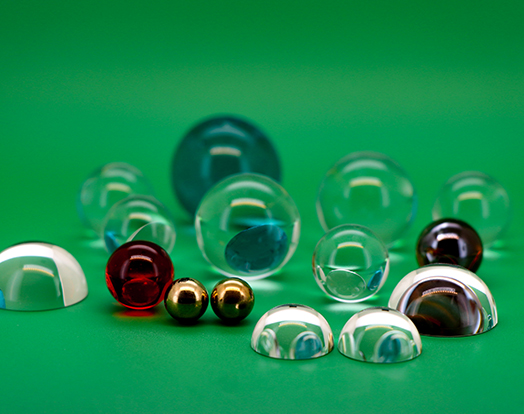
Ball lenses are highly polished spherical optical components made from materials such as optical glass, sapphire, or fused silica. Their spherical geometry allows them to focus, collimate, or couple light efficiently between optical systems.
Key Optical Characteristics:
360° symmetrical geometry
High refractive index control
Excellent beam focusing capability
Low insertion loss in optical coupling
Compact size suitable for micro-optical systems
Because of these features, ball lenses are especially valuable in laboratory research setups where precision optical alignment is required.
Why Ball Lenses Are Important in Scientific Research
Scientific experiments often require stable, repeatable, and highly accurate optical paths. Traditional lens systems may be too large or complex for compact laboratory instruments.
Ball lenses solve this problem by offering:
Simple optical alignment
Minimal footprint in experimental setups
High coupling efficiency
Broad wavelength compatibility
These advantages make them a preferred choice in both academic and industrial research environments.
Key Applications in Scientific Research and Lab Equipment
1. Fiber Optic Coupling Experiments
One of the most common uses of ball lenses in laboratories is optical fiber coupling.
Functions:
Efficiently couple laser light into single-mode or multimode fibers
Reduce alignment sensitivity compared to traditional lenses
Improve signal stability in experimental systems
Ball lenses help researchers achieve high coupling efficiency with minimal optical loss, which is critical in photonics experiments.
2. Laser Beam Shaping and Focusing
In laser-based research systems, beam control is essential.
Ball lenses are used to:
Focus laser beams into small spots
Collimate diverging beams
Adjust beam divergence in compact systems
This is particularly useful in:
Material processing research
Optical trapping experiments
Microscopy systems
3. Spectroscopy Systems (Raman, IR, and THz)
Spectroscopy relies heavily on precise light delivery and collection.
Ball lenses improve:
Signal-to-noise ratio
Light collection efficiency
System compactness
They are commonly used in:
Raman spectroscopy setups
Infrared spectroscopy systems
Terahertz experimental instruments
4. Biomedical and Life Science Research
In life science laboratories, ball lenses support optical diagnostic systems such as:
Fluorescence microscopy
Endoscopic research systems
Cell imaging platforms
Their small size allows integration into miniaturized biomedical devices, enabling real-time observation of biological samples.
5. Optical Sensor Development
Research labs developing next-generation optical sensors use ball lenses for:
Light input/output coupling
Signal enhancement in photodetectors
Compact sensor module design
They help improve sensor sensitivity and reduce system complexity.
6. Quantum Optics and Photonics Experiments
In advanced physics research, such as quantum optics, stability and precision are critical.
Ball lenses are used in:
Photon coupling systems
Quantum communication experiments
Single-photon detection setups
Their ability to maintain stable optical alignment makes them suitable for sensitive experiments.
Advantages of Ball Lenses in Laboratory Equipment
1. High Optical Efficiency
Ball lenses minimize light loss during coupling, improving experimental accuracy.
2. Compact Design
Their small size allows integration into miniaturized optical systems and portable lab instruments.
3. Easy Alignment
Compared to multi-element lens systems, ball lenses are easier to align, saving setup time in research environments.
4. Wide Wavelength Compatibility
Ball lenses can operate across:
Visible spectrum
Near-infrared (NIR)
Infrared (IR) applications
This makes them highly versatile in multi-disciplinary research.
5. Cost-Effective Optical Solution
For many laboratory setups, ball lenses offer a lower-cost alternative to complex lens assemblies without sacrificing performance.
Materials Used in Laboratory-Grade Ball Lenses
The choice of material directly affects optical performance:
Optical Glass (N-BK7): General lab use, cost-effective
Fused Silica: High laser damage threshold, low thermal expansion
Sapphire: Extreme durability for harsh conditions
Quartz: High transmission in UV applications
Selecting the right material depends on experimental wavelength and power requirements.
Design Considerations in Scientific Applications
When integrating ball lenses into lab systems, researchers typically evaluate:
Optical Parameters:
Refractive index
Diameter and focal length
Transmission wavelength range
Mechanical Parameters:
Surface quality and polish grade
Dimensional tolerance
Mounting compatibility
System Integration:
Fiber alignment precision
Beam divergence control
Optical path stability
Common Challenges in Lab Use
Despite their advantages, ball lenses also present some challenges:
Sensitive to misalignment in high-precision systems
Limited control over aberrations compared to multi-element lenses
Requires careful handling due to small size
Performance depends heavily on material quality and surface finish
However, these limitations are often outweighed by their simplicity and efficiency.
Future Trends in Scientific Applications
The use of ball lenses is expected to grow alongside advancements in:
Integrated photonics
Lab-on-chip technologies
Quantum communication systems
Miniaturized biomedical devices
AI-assisted optical measurement systems
As research equipment becomes more compact and precise, ball lenses will remain a core optical component.
Conclusion
Ball lenses play a critical role in scientific research and laboratory equipment by enabling efficient light coupling, compact system design, and high-precision optical performance.
Their versatility across fiber optics, spectroscopy, laser systems, and biomedical research makes them an indispensable component in modern laboratories.
As scientific instruments continue to evolve toward miniaturization and higher performance, the importance of ball lenses will only continue to increase.

Previous: None
Next: Customizable Silicon Domes in Military and Defense Systems