



Applications of Spectral Prisms in Infrared and Ultraviolet Detection
Dec. 19, 2025
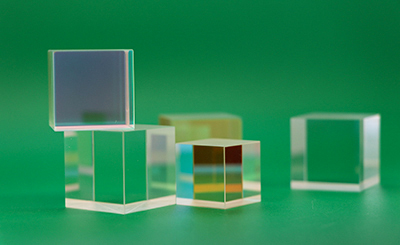
The core mission of a beam splitter prism is to precisely "deconstruct" a beam of composite light into a continuous monochromatic spectrum according to wavelength. Its physical foundation is the refraction of light—light of different wavelengths separates when passing through a medium interface due to differences in refractive index. This "dispersion" characteristic is even more subtle and challenging in the non-visible light band. Infrared light has a longer wavelength (approximately 700 nanometers to 1 millimeter) and lower photon energy, making it easily absorbed by ordinary optical materials; while ultraviolet light has a shorter wavelength (approximately 10 nanometers to 400 nanometers), higher photon energy, stronger penetrating power, and a stronger photochemical effect on materials. Therefore, the application of beam splitters in infrared and ultraviolet detection is far more than simply transplanting visible light technology; it is a systematic challenge involving materials science, coating processes, and precision design.
On the vast stage of infrared detection, beam splitters are key to obtaining the "thermal fingerprint" of matter. Any object with a temperature above absolute zero radiates infrared radiation, and its spectral characteristics act like a unique identity card. By using prisms to disperse light, scientists can resolve these spectra, thereby identifying the composition of matter, measuring temperature, and even reversing its physical state. For example, in environmental monitoring, Fourier transform infrared spectrometers equipped with spectroscopic prisms can detect the concentration of greenhouse gases (such as carbon dioxide and methane) in the atmosphere at long distances, with a resolution sufficient to distinguish different isotopic compositions, providing crucial data for carbon cycle research. In astronomical observation, infrared spectroscopic prisms help us penetrate the obscuration of interstellar dust, "peeking" into the cradle of star formation and the secrets of galactic cores. The renowned James Webb Space Telescope (JWST) is equipped with advanced spectroscopic elements to analyze the atmospheric composition of exoplanets and search for signs of life. In industry and security, infrared spectroscopic technology can be used to detect material defects, identify camouflaged targets, or perform precise identification against complex backgrounds.
Turning to the other end of the spectrum, ultraviolet (UV) detection concerns the world of photons with even higher energies. The applications of UV spectroscopic prisms are equally profound. In space science and astronomy, they are used to observe solar UV bursts, study the hot atmospheres of stars, and detect elemental abundance in the interstellar medium. In life sciences and medicine, UV spectroscopy is a powerful tool for studying the structure of biological macromolecules such as proteins and nucleic acids; its sensitive fingerprinting capabilities hold great potential for early disease diagnosis. In environmental and safety matters, UV spectroscopic technology can effectively monitor ozone layer depletion, detect organic pollutants in water bodies, or provide early warning of biochemical threats in public places.
However, traditional optical glasses (such as BK7) are insufficient for making spectroscopic prisms work efficiently in the infrared and ultraviolet bands. They exhibit severe absorption in the infrared region and a sharp drop in transmittance in the ultraviolet region. Therefore, scientists and engineers have turned to special crystal materials that must meet stringent requirements such as high transmittance, suitable dispersion, and excellent mechanical and chemical stability.
In the ultraviolet (UV) band, calcium fluoride (CaF₂) and magnesium fluoride (MgF₂) are undoubtedly the star materials. Calcium fluoride crystals exhibit excellent transmittance from deep UV to mid-infrared (approximately 0.13 μm - 10 μm) and moderate dispersion, making them a classic choice for fabricating UV spectrometers. However, their hardness is relatively low, and they are prone to deliquescence, requiring a protective coating. Magnesium fluoride, on the other hand, demonstrates stability over a wider wavelength range (from vacuum UV to mid-infrared), has higher hardness, and better weather resistance, and is often used in extreme environments such as space optics. In addition, fused silica (SiO₂) also has good UV transmittance and is relatively inexpensive, making it widely used in various UV optical systems.
For the mid- and far-infrared bands (typically above 2 μm), material choices differ drastically. Silicon (Si) and germanium (Ge) dominate. Single-crystal silicon is transparent in the 1.2 μm to 15 μm range, is abundant, and has mature processing technology. Single-crystal germanium, on the other hand, has extremely high transmittance for infrared light in the 2 μm to 23 μm range, a high refractive index, and strong dispersion, making it ideal for fabricating compact and efficient infrared beam splitters; however, it is expensive and temperature-sensitive. In addition, group II-VI compounds such as zinc sulfide (ZnS) and zinc selenide (ZnSe) exhibit good performance across a wide infrared band, particularly in thermal imaging and laser systems.
Besides the materials themselves, coating these special prisms with anti-reflective coatings is crucial. These films need to be precisely designed according to specific wavelengths (e.g., mid-infrared 3-5 μm or long-infrared 8-14 μm) to minimize interface reflection losses and improve the overall system's luminous flux and signal-to-noise ratio.
Despite its remarkable achievements, infrared and ultraviolet beam splitter technology continues to face challenges. High material purity and large-aperture crystal growth, precise fabrication of complex films, and long-term stability under extreme environments (such as deep space cryogenics and high-energy radiation) are all at the forefront of the technology. In the future, with the exploration of new materials (such as novel chalcogenide glasses and photonic crystals), the integration of micro-nano manufacturing technologies and computational optics, beam splitters are evolving towards higher performance, more compact integration, and greater intelligence (such as adaptive spectral tuning).