


Positive Cylinder Lenses: Working Principle, Applications, Benefits, and Selection Guide
Aug. 12, 2026
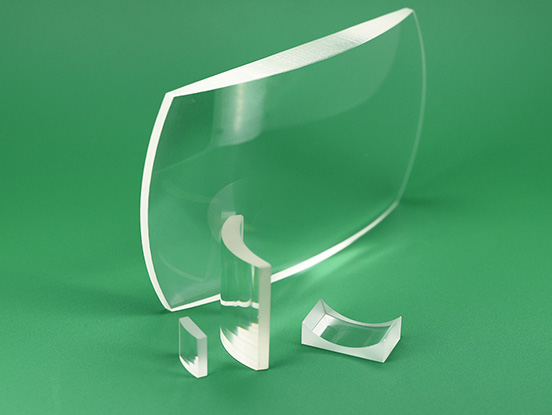
Positive cylinder lenses, more commonly called positive cylindrical lenses, are optical components designed to focus light in only one dimension. Unlike conventional spherical lenses, which focus light symmetrically in two axes, a positive cylinder lens has optical power along one axis while leaving the perpendicular axis essentially unchanged.
This unique optical behavior makes positive cylinder lenses valuable for laser beam shaping, line generation, machine vision, spectroscopy, optical measurement, barcode scanning, imaging correction, and other applications where light must be manipulated differently in the horizontal and vertical directions.
For optical engineers, equipment manufacturers, and OEM buyers, selecting the correct positive cylinder lens requires careful consideration of focal length, diameter, material, wavelength range, surface quality, coating, and orientation.
This guide explains how positive cylinder lenses work, their main types, applications, advantages, and the key specifications to consider when choosing them.
What Is a Positive Cylinder Lens?
A positive cylinder lens is a lens with positive optical power in one meridian and little or no optical power in the perpendicular meridian.
Instead of focusing incoming light to a single point, as a spherical positive lens does, a cylindrical lens focuses parallel light into a line.
This happens because the lens has curvature in only one direction.
A typical positive cylindrical lens may have:
One curved cylindrical surface and one flat surface
Two cylindrical surfaces
Positive optical power along one axis
No focusing power along the orthogonal axis
Because of this geometry, positive cylinder lenses are commonly used whenever an optical system needs to reshape a beam in only one direction.
How Do Positive Cylinder Lenses Work?
The operating principle is based on one-dimensional refraction.
When a collimated beam passes through a positive cylinder lens, the curved surface causes the light rays to converge along one axis.
Along the perpendicular axis, however, the beam remains almost unchanged.
As a result, a round beam can be transformed into:
A line
An elliptical beam
A narrow stripe
An astigmatically corrected beam
This is the key difference between cylindrical and spherical lenses.
A spherical lens focuses light in both horizontal and vertical directions.
A cylindrical lens focuses light only in one direction.
This one-dimensional optical power gives designers much greater control over beam geometry.
Positive Cylinder Lens vs. Spherical Lens
The main difference lies in the shape of the focusing region.
| Feature | Positive Cylinder Lens | Positive Spherical Lens |
|---|---|---|
| Optical power | One axis | Two axes |
| Focal shape | Line | Point |
| Beam shaping | Excellent | Limited |
| Line generation | Yes | No |
| Astigmatism correction | Suitable | Limited |
| Laser beam shaping | Common | Common |
| Imaging applications | Specialized | General |
A spherical lens is appropriate when symmetrical focusing is required.
A cylindrical lens is preferred when the optical system needs to manipulate only one dimension of the beam.
Positive Cylinder Lens vs. Negative Cylinder Lens
Positive and negative cylinder lenses have opposite effects on incoming light.
Positive Cylinder Lenses
Positive cylindrical lenses cause light to converge in one dimension.
They are commonly used for:
Line focusing
Laser line generation
Beam compression
Beam correction
Imaging systems
Negative Cylinder Lenses
Negative cylinder lenses cause light to diverge in one dimension.
Typical applications include:
Beam expansion
Laser beam reshaping
Astigmatism correction
Optical system compensation
Positive and negative cylinder lenses can also be combined to create more complex beam-shaping systems.
Common Types of Positive Cylinder Lenses
Positive cylinder lenses are available in several configurations.
Plano-Convex Cylinder Lenses
A plano-convex cylindrical lens has:
One flat surface
One convex cylindrical surface
This is one of the most common forms of positive cylinder lens.
It is often used to:
Focus collimated light into a line
Collimate diverging light in one axis
Shape laser beams
Generate illumination lines
Plano-convex cylinder lenses offer relatively simple construction and are widely used in industrial and laboratory optical systems.
Bi-Convex Cylinder Lenses
Bi-convex cylinder lenses have two outward-curved cylindrical surfaces.
They may be suitable when:
Higher optical power is needed
Symmetrical focusing conditions are preferred
The object and image distances are relatively similar
Their application depends on the complete optical layout.
Achromatic Cylinder Lenses
For broadband optical systems, chromatic aberration may become significant.
Achromatic cylindrical lenses use multiple optical materials to reduce wavelength-dependent focusing differences.
They may be useful in:
Broadband imaging
Spectroscopy
Scientific instruments
Precision measurement systems
Aspheric Cylinder Lenses
Aspheric cylindrical lenses use a non-spherical profile along the powered axis.
They can provide improved control of spherical aberration and may be selected for:
High-power laser focusing
Precision line generation
High numerical aperture applications
Advanced imaging systems
Common Applications of Positive Cylinder Lenses
Positive cylindrical lenses are used across a wide range of optical industries.
Laser Line Generation
One of the most common applications is converting a laser beam into a line.
A round collimated laser beam passing through a positive cylinder lens becomes focused in one dimension.
This creates a narrow laser line that can be used for:
Machine vision
3D scanning
Surface inspection
Alignment
Laser measurement
Industrial automation
Laser line uniformity depends not only on the cylindrical lens but also on the input beam profile and overall optical design.
Machine Vision Systems
Machine vision systems often require line-shaped illumination rather than a circular beam.
Positive cylinder lenses can help create optimized illumination for:
Surface defect inspection
Dimension measurement
PCB inspection
Semiconductor inspection
Packaging inspection
Automated sorting
Production-line monitoring
A controlled illumination line can improve contrast and make defects easier for imaging sensors to detect.
Laser Beam Shaping
Many laser sources do not produce perfectly symmetrical beams.
For example, diode lasers often produce different divergence angles in the fast and slow axes.
Positive cylinder lenses can correct or modify this asymmetry.
They may be used to:
Reduce divergence in one direction
Expand or compress one beam axis
Convert an elliptical beam toward a more symmetrical profile
Improve coupling into downstream optics
For higher-performance systems, multiple cylindrical lenses may be used together.
Barcode Scanners
Barcode scanning systems often require a narrow scanning line.
Cylindrical optics can help shape the laser beam into a line suitable for reading one-dimensional barcode patterns.
Spectroscopy
Spectroscopic equipment may require light to be focused onto:
Entrance slits
Detector arrays
Diffraction gratings
Spectrometer input apertures
Positive cylinder lenses can concentrate light in one dimension while maintaining beam width in the other.
This can improve optical throughput and matching between different components.
Optical Measurement Equipment
Positive cylinder lenses are useful in many measurement systems that require asymmetric focusing.
Applications may include:
Profilometry
Surface measurement
Optical alignment
Dimensional inspection
Interferometry
Position sensing
3D Imaging and Laser Triangulation
Laser triangulation systems often project a line onto an object.
A camera then observes how this line changes across the object's surface.
The resulting information can be used to calculate:
Height
Depth
Surface profile
Position
Shape
Positive cylinder lenses are therefore important components in:
3D scanners
Industrial profiling systems
Robotic vision
Automated inspection equipment
Medical and Scientific Instruments
Cylindrical optics may also be integrated into:
Medical imaging equipment
Laboratory analyzers
Optical diagnostic instruments
Laser therapy systems
Scientific imaging devices
Application-specific requirements may include tighter surface tolerances, specialized coatings, or particular optical materials.
How Positive Cylinder Lenses Generate a Laser Line
A conventional collimated laser beam typically has a circular or elliptical cross-section.
When the beam passes through a positive cylinder lens:
The lens bends light along its powered axis.
The beam converges toward a focal line.
The perpendicular beam dimension remains largely unchanged.
At the focal plane, a narrow laser line is formed.
The dimensions of the line depend on factors such as:
Input beam diameter
Focal length
Wavelength
Lens aperture
Lens quality
Beam divergence
Lens orientation
Shorter focal lengths generally create stronger focusing and shorter working distances.
Longer focal lengths provide more gradual convergence.
Key Advantages of Positive Cylinder Lenses
One-Dimensional Focusing
The most important advantage is their ability to focus light along only one axis.
This enables beam transformations that cannot easily be achieved using conventional spherical lenses.
Compact Optical Design
A single cylinder lens can perform beam shaping that might otherwise require a more complicated optical assembly.
Flexible Laser Beam Control
Cylindrical lenses allow engineers to independently control horizontal and vertical beam dimensions.
This is especially useful for diode lasers and other asymmetric light sources.
Suitable for Line Illumination
They provide an effective solution for generating laser lines used in inspection, measurement, and scanning systems.
Wide Material Availability
Positive cylinder lenses can be produced using materials such as:
BK7 optical glass
Fused silica
High-index optical glass
UV-grade fused silica
Infrared optical materials
This allows the lens to be optimized for different wavelengths and environmental conditions.
Important Specifications When Selecting Positive Cylinder Lenses
Choosing the correct lens requires evaluating several optical and mechanical parameters.
Focal Length
Focal length determines the focusing strength of the cylinder lens.
A shorter focal length provides:
Stronger optical power
Shorter working distance
Faster beam convergence
A longer focal length provides:
Lower optical power
Longer working distance
More gradual focusing
The required focal length should be determined from the complete optical layout.
Lens Dimensions
Cylinder lenses may be:
Rectangular
Square
Circular
Important dimensions include:
Length
Width
Diameter
Center thickness
Edge thickness
Mechanical mounting requirements should be considered before finalizing the lens geometry.
Clear Aperture
The clear aperture defines the usable optical area.
An undersized aperture can cause:
Beam clipping
Reduced illumination
Diffraction effects
Power loss
The clear aperture should be larger than the active beam area whenever possible.
Optical Material
Material selection affects:
Transmission
Refractive index
Dispersion
Thermal performance
Laser damage resistance
Cost
BK7
BK7-type optical glass is widely used for visible and near-infrared systems because of its:
Good transmission
Stable optical properties
Good manufacturability
Moderate cost
Fused Silica
Fused silica is commonly selected for demanding optical systems because it offers:
Broad transmission
Low thermal expansion
Good thermal stability
Good laser damage resistance
It is frequently used in UV and high-power laser applications.
Surface Quality
Surface scratches and digs can introduce scattering and reduce system performance.
Typical requirements depend on application sensitivity.
General industrial optics may tolerate looser surface specifications, while laser and precision measurement systems may require tighter standards.
Surface Figure
Surface figure determines how accurately the cylindrical surface matches the intended optical shape.
Poor surface accuracy can result in:
Uneven line focusing
Aberrations
Reduced resolution
Distorted beam profiles
High-performance laser systems generally require tighter surface figure tolerances.
Wedge and Parallelism
Mechanical and optical alignment can be affected by wedge errors.
This is particularly important when the lens is integrated into precision mounts or multi-element optical systems.
Anti-Reflection Coating
Uncoated glass surfaces reflect part of the incoming light.
Anti-reflection coatings can improve transmission and reduce unwanted reflections.
Coatings may be designed for:
UV
Visible
NIR
532 nm
633 nm
808 nm
1064 nm
1550 nm
Custom wavelength bands
Laser applications should use coatings designed specifically for the operating wavelength and optical power.
How to Choose a Positive Cylinder Lens
A practical selection process should begin with the optical system requirements.
Step 1: Define the Required Beam Transformation
Determine whether you need to:
Focus a beam into a line
Collimate one axis
Correct beam asymmetry
Compress a beam
Produce line illumination
Different requirements may call for different focal lengths and lens configurations.
Step 2: Define the Operating Wavelength
Choose a material and coating suitable for the light source.
A lens designed for visible light may not provide optimal performance in UV or infrared applications.
Step 3: Determine Input Beam Size
The beam dimensions help determine:
Lens aperture
Cylinder length
Required clear aperture
Avoid selecting a lens whose clear aperture is only marginally larger than the beam.
Step 4: Determine the Required Focal Length
Consider:
Working distance
Required line width
Optical package length
Beam divergence
Optical simulation may be helpful for precision applications.
Step 5: Determine Required Line Quality
Some applications only need general line illumination.
Others require:
Uniform intensity
Precise line width
Minimal aberration
Tight focus
Stable edge quality
Higher-performance applications may require tighter manufacturing tolerances.
Step 6: Select the Appropriate Coating
Choose an AR coating that matches the source wavelength.
For laser systems, also evaluate laser damage threshold.
Positive Cylinder Lenses for Laser Diode Beam Correction
Laser diodes often have very different divergence angles along their two axes.
This produces a beam that may be highly elliptical.
A cylindrical lens system can independently modify one axis to improve beam shape.
A typical configuration may involve:
Laser diode → Cylindrical lens → Collimated or reshaped beam
In more advanced designs, two cylindrical lenses can form a beam expander or compressor for one axis.
This allows engineers to better match the laser beam to:
Optical fibers
Scanning systems
Detectors
Focusing optics
Imaging systems
Using Two Cylinder Lenses Together
Two cylindrical lenses can create more flexible beam-shaping arrangements.
For example, a pair of positive and negative cylinder lenses may form a cylindrical telescope.
This can change the beam width in only one dimension.
Applications include:
Elliptical beam correction
Laser beam compression
Beam expansion
Anamorphic optical systems
The relative orientation of the cylindrical axes is critical.
If both lenses are aligned along the same axis, they affect the same beam dimension.
If rotated by 90 degrees, they affect different axes.
Orientation and Alignment of Cylinder Lenses
Correct orientation is one of the most important practical considerations.
Because a cylindrical lens has optical power only in one direction, rotating it changes which axis of the beam is affected.
Even a small rotational error may cause:
Tilted laser lines
Uneven beam shape
Reduced measurement accuracy
Alignment problems
Precision systems may therefore require:
Dedicated lens mounts
Rotation adjustment
Alignment marks
Tight mechanical tolerances
Common Problems When Using Positive Cylinder Lenses
Uneven Laser Line
An uneven line may result from:
Non-uniform input beam
Lens aberrations
Incorrect focal distance
Lens contamination
Poor optical alignment
A cylinder lens alone does not necessarily produce a perfectly uniform intensity distribution.
Additional line-generating optics may be required where high uniformity is essential.
Excessive Spherical Aberration
Although cylinder lenses focus in only one direction, spherical aberration can still occur along the powered axis.
This becomes more significant at:
Large apertures
Short focal lengths
High numerical apertures
Incorrect Orientation
A lens rotated by 90 degrees will focus the wrong beam axis.
Always confirm the cylindrical axis during assembly.
Reflection Loss
Without suitable AR coatings, reflections can reduce optical throughput and create ghost beams.
Beam Clipping
If the clear aperture is too small, the beam may be partially blocked.
Custom Positive Cylinder Lenses
Standard cylinder lenses are suitable for many laboratory and industrial systems.
However, OEM equipment may require customized optical components.
A custom positive cylinder lens may be appropriate when the system requires:
Non-standard focal length
Special lens dimensions
Customized cylinder radius
Tight surface tolerances
High-power laser operation
Special glass material
UV or IR transmission
Custom anti-reflection coating
Special edge geometry
Large-volume production
Custom lenses can be designed around the mechanical and optical requirements of the final equipment rather than forcing the equipment to accommodate a catalog component.
What Information Should Buyers Provide for a Custom Cylinder Lens?
Providing detailed requirements can make optical evaluation and quotation more efficient.
Useful information includes:
Lens type
Material
Dimensions
Cylinder radius
Effective focal length
Center thickness
Clear aperture
Surface quality
Surface figure
Dimensional tolerance
Wavelength
AR coating
Laser power, where applicable
Application
Production quantity
For laser applications, buyers should also specify:
Laser wavelength
Beam diameter
Beam divergence
Required line width
Working distance
Optical power
What Should Buyers Look for in a Positive Cylinder Lens Manufacturer?
For precision optical systems, supplier capability should extend beyond basic lens fabrication.
A qualified positive cylinder lens manufacturer should be able to support:
Optical Material Selection
The supplier should understand how glass choice affects:
Transmission
Optical power
Thermal stability
Laser compatibility
Precision Grinding and Polishing
Cylinder surfaces require controlled manufacturing to achieve:
Accurate radius
Good surface figure
Consistent focal performance
Surface and Dimensional Inspection
Quality control may include:
Radius inspection
Surface quality
Surface figure
Thickness
Dimensions
Clear aperture
Coating inspection
Optical Coating
The supplier should be able to provide or coordinate AR coatings matched to specific wavelength ranges.
Prototype and Volume Production
For OEM projects, it is valuable to work with a manufacturer capable of supporting:
Prototype quantities
Engineering samples
Pilot production
Repeat mass production
This helps maintain performance consistency as the project scales.
Common Positive Cylinder Lens Selection Mistakes
Selecting Only by Focal Length
Focal length is important, but it does not determine the entire optical performance.
Material, aperture, coating, surface accuracy, and beam size must also be considered.
Ignoring Lens Orientation
Cylinder lenses are directional optical components.
Incorrect orientation can make an otherwise correctly specified lens ineffective.
Using Too Small an Aperture
The lens should have enough clear aperture to accommodate the beam without clipping.
Ignoring Laser Power
For high-power laser systems, material quality and coating damage threshold must be considered.
Over-Specifying Surface Quality
Extremely tight tolerances increase manufacturing cost.
Specifications should match the actual system requirements.
Frequently Asked Questions About Positive Cylinder Lenses
What is a positive cylinder lens?
A positive cylinder lens is an optical lens that has positive focusing power in one direction and little or no optical power in the perpendicular direction.
What does a positive cylindrical lens do?
It focuses parallel light into a line rather than a point.
What are positive cylinder lenses used for?
They are commonly used for laser line generation, machine vision, beam shaping, barcode scanning, spectroscopy, optical measurement, and laser diode beam correction.
What is the difference between a cylinder lens and a spherical lens?
A spherical lens focuses light along two axes, while a cylinder lens focuses light along only one axis.
Can a cylinder lens create a laser line?
Yes. Positive cylinder lenses are widely used to convert collimated laser beams into focused lines.
Can positive cylinder lenses correct an elliptical laser beam?
Yes. Cylindrical optics can modify one beam dimension independently and are commonly used to correct asymmetrical laser diode beams.
What materials are available for positive cylinder lenses?
Common materials include BK7 optical glass, fused silica, high-index glass, and specialized UV or infrared materials.
Can positive cylinder lenses have AR coatings?
Yes. Anti-reflection coatings can be optimized for visible, UV, NIR, laser, or custom wavelength ranges.
Can positive cylinder lenses be customized?
Yes. Focal length, radius, dimensions, material, coating, surface accuracy, and other optical parameters can be customized for OEM applications.
Conclusion
Positive cylinder lenses provide one-dimensional focusing that makes them highly useful for laser beam shaping, laser line generation, machine vision, optical measurement, spectroscopy, and precision imaging systems.
Their ability to manipulate one beam axis independently gives optical engineers greater control over beam geometry than conventional spherical lenses can provide.
Selecting the right positive cylinder lens requires consideration of more than focal length alone. Buyers should evaluate operating wavelength, beam diameter, clear aperture, optical material, cylinder radius, surface quality, coating, alignment requirements, and working distance.
For standard applications, off-the-shelf positive cylindrical lenses may be sufficient. For OEM equipment, laser modules, inspection systems, and specialized optical instruments, custom positive cylinder lenses can be manufactured around specific optical, mechanical, and environmental requirements, helping achieve more stable performance and easier system integration.