





MgF₂ Coated vs. Uncoated Achromatic Lenses: Performance, Applications, and Buying Considerations
Jan. 13, 2026
Achromatic lenses are widely used in optical systems to reduce chromatic aberration and improve image quality across multiple wavelengths. When selecting an achromatic lens, one critical decision engineers and buyers must make is whether to choose MgF₂ coated or uncoated optics.
While both options share the same fundamental optical design, their surface treatment significantly affects transmission efficiency, reflection loss, durability, and application suitability. This article provides a comprehensive comparison of MgF₂ coated vs. uncoated achromatic lenses, helping optical designers, OEMs, and procurement teams make informed decisions.
What Is an Achromatic Lens?
An achromatic lens (often called an achromatic doublet) is composed of two optical elements—typically crown glass and flint glass—cemented together to correct chromatic aberration at two wavelengths (commonly red and blue).
Key benefits include:
Reduced color fringing
Improved image sharpness
Better focus consistency across visible wavelengths
Achromatic lenses are commonly used in:
Imaging systems
Laser optics
Machine vision
Scientific instruments
Medical and inspection equipment
However, surface reflections remain a limiting factor—this is where optical coatings, such as MgF₂, become important.
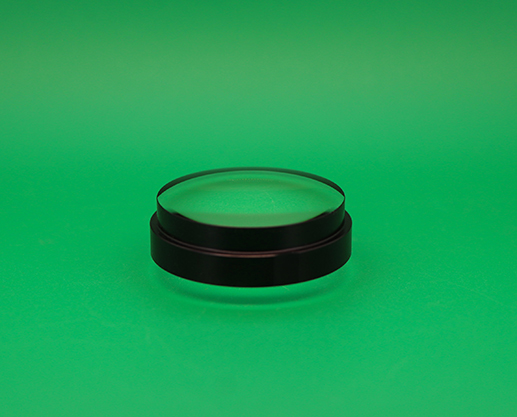
Understanding MgF₂ Optical Coating
Magnesium Fluoride (MgF₂) is one of the most widely used single-layer anti-reflection (AR) coatings in the optics industry.
Key Properties of MgF₂ Coating
Optimized for visible wavelengths (typically ~550 nm)
Reduces surface reflection from ~4% to ~1.5%
High environmental stability
Cost-effective compared to multi-layer AR coatings
MgF₂ coatings are applied via vacuum deposition and are known for their durability and broad compatibility across optical applications.
Uncoated Achromatic Lenses: Characteristics and Limitations
Uncoated achromatic lenses have bare glass surfaces, meaning no anti-reflection treatment is applied.
Advantages of Uncoated Achromatic Lenses
Lower upfront cost
Suitable for non-critical optical paths
Adequate for educational or experimental use
Limitations
Higher Fresnel reflection losses (~4% per surface)
Reduced transmission efficiency
Increased ghosting and stray light
Lower contrast in imaging systems
In systems with multiple optical elements, reflection losses from uncoated lenses can accumulate rapidly, degrading overall system performance.
MgF₂ Coated Achromatic Lenses: Performance Advantages
1. Higher Optical Transmission
MgF₂ coated achromatic lenses significantly improve light throughput by minimizing surface reflections.
Uncoated doublet: ~92% total transmission
MgF₂ coated doublet: ~96–97% total transmission
This difference is especially critical in:
Low-light imaging
Laser delivery systems
Spectroscopy applications
2. Reduced Reflection and Ghost Images
Surface reflections in uncoated lenses can lead to:
Internal reflections
Ghost images
Reduced contrast
MgF₂ coatings suppress these effects, making coated lenses preferable for high-contrast imaging and precision optics.
3. Improved System Signal-to-Noise Ratio
In machine vision, metrology, and scientific imaging, stray reflections introduce background noise. MgF₂ coated lenses help maintain a higher signal-to-noise ratio, improving measurement accuracy.
4. Better Performance in Multi-Lens Assemblies
As optical systems grow more complex, the cumulative impact of reflection losses increases. MgF₂ coatings help maintain consistent performance in:
Compound lens systems
Optical modules
OEM optical assemblies
Durability and Environmental Resistance
MgF₂ coatings offer:
Good hardness
Resistance to humidity
Stability under moderate temperature changes
Compared with uncoated lenses, MgF₂ coated optics are less prone to surface degradation in real-world environments, making them more suitable for industrial and long-term applications.
Typical Applications and Recommended Choices
Choose Uncoated Achromatic Lenses When:
Budget is extremely limited
Optical performance requirements are minimal
Used in educational demonstrations or basic experiments
Choose MgF₂ Coated Achromatic Lenses When:
High transmission is required
Contrast and image clarity matter
Used in laser, imaging, or inspection systems
Optics are part of a multi-element assembly
MgF₂ vs. Multi-Layer AR Coatings: A Quick Note
While MgF₂ coatings offer excellent value, some high-end applications may require broadband multi-layer AR coatings, which provide even lower reflectance across wider wavelength ranges.
However, MgF₂ remains a popular industry standard due to its:
Cost-performance balance
Reliability
Compatibility with visible optics
Buying Considerations for Optical Engineers and OEMs
When sourcing achromatic lenses, consider:
Target wavelength range
Required transmission efficiency
System complexity
Environmental conditions
Total cost of ownership
For most general-purpose visible light applications, MgF₂ coated achromatic lenses provide the optimal balance of performance and cost.
Conclusion: Which Should You Choose?
The choice between MgF₂ coated and uncoated achromatic lenses ultimately depends on application requirements.
Uncoated lenses may suffice for basic, low-performance systems
MgF₂ coated lenses deliver higher transmission, better contrast, and improved system reliability
For industrial, scientific, and commercial optical systems, MgF₂ coated achromatic lenses are generally the preferred and more future-proof solution.