


What are the differences between commonly used optical fluoride materials
Jan. 18, 2024
Most fluoride film materials have low melting points. The refractive index of fluoride films is also generally low, so they are often used as anti-reflective films. Another characteristic of fluoride thin film materials is that they are highly transparent from ultraviolet to infrared (except CeF3, which is transparent from 300 nm to 5 μm), making them particularly valuable for applications in the ultraviolet region. Except for fluoride films prepared by special processes, the mechanical strength of the films is poor, and the moisture resistance is not good (except for high-temperature plated MgF2). So, some common fluoride materials, what are the differences between them?
Aluminum Fluoride
The evaporated material has a smooth surface at low electron beam power, no spattering occurs, and the continuous decrease in vacuum chamber pressure during evaporation indicates that no volatiles or water vapor escapes. Excellent adhesion and transparency to the substrate. The material has the lowest refractive index values (among the fluorides given in the table). The loss of transmittance of about 2% at 400 nm is due to insufficient fluorine content in the film. This insufficient fluorine content is detected in the 150 nm thick AlF3 film, and it can be expected that it will not be detected in the ultraviolet region when the thickness of the film required for the application is one-tenth of this value. In comparison with previous work, no water vapor absorption bands were found in the AlF3 films deposited by electron beam deposition. The refractive index of the AlF3 film in the visible region is 1.34. The refractive index value reported in the literature for the AlF3 film is 1.385±5%, which exceeds the refractive index value for bulk AlF3. For high-energy applications, although the absorption of AlF3 films in the 10 μm region is slightly higher than desired, AlF3 films are promising for infrared applications. Experiments have shown that the durability and adhesion of AlF3 films are excellent. In the ultraviolet region, it has been found that AlF3 films can be applied to coatings for high-energy lasers at wavelengths shorter than 250 nm.
Barium Fluoroide
Thin films were prepared by electron beam heating and evaporation with good results. Barium fluoride has low absorption values in the broad spectral range of 0.25~15μm. The transparent region is 0.19~13 μm and has a low refractive index value of 1.2~1.47. Typical BaF2 films prepared by evaporation have hygroscopicity and low filling density values. The mechanical stability of BaF2 films can be improved and the packing density can be increased by assisted deposition with low-energy ions. The resulting characterized BaF2 films can be used as low refractive index optical coatings in a wide spectral region from the ultraviolet to the far infrared. Due to their rather low optical absorption and high damage threshold for intense laser radiation of 10.6 μm, they can also be used as coatings for high-power CO2 lasers (λ=10.6 μm).
Bismuth Trifluoride
Molecular weight 266, Density 5.32,7.912,8.75,Melting point 727℃,649℃,Boiling point 900℃, Evaporation temperature at 10-2Pa vacuum is 300℃. The transparent region of the film is 260 nm~20 μm, and its refractive index value is 1.74. It can be evaporated by heating it with a graphite crucible.BiF3 film has low absorption at shorter laser wavelengths such as 5.0 μm, 3.8 μm, 2.8 μm, and 1.06 μm, and it is not only used as a window material but also very valuable in the design of multilayer film. BiF3 can be used not only as a low refractive index material in the infrared region but also as a high refractive index material in the visible spectral region.
Calcium Fluoride
Molecular weight 78.08, density 3.18, melting point 1360 ℃, boiling point 2500 ℃, in 10-2Pa vacuum evaporation temperature of 1100 ℃. It can be evaporated by heating with tantalum, molybdenum, tungsten boat, or coil, and it can also be evaporated by heating with a quartz crucible. The transparent zone of calcium fluoride film is 150nm~12μm, its refractive index is 1.36~1.42, and the refractive index of the film layer changes with time. In addition, the refractive index value is related to the temperature of the substrate when the film is deposited. The mechanical properties of the CaF2 film layer are poor, and it has hygroscopicity.
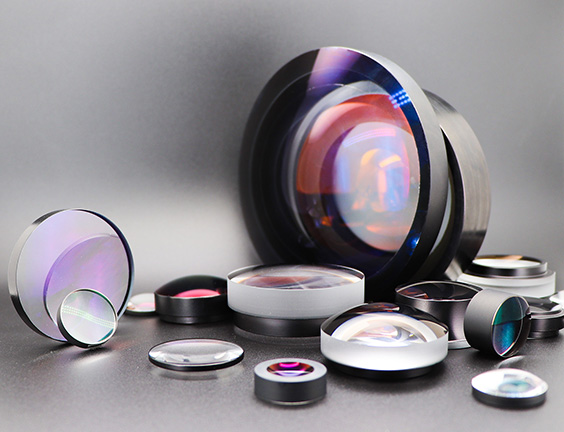
CLZ Optical Co., Ltd. has been manufacturing and trading optical components for many years, Integration from design to production and sales, main products including optical domes, optical windows, optical prisms, optical filters, and so on, we also could provide customized service, With a variety of substrate materials, such as sapphire, fused silica, silicon, optical glass N-BK7,H-K9L.
Please contact us free time if you have any needs.