




Ruby Ball Lenses: High-Precision Optics Redefining Modern Photonics
Nov. 12, 2025
In the field of precision optics, ruby ball lenses have become one of the most sought-after components for high-performance imaging, fiber coupling, and laser focusing applications. Known for their distinctive red hue, superior durability, and exceptional optical quality, these lenses are setting new standards for accuracy and stability in optical systems that demand consistent performance under extreme conditions.
Understanding Ruby Ball Lenses
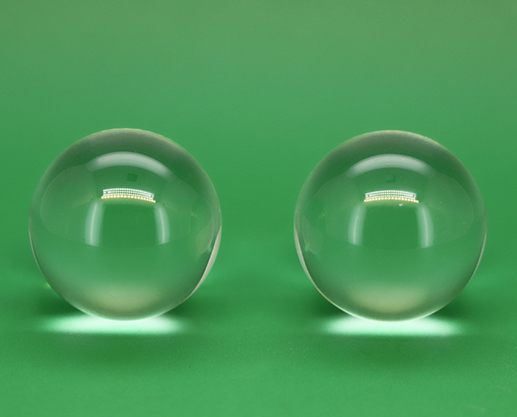
A ruby ball lens is a spherical optical component crafted from synthetic ruby, which is essentially aluminum oxide (Al₂O₃) doped with trace amounts of chromium. This chromium not only gives the lens its vivid red coloration but also enhances its optical performance by improving transmission in the visible wavelength range.
With a refractive index of approximately 1.77 at 587.6 nm and a transmission range between 0.33 and 0.55 micrometers, ruby lenses offer outstanding clarity in the visible spectrum. The material’s hardness—rated at 9 on the Mohs scale—makes it second only to diamond, ensuring that these lenses can withstand mechanical impact, scratching, and wear over prolonged use.
Ruby’s high melting point, around 2050°C, and excellent resistance to temperature fluctuations also mean these lenses retain their optical precision even when exposed to harsh industrial or laboratory environments.
Advantages of Ruby as an Optical Material
Ruby offers a unique balance of optical clarity and mechanical endurance that surpasses traditional materials like optical glass or BK7. Its high refractive index enables efficient focusing of light, minimizing spherical aberration and improving image quality.
Another significant advantage is ruby’s chemical stability. It resists corrosion from acids, alkalis, and most solvents, making it suitable for use in chemically active or high-humidity environments. Its low coefficient of thermal expansion ensures dimensional stability across wide temperature ranges, which is critical for maintaining alignment in precision optical assemblies.
While sapphire shares similar hardness and thermal properties, ruby’s slight coloration gives it superior visibility in alignment systems and optical calibration setups, particularly where visual identification is important.
Optical Performance and Surface Precision
The performance of a ruby ball lens depends heavily on the precision of its manufacturing. Modern ruby lenses are ground and polished to achieve perfect sphericity, often with deviations of less than one micron. This ensures accurate focusing and collimation of light with minimal distortion.
Each ruby ball lens is finished to an optical-grade surface, typically polished to a quarter-wavelength accuracy or better. This level of precision ensures minimal surface scatter and reflection loss, which is vital for laser-based or fiber-coupling applications.
In high-end production, interferometric testing is used to verify lens geometry and surface quality. As a result, ruby lenses provide exceptional consistency, allowing engineers to integrate them confidently into optical systems requiring sub-micron precision.
Applications of Ruby Ball Lenses
The range of applications for ruby ball lenses spans across multiple industries that depend on accuracy, durability, and optical clarity.
Fiber Optic Coupling
Ruby lenses are widely used to focus or collimate light in fiber-optic communication systems. Their high refractive index and spherical geometry enable efficient coupling between optical fibers, reducing insertion loss and improving transmission efficiency.
Laser Systems
In laser focusing and beam collimation, ruby ball lenses play a vital role in maintaining beam quality and alignment. Their stability under high temperatures and resistance to optical damage make them ideal for high-power laser systems and optical sensing devices.
Medical and Industrial Imaging
Because ruby is biocompatible and optically stable, ruby ball lenses are frequently used in miniature medical imaging systems such as endoscopes, as well as in industrial vision systems where precise focusing is essential.
Optical Measurement and Calibration
The perfect spherical shape of ruby lenses makes them valuable as reference components in precision metrology, alignment devices, and coordinate measuring instruments. Their distinctive color helps users easily identify them during optical setup and calibration.
Aerospace and Harsh Environments
In aerospace and defense systems, ruby lenses maintain optical accuracy despite extreme temperature shifts and vibration. Their ability to resist chemical degradation also makes them reliable for outdoor and field-deployed optical instruments.
Why Engineers Choose Ruby Ball Lenses
The decision to use ruby lenses over standard glass optics often comes down to performance reliability. Unlike glass lenses that may degrade under high-intensity light or mechanical stress, ruby lenses maintain consistent optical behavior even after prolonged use.
Their combination of refractive precision, hardness, and temperature stability means they can operate for years without significant wear or drift in optical performance. This makes them particularly suitable for mission-critical applications such as laser alignment systems, optical inspection equipment, and fiber communication modules.
Moreover, ruby lenses require minimal maintenance. Their surface hardness prevents scratching during cleaning or assembly, and their chemical inertness eliminates concerns about environmental contamination affecting performance.
Integration with Fiber Optic and Laser Systems
In fiber optic communication setups, ruby lenses are typically used to collimate light from one fiber into another or from a fiber into a photodiode or laser diode. Because of their precise geometry and high refractive index, they ensure optimal focus with minimal beam divergence.
For laser systems, ruby lenses enhance beam collimation and focus control. They maintain stability even when exposed to fluctuating power levels or heat, which is a common challenge in industrial and medical laser equipment.
This reliability translates into improved system longevity and reduced downtime, providing a measurable advantage for optical device manufacturers and end users.
Manufacturing and Customization
Modern production methods enable ruby ball lenses to be fabricated in a wide range of diameters, typically from 0.3 mm to 10 mm, depending on the application. Custom surface coatings can also be applied to improve transmission efficiency or reduce reflection losses at specific wavelengths.
Some designs incorporate anti-reflective coatings, which enhance performance in laser and imaging systems operating in narrow wavelength ranges. Although ruby naturally has excellent surface properties, these coatings further improve light throughput, especially in systems with multiple optical interfaces.
Market Trends and Industry Outlook
The demand for ruby ball lenses has grown rapidly as optical devices become more compact and require higher performance in smaller spaces. Miniaturized laser systems, optical sensors, and fiber communication modules all benefit from the combination of durability and optical quality that ruby provides.
In recent years, the rise of LiDAR technology, biomedical imaging, and precision metrology has further expanded the application base of ruby optics. With their proven resilience and accuracy, ruby lenses are expected to play an increasingly vital role in next-generation optical and photonic systems.
Conclusion
Ruby ball lenses represent a perfect balance of mechanical strength, thermal stability, and optical excellence. They provide a reliable, high-performance solution for applications where precision and endurance cannot be compromised.
Whether used in laser alignment, optical sensing, medical imaging, or fiber communication, ruby lenses deliver exceptional results through consistent performance and unmatched longevity.
As the global optics industry continues to advance, ruby ball lenses stand out as a cornerstone material in precision photonics—supporting innovation in fields that demand nothing less than perfection.