


Properties and Applications of Fused Silica Windows
Apr. 22, 2026
I.Physical Characteristics of Fused Silica
Refined from high-purity silicon dioxide (SiO₂), fused silica is a specialized industrial material distinguished by its superior physical and chemical stability. As a critical component in precision engineering, it offers a unique combination of properties essential for advanced technological applications:
1. Thermal Resistance: Fused silica possesses a softening point of approximately 1730°C. It exhibits exceptional thermal durability, sustaining continuous operation at 1100°C and withstanding peak temperatures of up to 1450°C for short durations without structural degradation.
2. Chemical Inertness: This material is chemically inert to most acids, with the exceptions of hydrofluoric and hot phosphoric acids. Its corrosion resistance is 30 times superior to ceramics and 150 times that of stainless steel, maintaining structural integrity in highly corrosive, high-temperature environments.
3. Thermal Stability and Shock Resistance: Due to its near-zero coefficient of thermal expansion (CTE), fused silica exhibits extraordinary resistance to thermal shock. It can withstand a rapid temperature delta—such as quenching from 1100°C to 20°C—without fracture or mechanical failure.
4. Broadband Optical Transmittance: The material provides high transparency across a wide spectral range. Visible light transmittance exceeds 93%, while the ultraviolet (UV) transmission remains robust, typically surpassing 80%.
5. Dielectric Properties: Fused silica is an exceptional electrical insulator, with a resistivity exceeding that of soda-lime glass by a factor of 10,000. It provides reliable dielectric performance across a broad temperature range.
II. Optical Advantages and Environmental Resilience
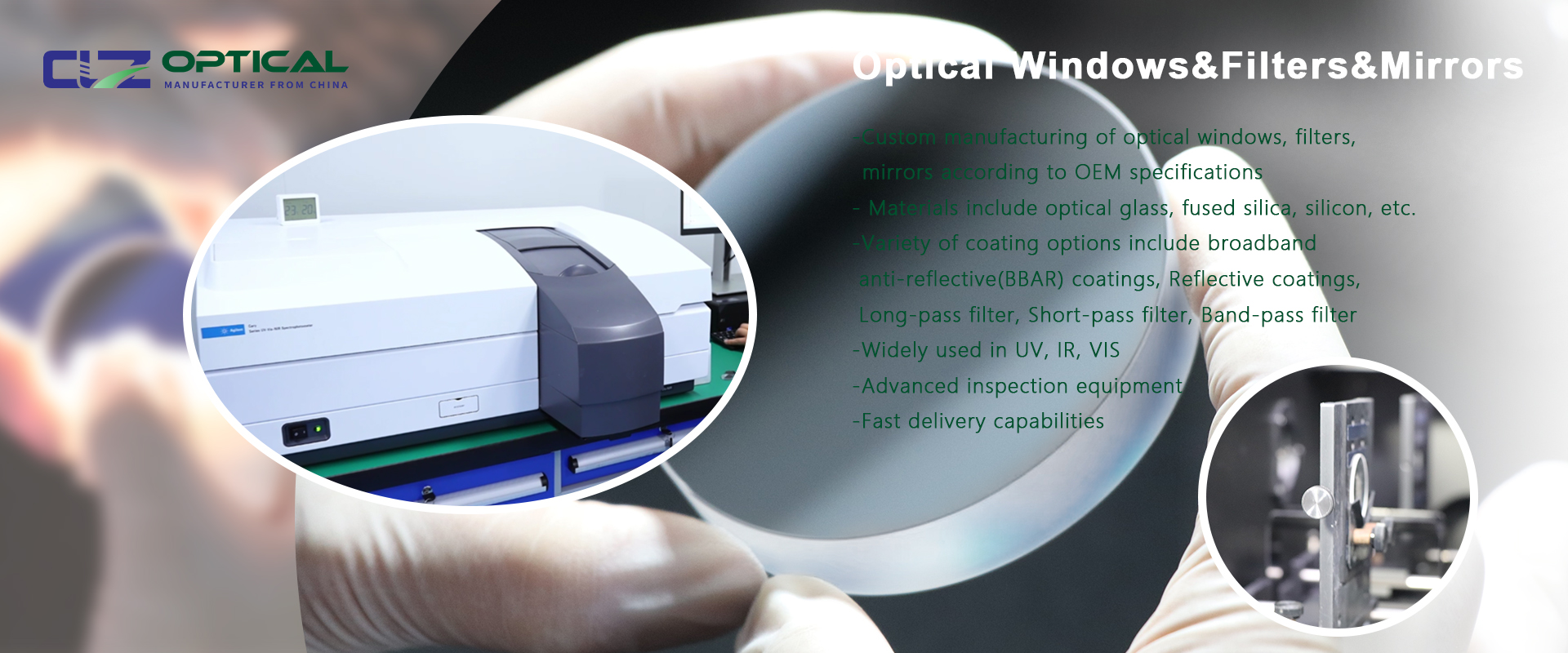
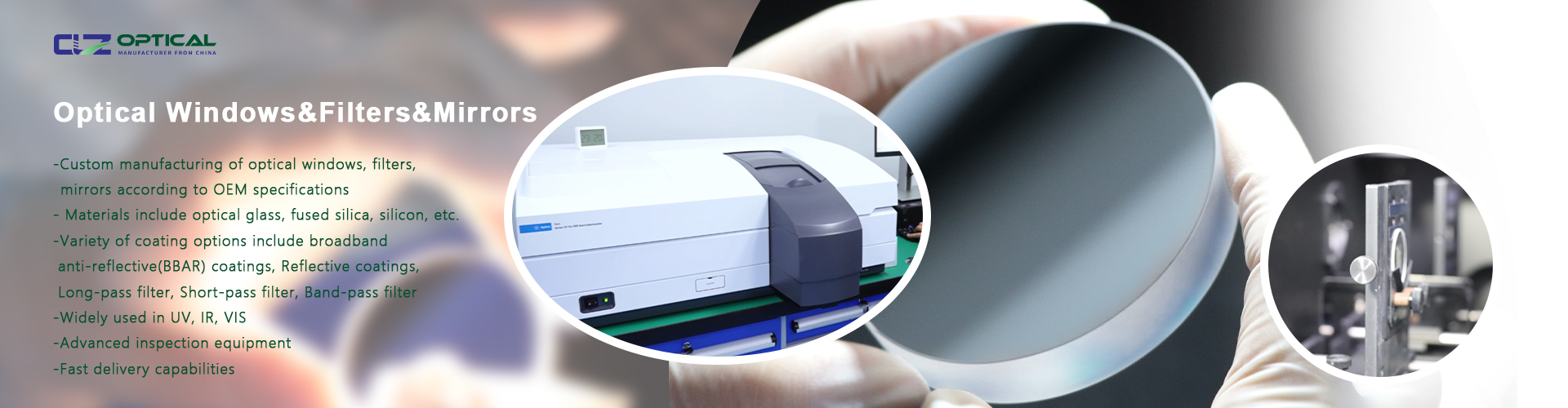
Optical windows fabricated from fused silica are industry-standard for demanding environments. They offer high throughput from the Deep UV (DUV) through the Visible and into the Near-Infrared (NIR) spectra.
With its minimal thermal expansion, high chemical resistance, and superior homogeneity (low striae and bubble content), fused silica is the definitive choice for maintaining precise optical wavefronts under extreme conditions, including high pressure and aggressive chemical exposure.
III. Material Grade Analysis: JGS1, JGS2, and JGS3
Optical performance is optimized by selecting the appropriate grade based on the target wavelength:
• JGS1 (Synthetic Fused Silica - UV Grade)
Produced via synthetic chemical vapor deposition (CVD) using an oxy-hydrogen flame. It contains a high hydroxyl (OH) concentration (~2000 ppm), which provides superior transmission in the deep ultraviolet. It reaches 90% transmittance at 185 nm, making it the primary material for the 185–2500 nm range.
• JGS2 (Fused Quartz - Optical Grade)
Manufactured from high-purity natural quartz. While containing trace metallic impurities and a moderate OH content (100–200 ppm), it offers excellent physical consistency. It serves as a cost-effective solution for the 220–2500 nm spectrum.
• JGS3 (Infrared Fused Quartz - IR Grade)
Produced through vacuum electrical fusion. This grade is characterized by being hydroxyl-free (OH < 5 ppm), effectively eliminating the water absorption peak at 2.7 μm. It offers >85% transmittance in the 260–3500 nm range, optimized for infrared applications.
IV. Industrial Applications in Extreme Conditions
The multifaceted properties of fused silica windows enable critical functions across various high-tech sectors:
• Precision Optical Instrumentation: High transmittance and minimal stress birefringence ensure the accuracy of spectrophotometers and high-speed wind tunnel imaging.
• High-Power Laser Systems: The low CTE and high damage threshold make these windows ideal for protecting sensitive optics in industrial laser cutting and welding systems.
• Aerospace and Defense: Superior radiation resistance and thermal shock durability protect optical sensors in satellites, launch vehicles, and guided munitions.
• Semiconductor and Chemical Processing: Thermal and chemical resilience allow for reliable observation in high-temperature furnaces and plasma etch chambers.