








Functions and applications of optical windows
Mar. 30, 2026
An optical window is a basic optical component with high light transmittance. It is usually used to separate the external environment from internal optical devices and plays an important role in various optical systems.
Working Principle and Function
The optical window relies on its flat and transparent structural characteristics to isolate internal components from the external environment while minimizing changes to light path propagation and optical signal properties. It can block interference from external impurities, physical impacts, and environmental changes to a certain extent, while allowing the required light to pass through with low loss, providing a relatively stable optical path for imaging, detection, measurement, and other related operations.
The core function of the optical window is to provide physical protection for internal optical components on the basis of ensuring unobstructed light paths, improving the operational stability of optical systems in complex environments. In addition, in an overall optical system, the optical window is usually designed for easy installation and replacement, which can effectively reduce system maintenance difficulty.
Material Selection and Surface Characteristics
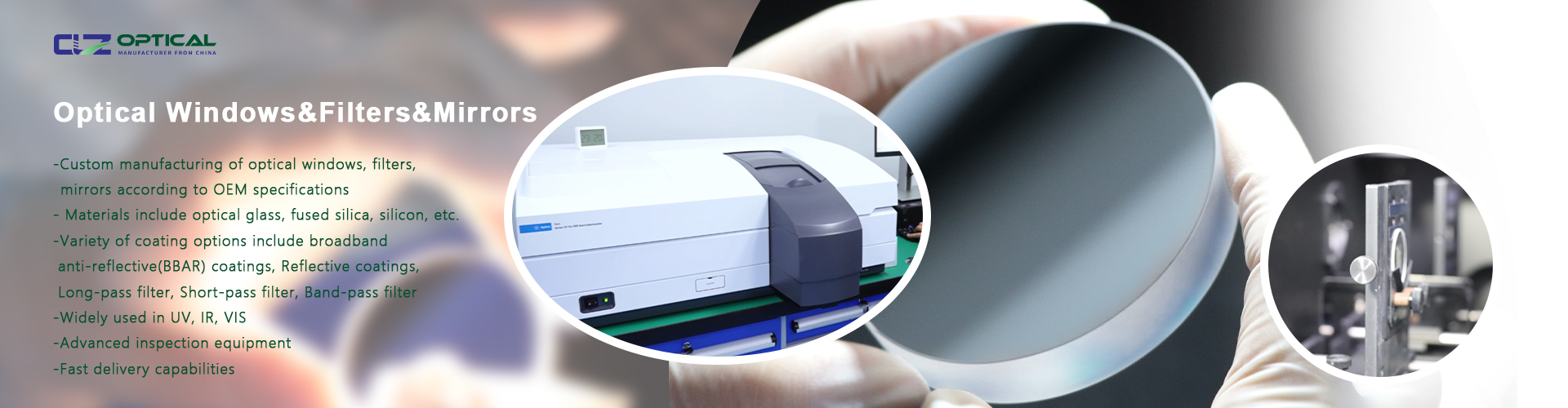
The selection of materials for optical windows is mainly based on high transmittance in the operating wavelength band, with different materials corresponding to different applicable wavelength bands. Fused silica and K9 glass are suitable for ultraviolet, visible and near-infrared bands, while silicon materials are mostly used in the infrared band. These materials generally have good mechanical and chemical properties and can adapt to diverse environments. Sapphire windows have outstanding wear resistance, hardness and chemical stability, giving them significant advantages in applications with high durability requirements. To improve light transmission efficiency, anti-reflection coatings are usually deposited on the surface of the window to further enhance transmittance and reduce reflection loss in the corresponding operating wavelength band.
Structural Form
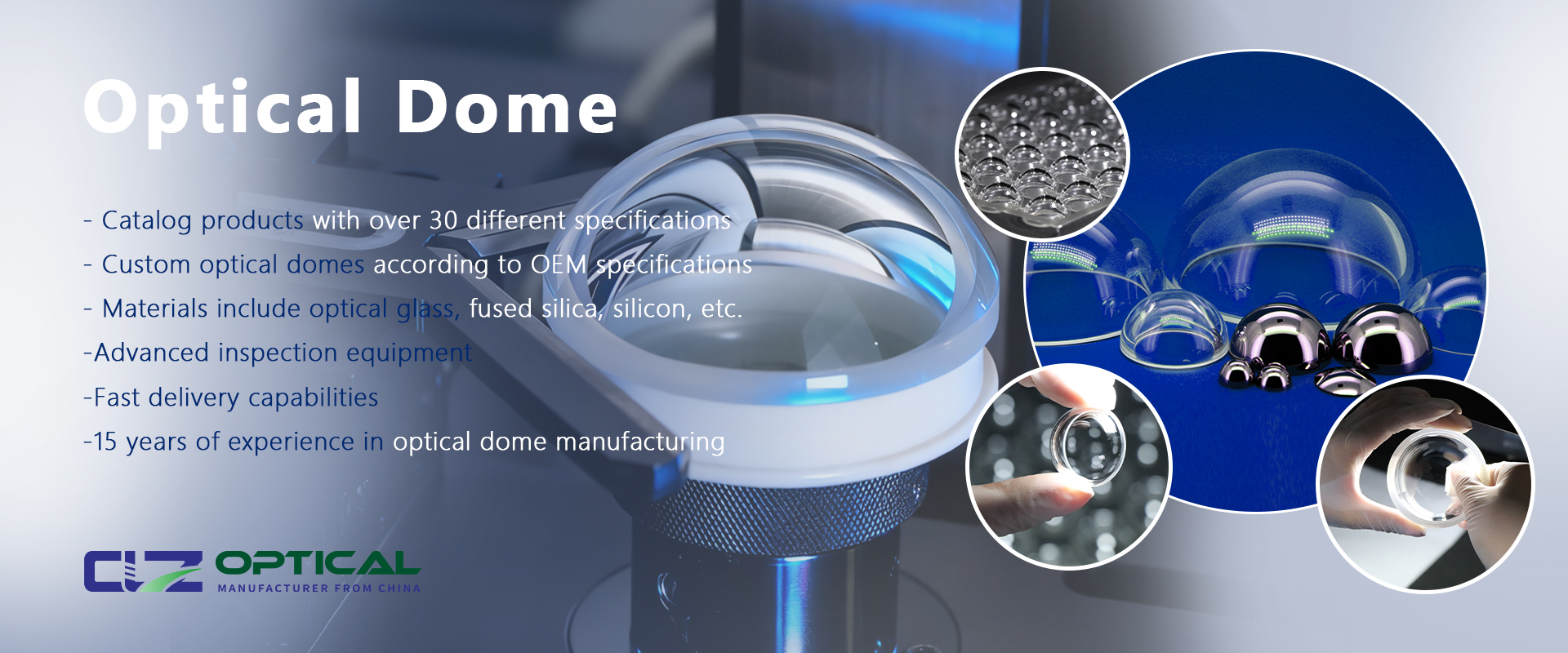
Planar structures are the most common for optical windows. In addition, optical domes are also widely used in scenarios with high requirements for field of view and environmental adaptability, such as deep-sea detection, meteorological observation, and wide-angle imaging. They can meet the demand for large-angle light transmission while providing stronger environmental protection.
Application Fields
In the field of imaging and observation, optical windows can provide certain protection for imaging and observation systems, help maintain stable optical paths, reduce the impact of external environments on components such as sensors, and facilitate equipment in acquiring relatively clear and reliable image information in various scenarios.
In the field of precision optical equipment, optical windows are often used to protect the internal components of laser equipment and other precision instruments, helping to reduce interference from external factors and playing a positive role in maintaining the long-term stable operation of the system.
In the field of scientific research and experiments, optical windows can serve as the optical interface of experimental devices, providing stable optical path conditions for research work such as microscopic observation and spectral analysis, and helping to improve the accuracy and reliability of observation and measurement results.
With diverse choices in material properties, surface treatment and structural forms, optical windows combine environmental adaptability and optical path transmission. They are of great value in scenarios with high requirements for imaging quality, detection accuracy and equipment stability, and can provide strong support for the reliable operation of optical systems in various fields.