


Bandpass optical filter
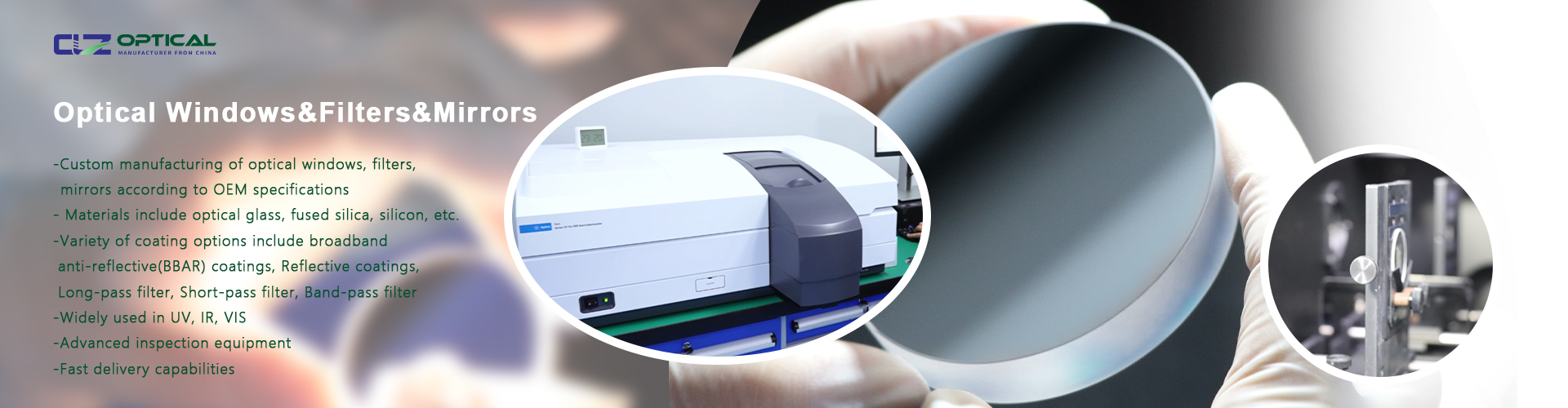
Bandpass filter is an optical component designed to transmit light of a specific wavelength range while reflecting (or attenuating) light outside that range. It selectively allows a narrow band of wavelengths (centered around a "center wavelength") to pass through while blocking others. This is achieved through constructive interference for the desired wavelengths (enhancing transmission) and destructive interference for others (reducing or eliminating transmission).
The filter’s design typically involves single- or multi-layer interference coatings deposited on a substrate. These coatings cause light to reflect and transmit between layers, creating interference patterns that strengthen transmission for targeted wavelengths and suppress others.
Key Parameters of Bandpass Filters
When selecting a bandpass filter, consider these critical specifications:
Center Wavelength (CWL): The midpoint of the transmitted wavelength range.
Bandwidth (FWHM): The width of the passband at 50% of peak transmission (Full Width at Half Maximum).
Peak Transmittance: The maximum percentage of light transmitted within the passband.
Blocking Range: The wavelength range where light is attenuated (blocked).
Optical Density (OD): A measure of blocking efficiency outside the passband (higher OD = stronger blocking).
These parameters vary in importance depending on the application—prioritize based on your specific needs.
Typical Applications
1. Imaging Systems
Bandpass filters enhance contrast or highlight specific details by isolating light at target wavelengths. Applications include:
Fluorescence microscopy
Machine vision
Biometric identification
2. Environmental Monitoring
Optical sensors use bandpass filters to detect specific atmospheric or aqueous components by measuring their absorption/emission spectra. Examples:
Air quality analysis (e.g., NO₂, O₃ detection)
Water pollution monitoring (e.g., chlorophyll measurement)
3. Optical Communication
Bandpass filters separate multiplexed optical signals, ensuring each channel operates at a designated wavelength. They also:
Stabilize laser wavelengths in fiber-optic networks
Enable wavelength-division multiplexing (WDM)
4. Laser Systems
Filters refine or stabilize laser output by:
Selecting a single wavelength in tunable lasers
Suppressing unwanted spectral noise (e.g., in lidar or medical lasers)