

Camera systems and optical domes used in aquaculture.
Feb. 28, 2026
The water area is divided into marine aquaculture and freshwater aquaculture, depending on the area's nature. According to the objects of aquaculture and planting, it is divided into fish, shrimps and crabs, shellfish, algae, lotus, lotus root, etc. Aquaculture is the production business of aquatic economic animals and plants in suitable waters. It is an important part of fisheries. The period when humans engaged in aquaculture was later than the fishing industry, which harvested natural water resources. The emergence and development of aquaculture marks the enhancement of human ability to influence and control waters.
In traditional aquaculture, understanding the growth status of fish populations relies on crew members sampling at sea. Every three days, 30 fish are caught and manually measured, which is not only inefficient but also prone to large sampling errors. Modern underwater camera systems have completely changed this model.
The aquaculture camera system integrates video surveillance and parameter monitoring, which is mainly used for real-time surveillance and parameter monitoring in aquaculture environments. The system realizes comprehensive monitoring of the aquaculture environment by deploying high-definition cameras and various types of sensors to ensure the stability of the aquaculture environment and the healthy growth of aquaculture organisms.
The aquaculture camera system is mainly composed of the following parts:
1. HD camera: used for real-time monitoring of key areas such as aquaculture tanks, oxygenators, feeding equipment, etc., providing high-definition video images.
2. Sensors: including dissolved oxygen sensors, PH sensors, temperature sensors, etc., which are used to monitor water quality parameters, meteorological conditions, and the status of aquaculture organisms.
3. Transmission equipment: Transmit the collected data and video to the data center through a wireless network or wired network.
4. management platform: process and analyze the received data through a cloud computing platform, provide an intuitive monitoring interface, support remote viewing, control breeding equipment, and other functions.
Aquaculture camera systems are widely used in various aquaculture scenarios, including but not limited to:
1. Water quality monitoring: Real-time monitoring of water quality in terms of dissolved oxygen, pH value, temperature, and other key parameters.
2. Feed feeding management: automatically adjust the feeding amount and management operation according to the growth cycle and current water quality condition.
3. Disease prevention and control: Monitor the water quality and disease risk and take preventive measures in advance to reduce the occurrence and spread of diseases.
4. Remote management: Supporting multiple terminal access, farmers can view the real-time picture and data of the aquaculture site at any time and anywhere, and carry out remote management and operation.
In summary, the aquaculture camera system realizes comprehensive monitoring and intelligent management of the aquaculture environment through the combination of high-definition cameras and various types of sensors, which improves the breeding efficiency and quality of aquatic products.
Underwater cameras use high-quality cables for video transmission control lines, control boxes and other equipment composed of the underwater camera system. Mainly used in oil, deep water exploration, underwater work, marine fisheries, aquaculture, and other underwater areas.
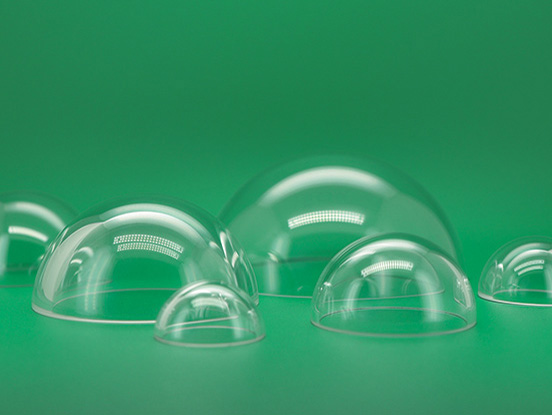
Optical issues exist when using underwater cameras. Due to refraction, images seen through the glass port of underwater lenses are distorted, especially with wide-angle lenses. A dome-shaped or fisheye port corrects this distortion. Most manufacturers create these dome-shaped ports for their housings, typically designed for use with specific lenses to maximize their effectiveness. In addition to dome-shaped ports, housings are also made with auxiliary optics to further enhance the field of view.
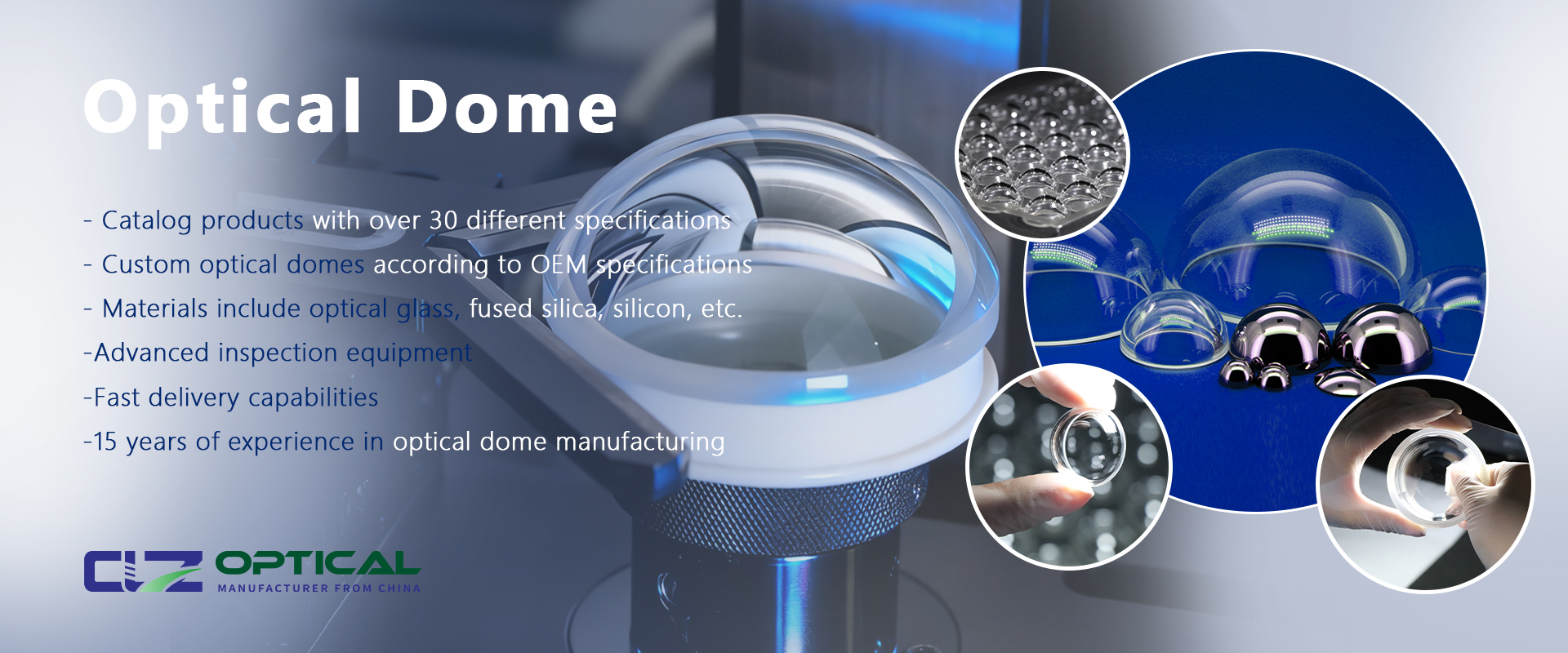
Optical Dome: A Key Guarantee for Underwater Imaging Systems
Underwater camera systems face challenges far greater than those on land: pressure increases by one atmosphere for every 10 meters of depth; seawater is highly corrosive; suspended particles in the water cause light scattering; and differences in water's refractive index lead to image distortion. As the first line of defense for the imaging system, the design and manufacturing quality of the optical dome directly determines the system's reliability and image quality.
Pressure Resistance Protection: Coping with High-Pressure Deep-Sea Environments
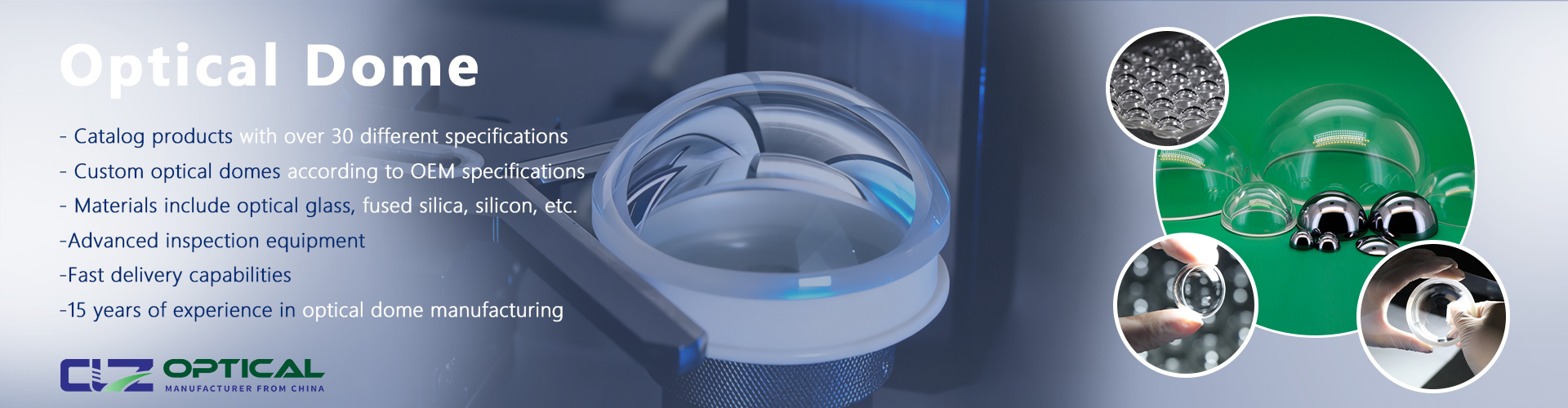
The most basic function of an optical dome is to protect the internal camera system from water pressure damage. The spherical geometry offers excellent mechanical properties—pressure is evenly distributed across the surface, and stress concentration is far lower than with a flat window. CLZ Optical Co., Ltd. offers domes made from various materials, including fused silica and optical glass, for depths up to 3000 meters, ensuring stable operation in extreme deep-sea environments through sophisticated manufacturing processes.
Wide-Angle Protection: Expanding the Field of View
Another significant advantage of optical domes is their ability to support wide-angle imaging. Compared to flat windows, hemispherical or hyperspherical domes offer the following advantages:
1. Avoiding field-of-view obstruction. A dome canopy allows wide-angle lenses to fully utilize their field of view without the obstruction caused by the edges of a flat window. CLZ offers a variety of dome canopies ranging from 10mm to 250mm in diameter to meet different field-of-view requirements.
2. Eliminating Water Refraction Effects. When a camera is placed behind a flat window, water refraction magnifies the image and introduces distortion. A properly designed optical dome can eliminate this effect, making underwater images closer to true proportions. This is especially crucial for growth monitoring systems that require precise measurement of fish size.
Optical Performance Optimization. The optical dome is not only a protective structure but also a vital component of the imaging optical path. Its optical performance directly affects image quality.
In material selection, factors such as transmittance, dispersion, and thermal stability must be comprehensively considered.
In optical design, the dome needs to be optimized in conjunction with the imaging lens. A patented underwater observation lens technology shows that, as the first optical element, the parameters of the spherical protective dome, such as its optical power, radius of curvature, and air gap, must be precisely matched with the subsequent lens group to achieve wide operating wavelengths, large field of view, and high-definition imaging effects.
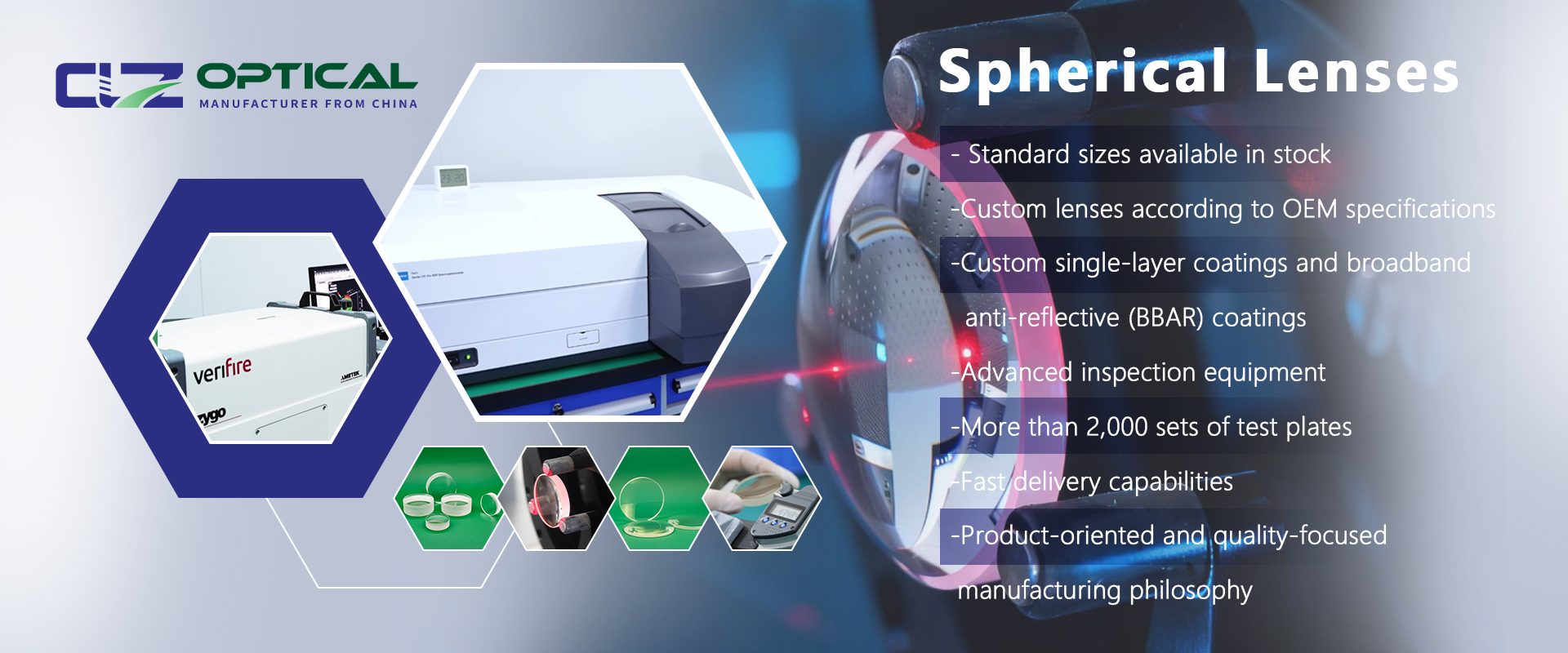
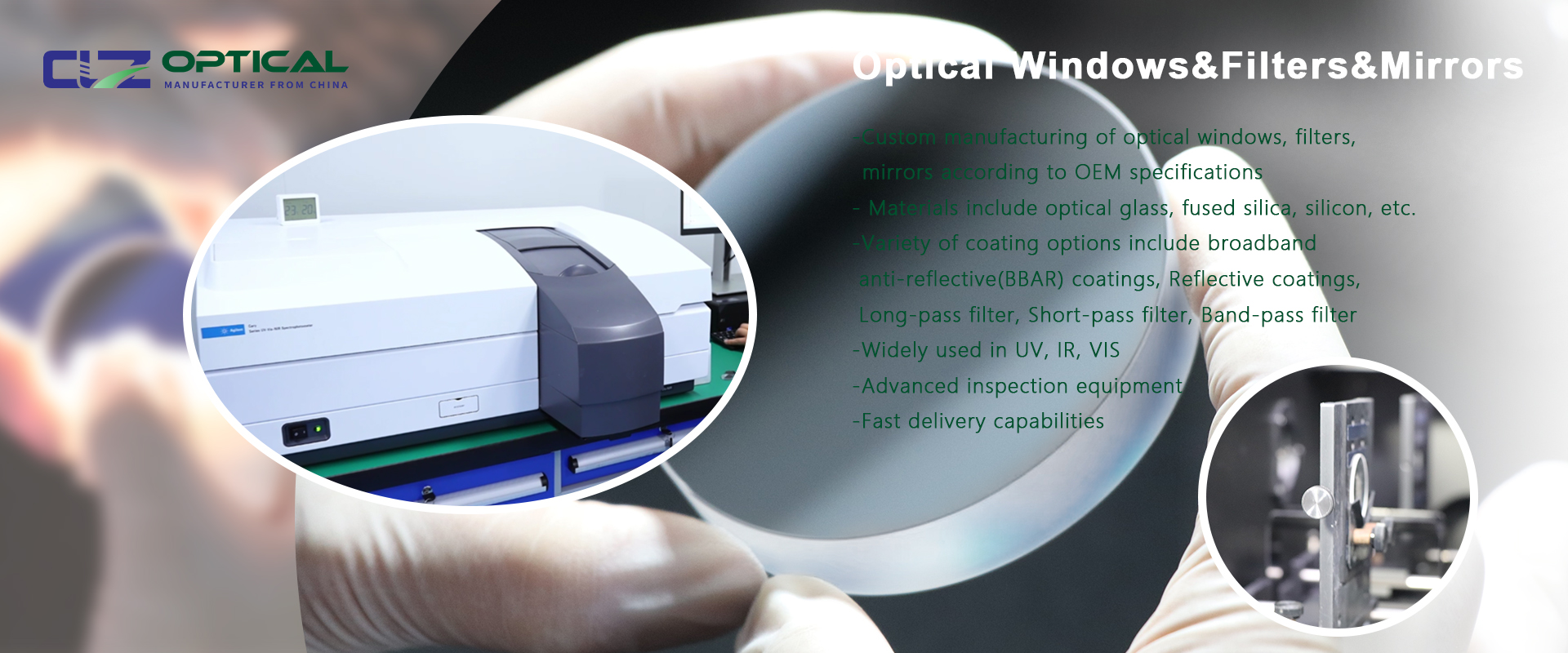
Since its establishment in 2012, CLZ has focused on the research and development and manufacturing of precision optical components. With its outstanding technical capabilities and stringent quality control, it has become one of the world's leading optical component suppliers. To better serve our customers, we launched the new Online Stock product in 2024, allowing you to select and purchase high-quality optical components online anytime, anywhere, meeting the needs of different industries and fields.